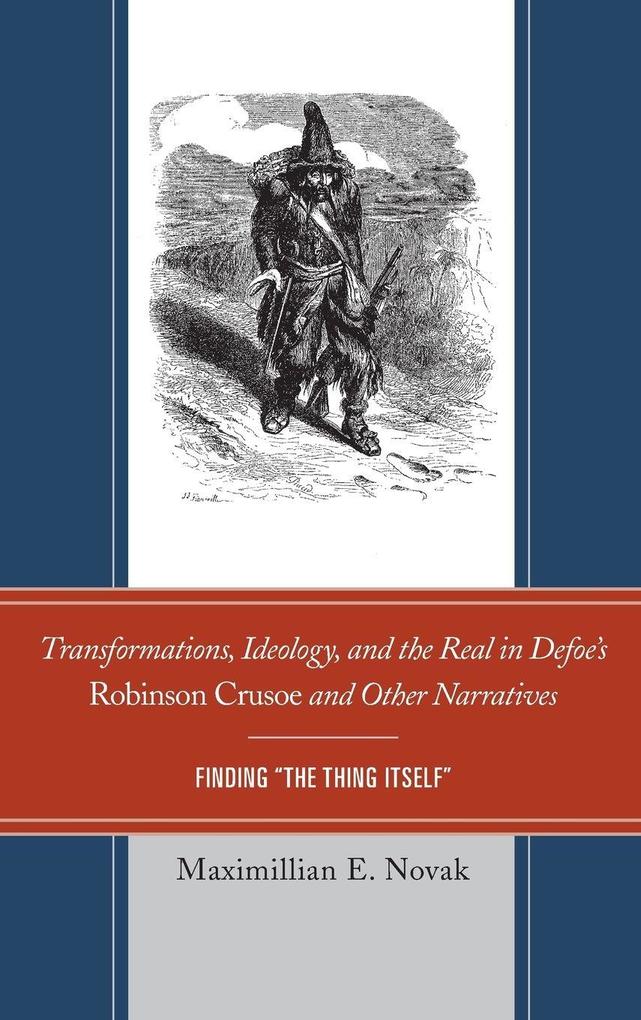
Writer Daniel Defoe was anything but a novice in writing fiction in short stories, but in turning himself into a novel-length writer, he had to explore ways of knitting his fictions together through patterns of language, imagery, and intellectual play. This book establishes the complexities and originality of Defoe as a writer.
Inhaltsverzeichnis
Contents
Acknowledgments
List of Illustrations
Introduction
Chapter 1: Defoe as an Innovator of Fictional Form
Chapter 2: Picturing the Thing Itself, or Not: Defoe, Painting, Prose Fiction, and the Arts of Describing
Chapter 3: The Unmentionable and the Ineffable in Defoe's Fiction
Chapter 4: Novel or Fictional Memoir: The Scandalous Publication of Robinson Crusoe
Chapter 5: Meatless Fridays: CAnnibalism as Theme and Metaphor in Robinson Crusoe
Chapter 6: Edenic Desires: Robinson Crusoe, The Robinsonade, and Utopian Forms
Chapter 7: Strangely Surpriz'd by Robinson Crusoe: A Response to David Fishelov's "Robinson Crusoe, 'The Other,' and the Poetics of Surprise"
Chapter 8: "Looking with Wonder Upon the Sea" : Defoe's Maritime Fictions, Robinson Crusoe, and "The Curious Age We Live in"
Chapter 9: The Cave and the Grotto: Imagined Interiors and Realist Form in Robinson Crusoe
Chapter 10: "The SUme of Humane Misery?": Ambiguities of Exile in Defoe's Fiction
Chapter 11: Ideological Tendencies in Three Crusoe Narratives by British Novelists during the Period following the French Revolution: Charles Dibdin's Hannah Hewit, The Demale Crusoe, Maria Edgeworth's Forester, and Frances Burney's The Wanderer
Afterword
Bibliography
About the Author