








Das eBook.de Hörbuch Abo - jederzeit, überall, für nur 7,95 € monatlich!
Jetzt entdecken
mehr erfahren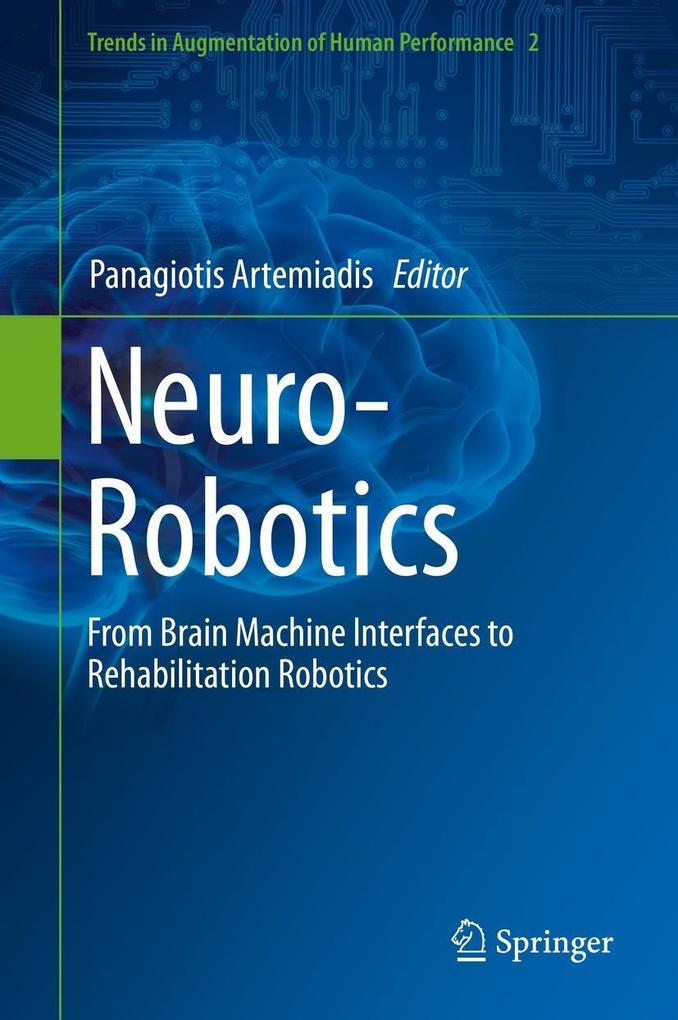
Inhaltsverzeichnis
1 A Learning Scheme for EMG Based Interfaces: On Task Specificity in Motion Decoding Domain. - 2 State of the art and perspectives of ultrasound imaging as a human-machine interface. - 3 Considering limb impedance in the design and control of prosthetic devices. - 4 Multi-axis Capability for Powered Ankle-foot Prostheses. - 5 Mimicking human-like leg function in prosthetic limbs. - 6 Multi-directional dynamic mechanical impedance of the human ankle; a key to anthropomorphism in lower extremity assistive robots. - 7 Development of the Quantified Human. - 8 Optimal Neural Representations for Brain-Mediated Human-Robot Interactions. - 9 Assisted Computer Interaction for Users with Weak Upper Limb Motion. - 10 Robotic Systems for Gait Rehabilitation. - 11 Enhancing recovery of sensorimotor functions: the role of robot generated haptic feedback in the re-learning process. - 12 Robotic Assistance for Cerebellar Reaching. - 13 A Human Augmentation Approach to Gait Restoration. - 14 Home-based rehabilitation: enabling frequent and effective training. - 15 Unilateral and Bilateral Rehabilitation of the Upper Limb Following Stroke via an Exoskeleton. - Index.
This book describes the state of the art at the interface of neuroscience and robotics. It is divided into three sections that can be read independently, but as a whole it gives an overview of neurorobotics, artificial intelligence, and brain plasticity. The audience includes those involved in the emerging and robust field of neuroscience and in particular neurorobotics. it is a go-to resource for clinicians wanting a more in-depth understanding of the development of motion systems. (Deborah J. Gaebler-Spira, Doody' s Book Reviews, May, 2015)
Es wurden noch keine Bewertungen abgegeben. Schreiben Sie die erste Bewertung zu "Neuro-Robotics" und helfen Sie damit anderen bei der Kaufentscheidung.