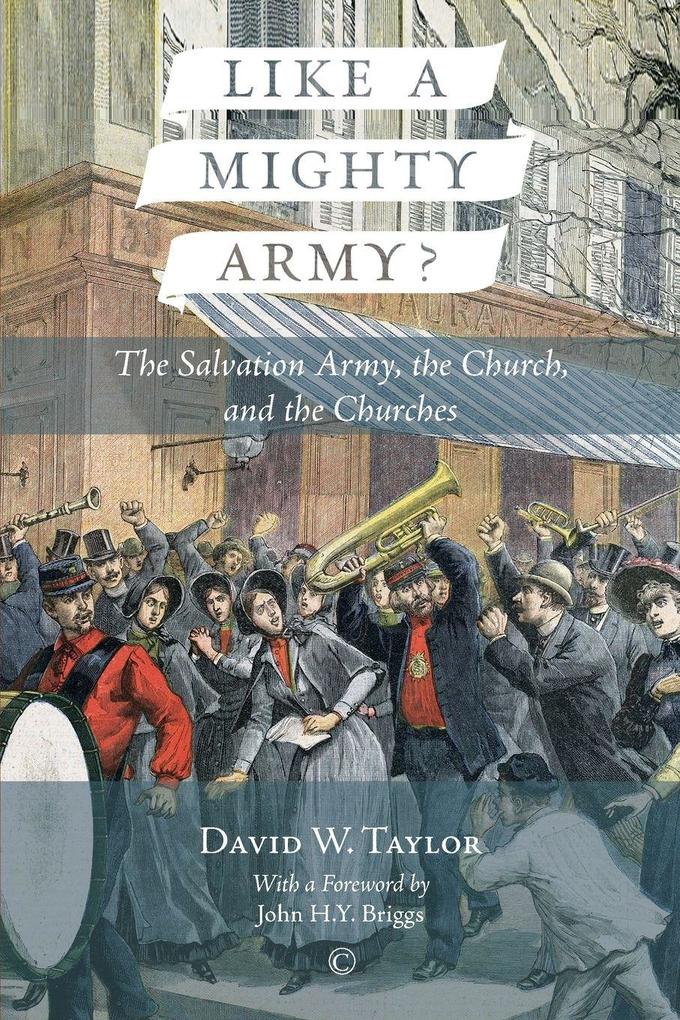
An exploration of the identity of the Salvation Army as an ecclesial body in the light of Karl Barth's ecumenical and ecclesiological theology.
In 1937, prior to the 1948 inauguration of the World Council of Churches, Karl Barth challenged the churches to engage in 'real strict sober genuine theology' in order that the unity of the church might be visibly realized. At that time The Salvation Army didn't aspire to become formally known as a church, even though it was a founding member of the WCC. Today it is globally known as a social welfare organization, concerned especially to serve the needs of those who find themselves at the margins of society. Less well known is that seventy years after Barth's challenge it has made its peace with the view that it is a church denomination. Accepting Barth's challenge to the churches, and in dialogue with his own ecumenical ecclesiology, the concept of the church as an Army is interrogated, in service to The Salvation Army's developing understanding of its identity, and to the visible unity of God's church.
Inhaltsverzeichnis
Foreword by John H. Y. Briggs
Preface
Introduction
Part One: Emerging Salvationist Ecclesiology
Introduction
1 The Origins of a "Christian Mission"
2 The Establishing of The Salvation Army
3 The Salvation Army as a Church
Part Two: Salvationist Dialogue with Karl Barth
Introduction
4 Electing the Christian Community
5 Reconciling the Christian Community
6 The Nature of the Christian Community
7 The Form of the Christian Community
8 The Marks of the Christian Community
9 The Mission and Ministry of the Christian Community
Conclusion
Bibliography
Index