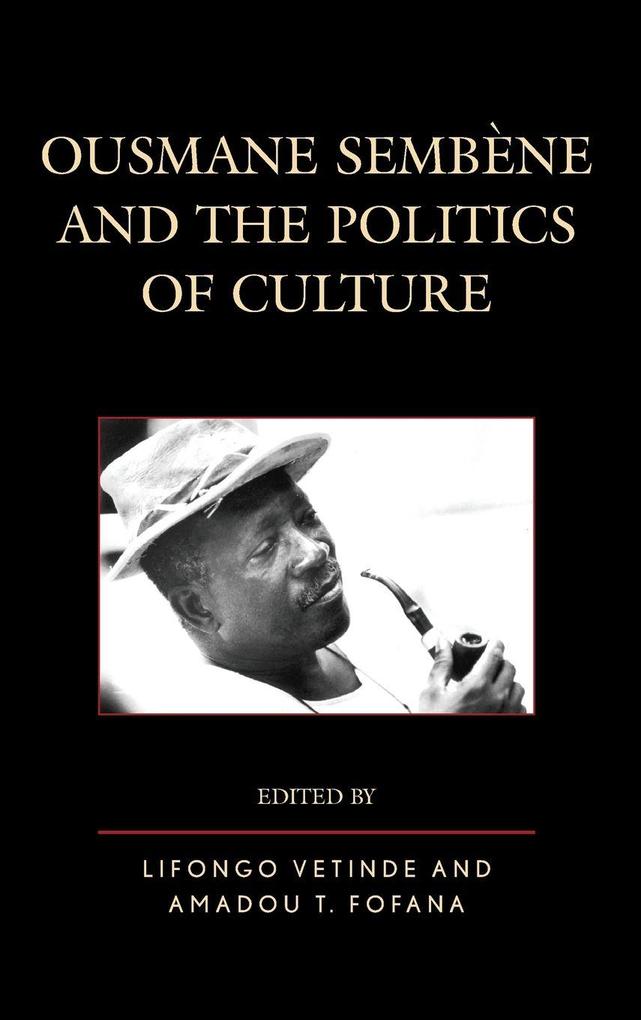
Undoubtedly one of Africa’s most influential first generation of writers and filmmakers, Ousmane Sembene's creative works of fiction as well as his films have been the subject of a considerable number of scholarly articles. This bookexamines this figure within the context of his career-long preoccupation with the production of culture.
Inhaltsverzeichnis
Table of Contents
Introduction: Cultural Politics in Senegal: A Quest for Relevance, by Lifongo Vetinde
Part One: Culture and Development
Chapter One: Sembene, Senghor and Competing Notions of Culture and Development at the 1966 Festival Mondial des Arts Nègres de Dakar, by David Murphy
Chapter Two: Sembène and the Aesthetics of Senghorian Négritude, by Lifongo Vetinde
Chapter Three: Representations of Islam and the question of Identity in Ousmane Sembene's Ceddo, by Cherif Correa
Part Two: Discourses
Chapter Four: A Twice-Told Tale: The Post-colonial Allegory of La Noire de .(1966) and Faat Kine (2000), by Dayna Oscherwitz
Chapter Five: Bringing the Rain Indoors: Rereading the National Allegory in Ousmane Sembene's Xala, by Mathew H. Brown
Chapter Six: Women in Sembène's Films: Spatial Reconfigurations and Cultural Meanings, by Moussa Sow
Chapter Seven: Why Does Diouana Die? Facing History, Migration and Trauma in Black Girl, by Lyell Davis
Part Three: Language and Aesthetics
Chapter Eight: La