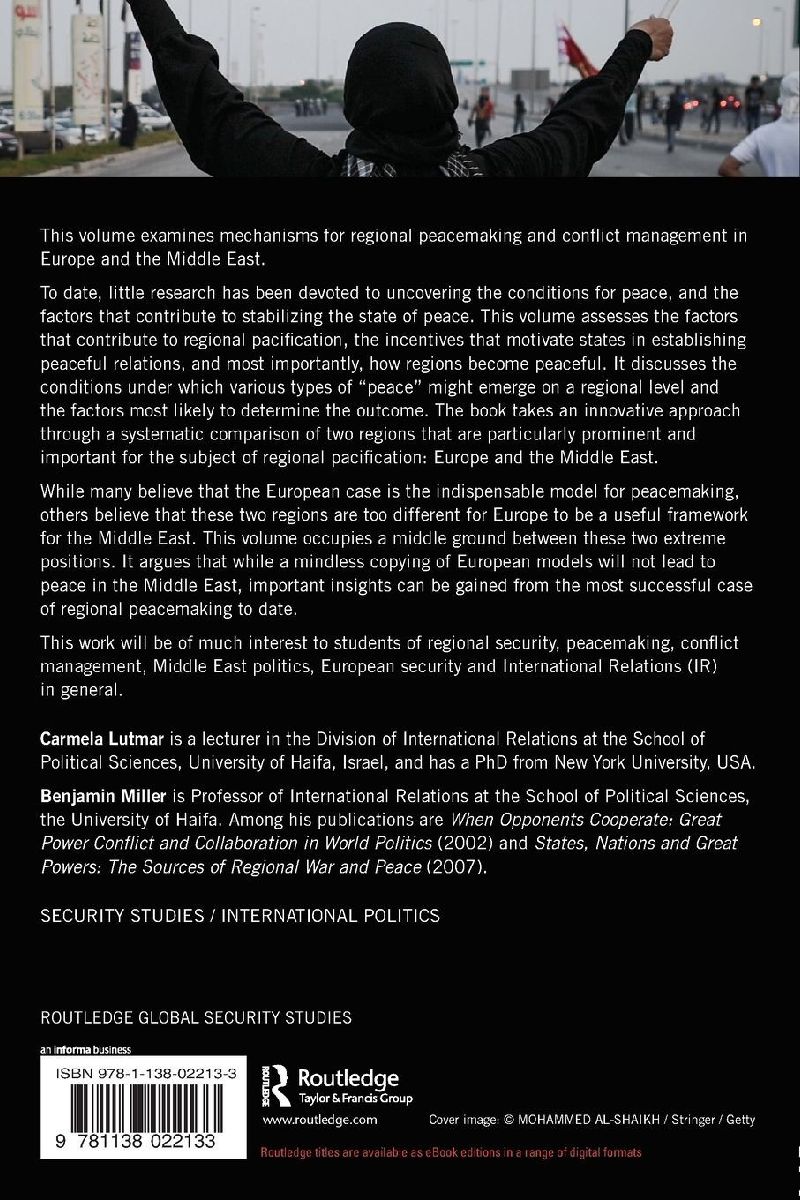
This volume examines the various mechanisms for regional pacification and conflict resolution by comparing the cases of Europe and the Middle East.
Inhaltsverzeichnis
Introduction, Benjamin Miller Part I: Theoretical Framework 1. Explaining the Warm Peace in Europe Versus the Shifts Between Hot War and Cold Peace in the Middle East, Benjamin Miller Part II: Europe: From Hot War to Warm Peace 2. With a Little Help From our Institutions: French-German Security Relations after 1945, Andreas Hasenclever and Lukas Kasten 3. Why "Warm Peace" in Europe is not so Warm: The Impact of Immigration-Related Securitization Process on the European Security Community, Tal Dingott Alkopher 4. Voice Opportunity as a Key to Stability, Nadav Kedem 5. In search of identity: 'Normative Power Europe' through the lens of the Middle East conflict, Neve Gordon and Sharon Pardo 6. Realist Institutionalism and Regional Peace: The Case of the European Coal and Steel Community, Ilai Saltzman Part III: Middle East: From Hot War to Cold Peace - and Back to Hot (Civil) War 7. Why the Liberal Economic Model of International Peace Failed in the Middle East, Ranan Kuperman 8. Hobbes, Locke, and Kant: Systemic Cultures in the Israeli-Palestinian Conflict, Ariel Kabiri 9. The Alawi regime during the Syria civil war: from collapse to fragile stability, Yaron Friedman 10. The (de)Construction of "Economic Peace"- "Economic Peace" Strategies in the Israeli-Palestinian Conflict: Between Theory and Reality, Mor Mitrani and Galia Press-Barnathan Part IV: Comparative Perspectives 11. US "Puppets", Domestic Institutions, and Foreign Policy Compliance, Carmela Lutmar 12. The Prerequisites Matter: North America's Transition to Regional Peace, Dov H. Levin 13."Offensive Liberalism" a Critical Appraisal, Amir Lupovici 14. The Sunshine Policy: Between Cold War and Normal Peace, Alon Levkowitz Conclusions, Carmela Lutmar