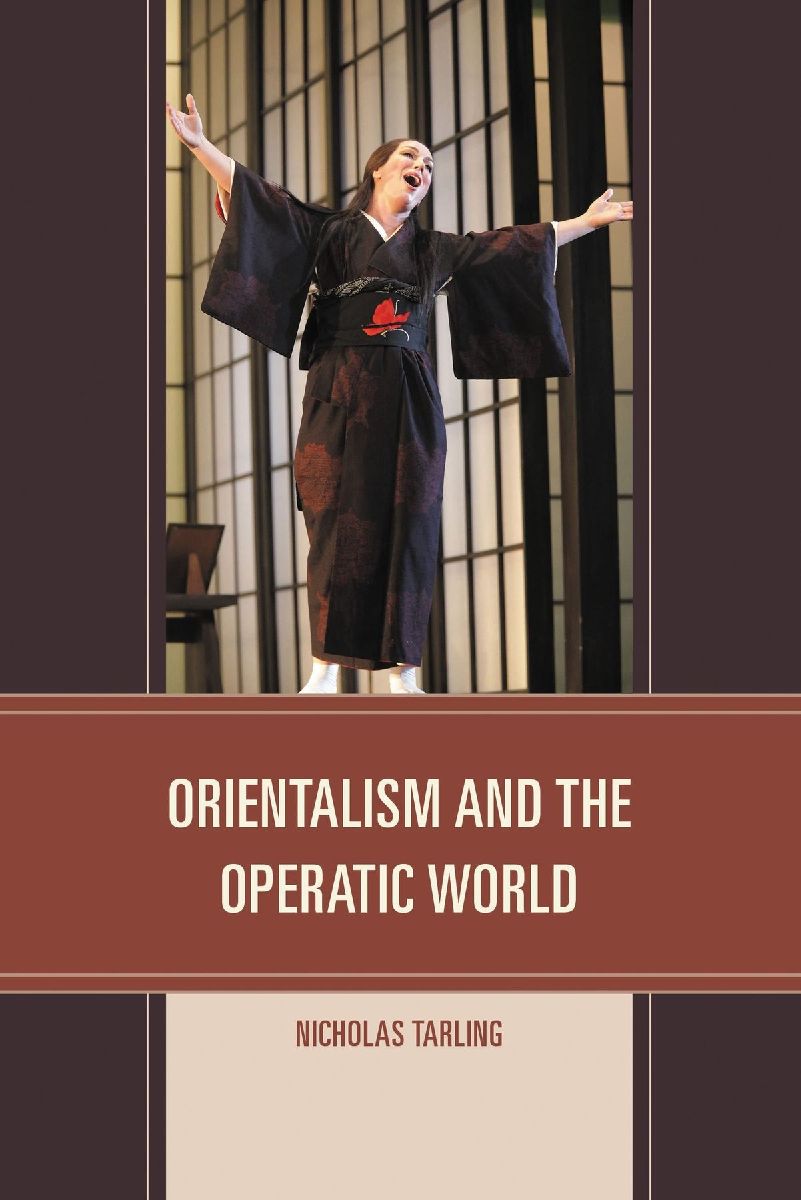
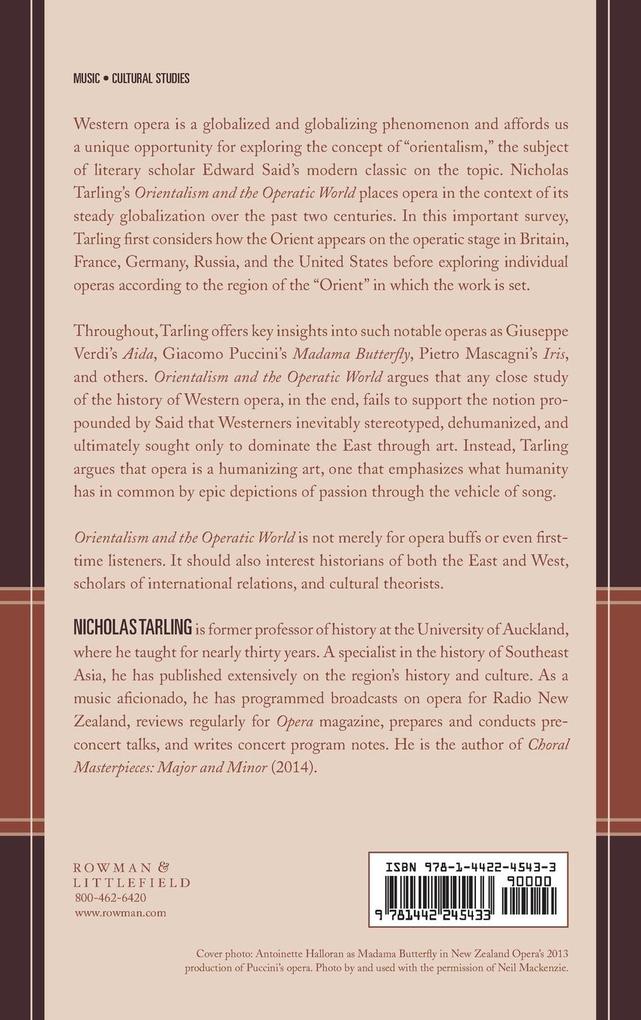
Nicholas Tarling’s Orientalism and the Operatic World places opera in the context of its steady globalization over the last two centuries, offering key insights into such notable operas as George Frederic Handel’s Berenice, Giuseppe Verdi’s Aida, Giacomo Puccini’s MadamaButterfly, Pietro Mascagni’s Iris, and others. Orientalism and the Operatic World argues that any close study of the history of Western opera, in the end, fails to support notion propounded by literary scholar Edward Said that the Westerners inevitably stereotyped, dehumanized, and ultimately sought only to dominate the East through art. Instead, Tarling argues that opera is a humanizing art, one that emphasizes what humanity has in common by epic depictions of passion through the vehicle of song.
Inhaltsverzeichnis
Overture
Part One: Recitatives
Chapter 1: Globalising and Glocalising Opera
Chapter 2: The Genre
Chapter 3: Orientalisms
Part Two: Arias
Chapter 4: Bible-based operas
Chapter 5: Crusaders, Arabs and Turks
Chapter 6: Egypt
Chapter 7: India and Ceylon
Chapter 8: China.
Chapter 9: Japan
Chapter 10: Russia
Finale
About the Author