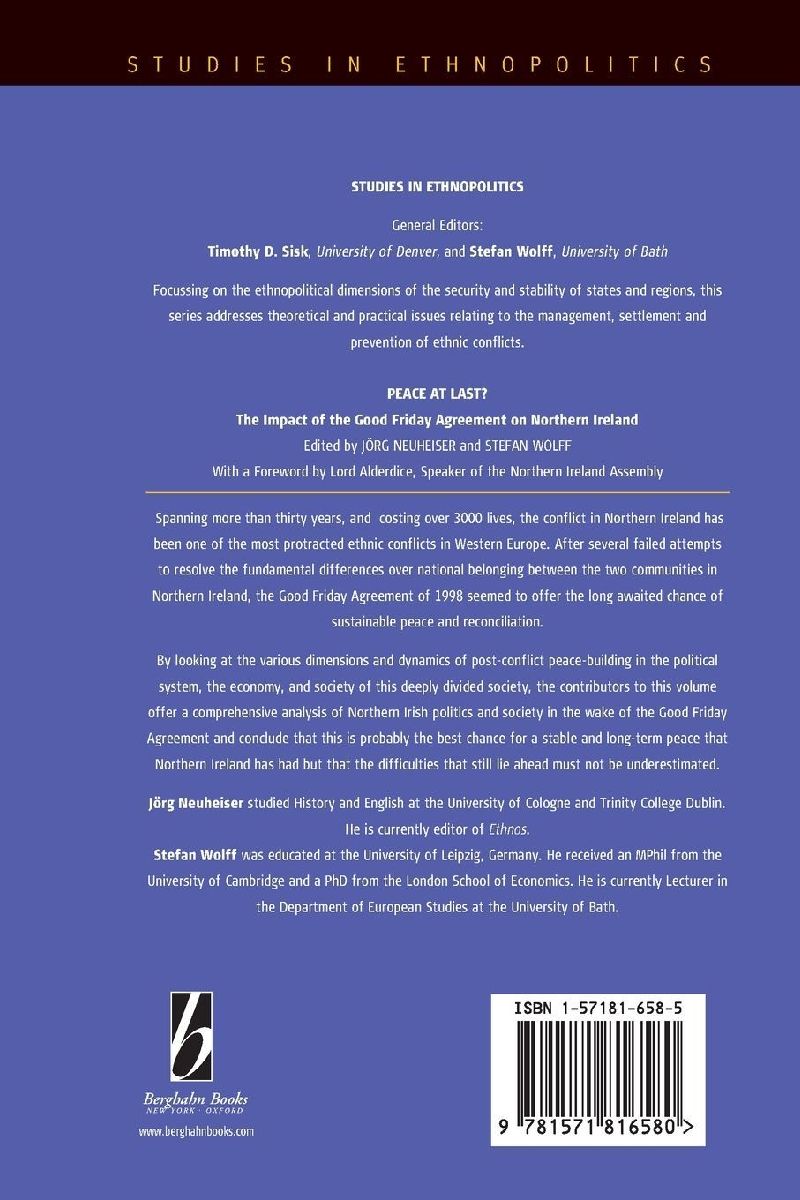
Spanning more than thirty years, and costing over 3000 lives, the conflict in Northern Ireland has been one of the most protracted ethnic conflicts in Western Europe. After several failed attempts to resolve the fundamental differences over national belonging between the two communities in Northern Ireland, the Good Friday Agreement of 1998 seemed to offer the long awaited chance of sustainable peace and reconciliation.
By looking at the various dimensions and dynamics of post conflict peace-building in the political system, the economy, and society of this deeply divided society, the contributors to this volume offer a comprehensive analysis of Northern Irish politics and society in the wake of the Good Friday Agreement and conclude that this is probably the best chance for a stable and long-term peace that Northern Ireland has had but that the difficulties that still lie ahead must not be underestimated.
Inhaltsverzeichnis
List of Tables
Notes on Contributors
Foreword
Preface
List of Abbreviations Chapter 1. Introduction: From Sunningdale to Belfast, 1973-98
Stefan Wolff Chapter 2. The Morning After: An Alliance Perspective on the Agreement
Stephen Farry Chapter 3. The Good Friday Agreement: An SDLP Analysis of the Northern Ireland Conflict
Gerard Murray Chapter 4. Sinn Féin: Beyond and within Containment
Peter Shirlow Chapter 5. Ulster Unionism after the Peace
James W. McAuley Chapter 6. Drumcree: Marching towards Peace in Northern Ireland?
Dominic Bryan Chapter 7. Images of Peace: The News Media, Politics and the Good Friday Agreement
Thomas Taafe Chapter 8. The Perception of Economic Aid in Northern Ireland and its Role in the Peace Process
Cynthia Irvin and Sean Byrne Chapter 9. Women and a 'New' Northern Ireland
Valerie Morgan Chapter 10. The Politics of Culture in Northern Ireland
Camille O'Reilly Chapter 11. Sport and the Politics of Irish Nationalism: The Struggle for Ireland's Sporting Soul
Alan Bairner Chapter 12. Conclusion: The Peace Process in Northern Ireland since 1998
Stefan Wolff Index