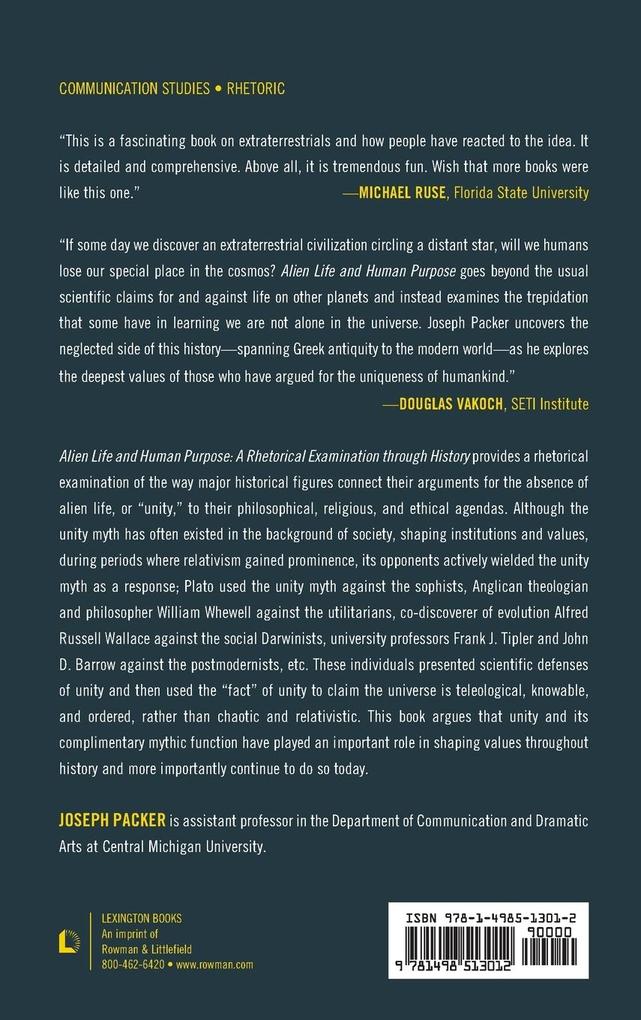
Alien Life and Human Purpose provides a rhetorical examination of the way major historical figures connect their arguments for the absence of alien life, or unity, to their philosophical, religious, and ethical agendas. Packer contends that unity had a complimentary mythic function and continues to shape modern social values. This work will be of interest to rhetoricians, philosophers, historians, and theologists.
Inhaltsverzeichnis
Acknowledgements
Introduction
Chapter One: Plato's Rhetorical Cosmology: The Unity of the World as Foundational Myth
Chapter Two: The Dominance of the Unity Cosmology from Plato to Galileo
Chapter Three: William Whewell and Alfred Russel Wallace: Unity Cosmology in the Modern Era
Chapter Four: Quantum Unity
Chapter Five: Unity in the Twenty-first Century
Conclusion: Humanity as the Measure vs. the Unity of the World
Bibliography