Shortlisted for the BMA Book Awards and Macavity Awards 2016
Fourteen novels. Fourteen poisons. Just because it's fiction doesn't mean it's all made-up ...
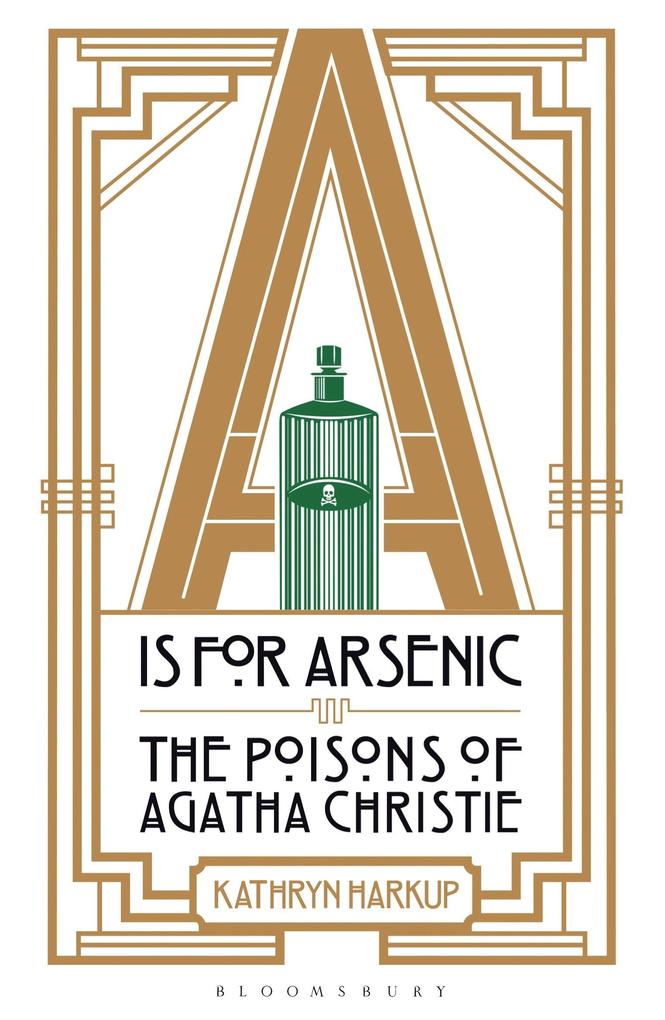
Agatha Christie revelled in the use of poison to kill off unfortunate victims in her books; indeed, she employed it more than any other murder method, with the poison itself often being a central part of the novel. Her choice of deadly substances was far from random - the characteristics of each often provide vital clues to the discovery of the murderer. With gunshots or stabbings the cause of death is obvious, but this is not the case with poisons. How is it that some compounds prove so deadly, and in such tiny amounts?
Christie's extensive chemical knowledge provides the backdrop for A is for Arsenic, in which Kathryn Harkup investigates the poisons used by the murderer in fourteen classic Agatha Christie mysteries. It looks at why certain chemicals kill, how they interact with the body, the cases that may have inspired Christie, and the feasibility of obtaining, administering and detecting these poisons, both at the time the novel was written and today. A is for Arsenic is a celebration of the use of science by the undisputed Queen of Crime.
Inhaltsverzeichnis
1. Dame Agatha's Deadly Dispensary
2. A is for Arsenic - Murder is Easy
3. B is for Belladonna - The Labours of Hercules
4. C is for Cyanide - Sparkling Cyanide
5. D is for Digitalis - Appointment with Death
6. E is for Eserine - Crooked House
7. H is for Hemlock - Five Little Pigs
8. M is for Monkshood - 4:50 from Paddington
9. N is for Nicotine - Three Act Tragedy
10. O is for Opium - Sad Cypress
11. P is for Phosphorus - Dumb Witness
12. R is for Ricin - Partners in Crime
13. S is for Strychnine - The Mysterious Affair at Styles
14. T is for Thallium - The Pale Horse
15. V is for Veranol - Lord Edgware Dies
Appendix
Glossary
Bibliography