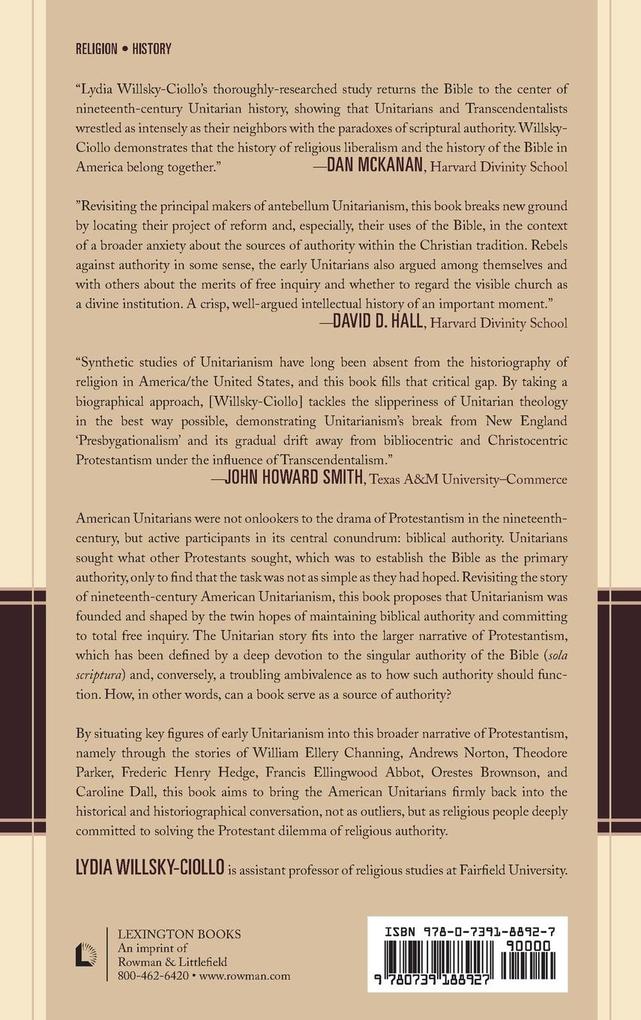
This book examines American Unitarianism and its struggle to define religious authority during its nascence in the nineteenth century. This story is situated in the context of Protestant history, revealing how American Unitarianism is representative of the broader Protestant dilemma of establishing the Bible as the primary religious authority.
Inhaltsverzeichnis
Introduction: Unitarianism and the Protestant Dilemma
Chapter 1: Protestantism and the Bible: From the Reformation to the American Unitarians
Chapter 2: William Ellery Channing and the Liberalizing of Biblical Authority
Chapter 3: What's "Gospel" in the Bible? Andrews Norton and the Language of Biblical Truth
Chapter 4: The Opening of the Canon: Theodore Parker and the Transformation of Religious Authority
Chapter 5: A Practical Spirit: Frederic Henry Hedge and the Universal Church
Chapter 6: When the Levee Breaks: Unitarian Experimentation with Authority in the Late Nineteenth Century
Epilogue: Seeking Authority in Contemporary Unitarian Universalism