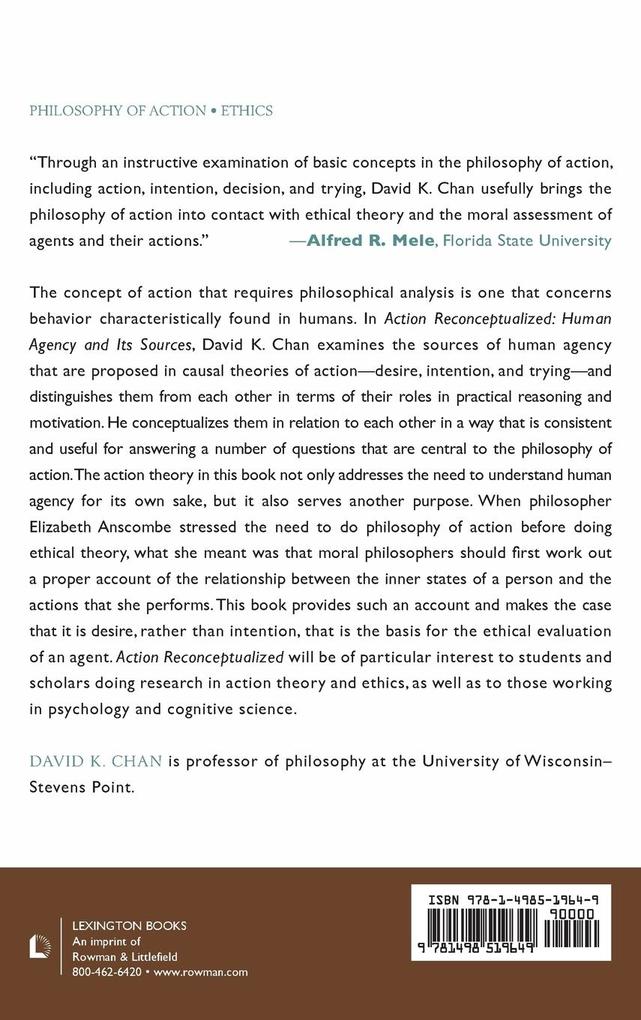
In re-examining the concepts of desire, intention, and trying, David K. Chan brings a fresh approach toward resolving many of the problems that have occupied philosophers of action for almost a century. This book not only presents a complete theory of human agency but also, by developing the conceptual tools needed to do moral philosophy, lays the groundwork for formulating an ethics that is rooted in a clear, intuitive, and coherent moral psychology.
Inhaltsverzeichnis
Preface
Introduction
The Need to Reconceptualize Action
What Needs to be Reconceptualized
Putting the Pieces Together
Chapter 1: Towards a Theory of Action
Philosophy of Action
Causal and Non-Causal Theories
Conceptualizing Action
'Actopia'
Evaluating Action
Fixing the Constants
An Outline of this Book
Chapter 2: Intention
Skepticism about Intention
The Planning Theory of Intention
Intention and Reasons for Acting
Comparing Concepts of Intention
Chapter 3: Desire
Defining Desire
Extrinsic Desire
Desire Ownership
Motivation, Reason, and Akratic Agency
Chapter 4: From Volitions to Tryings
Volitions and the Regress Problem
Why Do Volitionalists Say Strange Things?
A Theory of Tryings
The Identity-Theory of Trying as Mental and Physical
Mental Tryings
The Theoretical Advantage of Conceptualizing Tryings as Processes
Non-Observational Knowledge of Trying
Chapter 5: Problems and Issues in Action Theory
Deviant Causality
The Simple View
Non-Intentional Actions
Basic and Non-Basic Actions
The Nature of Action
Desiring and Intending to Try
Chapter 6: Rational and Moral Agency
The Doctrine of Double Effect
The Moral Significance of Non-Intentional Agency
The Argument Against Ethical Rationalism
Conclusion
The Reconceptualized Action Theory
The Importance of Getting It Right
Bibliography
Index