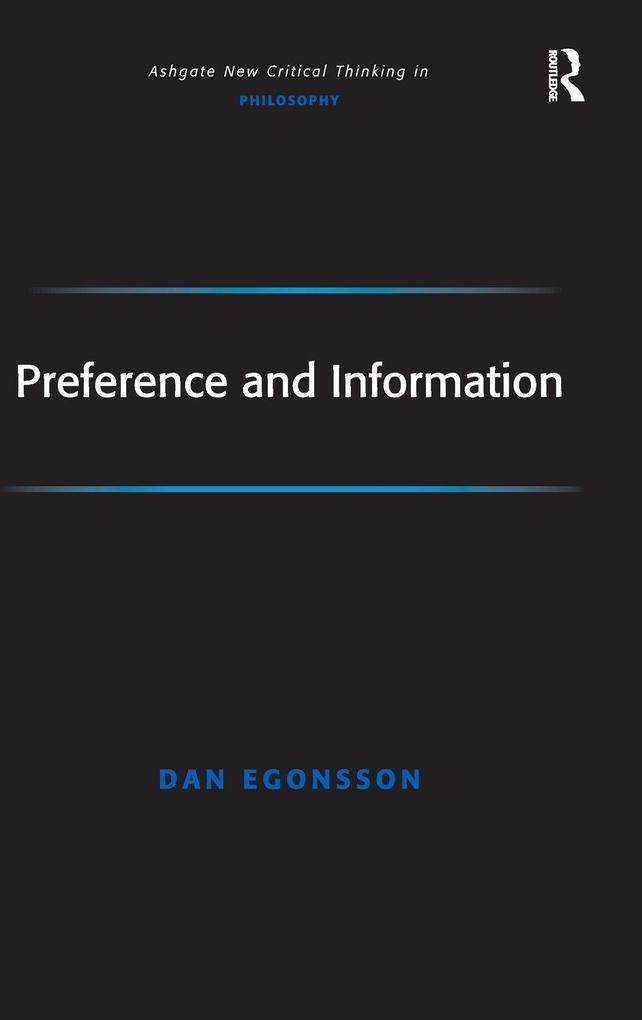
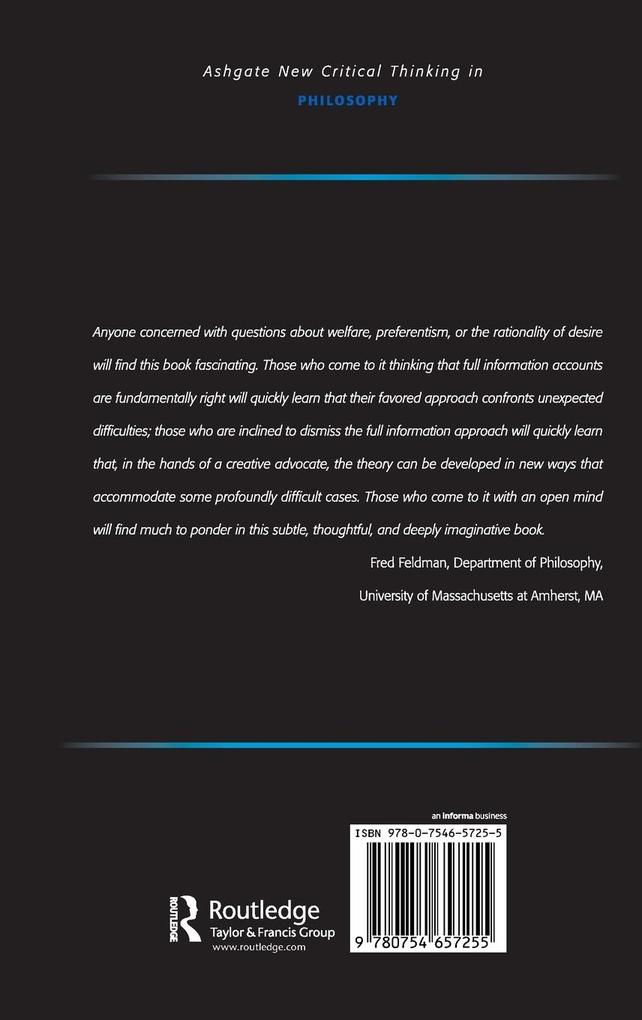
Standard preferentialist theories allege that a person's preferences and their satisfaction are the correct measure of well-being. In this book, Egonsson presents a critical analysis of the "full-information account of the good," which claims that only the satisfaction of rational and fully informed preferences has value for a person.
Inhaltsverzeichnis
Contents: Preface; Introduction; Analysing disappointment; The quantitative element; The qualitative element; The qualitative element criticized; Comparing examples; Truth and deliberation; Intrinsic and final preferences; Strongly intrinsic preferences; A problem of hypothetical approval; Hypothetical approval in medicine; Summary and conclusions; Bibliography; Index.