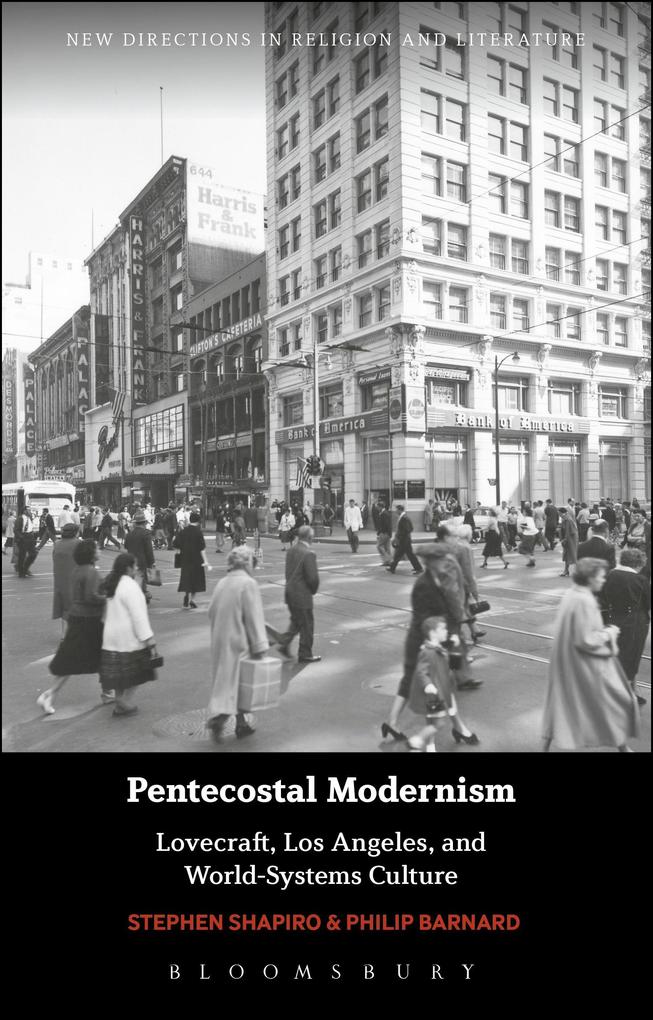
Bringing together new accounts of the pulp horror writings of H.P. Lovecraft and the rise of the popular early 20th-century religious movements of American Pentecostalism and Social Gospel, Pentecostal Modernism challenges traditional histories of modernism as a secular avant-garde movement based in capital cities such as London or Paris. Disrupting accounts that separate religion from progressive social movements and mass culture, Stephen Shapiro and Philip Barnard construct a new Modernism belonging to a history of regional cities, new urban areas powered by the hopes and frustrations of recently urbanized populations seeking a better life. In this way, Pentecostal Modernism shows how this process of urbanization generates new cultural practices including the invention of religious traditions and mass-cultural forms.
Inhaltsverzeichnis
Acknowledgements< BR> < BR> Part A: Methods< BR> 1) Modernism and the Capitalist World-System: Williams, Wallerstein, Foucault< BR> 2) Combined and Uneven Development: World-System Dynamics< BR> < BR> Part B: Modernisms< BR> 3) Pentecostalism and the Protolanguage of Racial Equality< BR> 4) Lovecraft, Race, and Pulp Modernism< BR> 5) Afterword: Social Gospel< BR> < BR> Bibliography< BR> Index