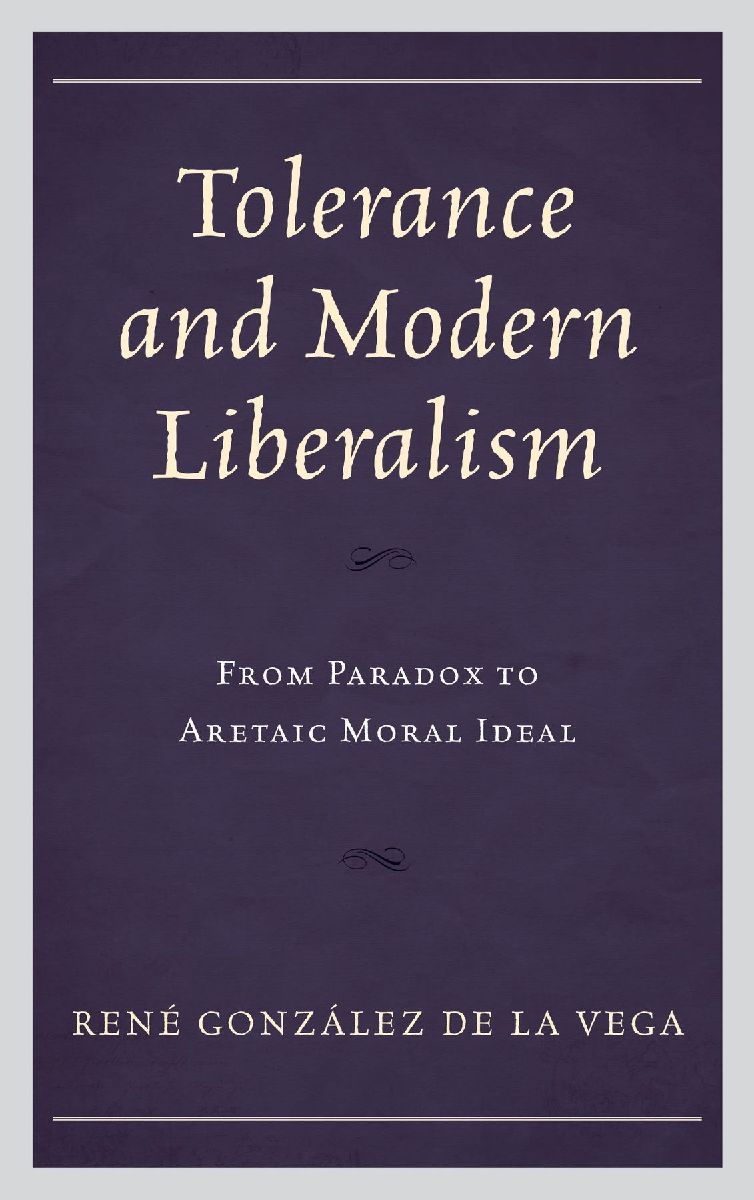
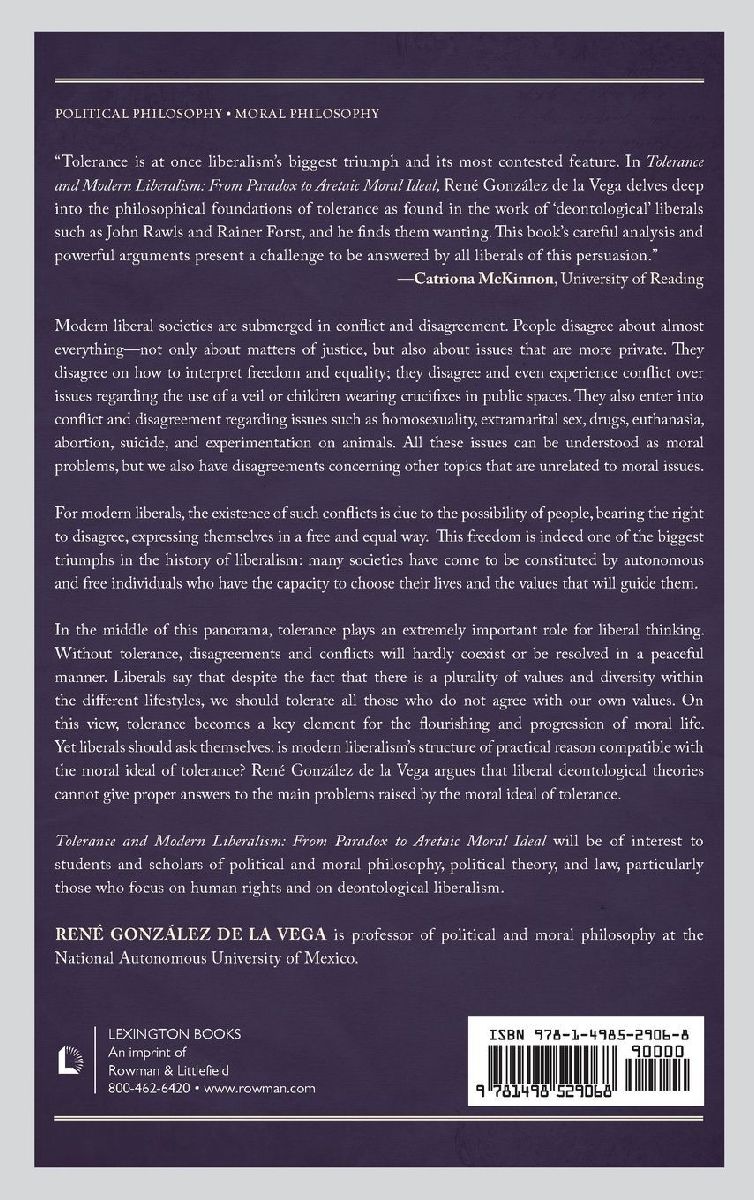
In this book, René González de la Vega argues that tolerance under the structure of modern deontological liberalism becomes a "suicidal ideal" or an irrational attitude, mainly because its claims are contradictory to the core normative elements of this account of the liberal thought.
Inhaltsverzeichnis
Introduction
I. The Premises of Modern Liberalism
1. Three Philosophical Claims
2. The Rational and Reasonable
3. The Moral System
II. The Liberal Idea of Tolerance4. Regarding the Concept5. On Relevant Convictions
6. About the Power and Competence to Tolerate
III. Tolerance in Modern Liberalism
7. Tolerance as Reasonableness: John Rawls' Conception
8. Tolerance and the Two Normative Systems: Ernesto Garzón Valdes's Conception
9. Tolerance as a Virtue of Justice: Rainer Forst's Conception
10. Tolerance and the Moral System
IV. The Moral Paradox of Tolerance
11. The Limits of Tolerance
12. Tolerance and the Conceptions of the Good
13. Tolerance as a Moral Dilemma
14. Tolerance in the Moral System
V. The Aretaic Turn
15. The Practical Impossibility of Tolerance
16. Tolerance as a Dispositional Property
17. The Contextual Response