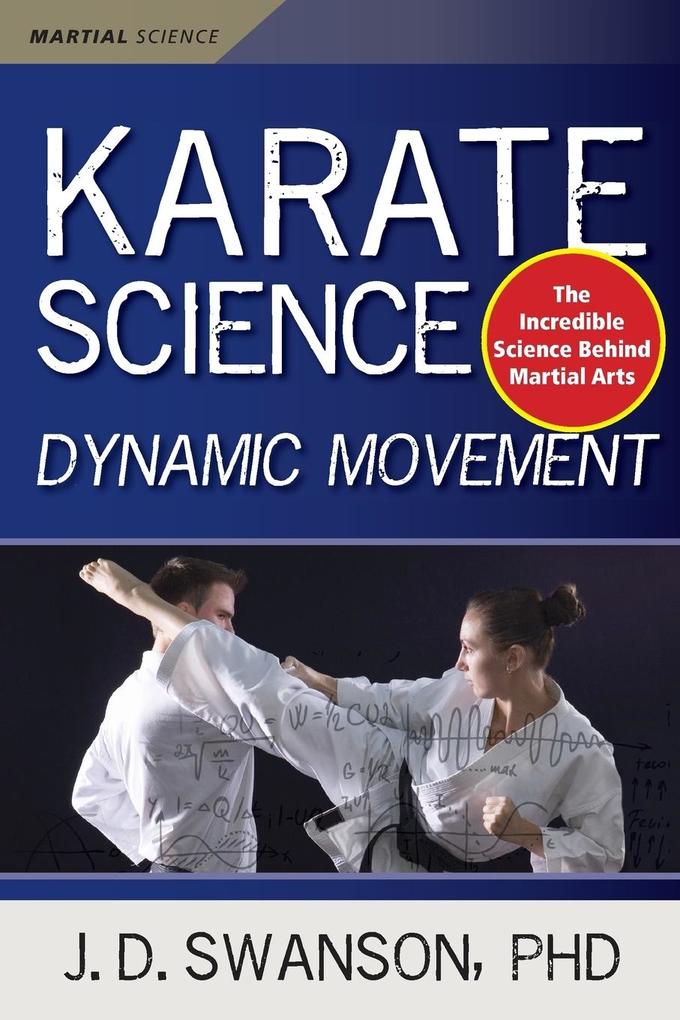
Dynamics, motion, and sensation are karate's connective tissue. Exploring the mechanics of the human body, Swanson draws on examples from several styles of karate, as well as aikido, taekwondo, and judo. Covered are the techniques and how to do them, biomechanical principles of karate techniques, and internal movement of karate.
Inhaltsverzeichnis
Foreword by Robin Rielly
Foreword by James Field
Acknowledgments
PART 1: The Techniques and How to Do Them
CHAPTER 1: An Introduction and How to Use This Book
CHAPTER 2: The Four Fundamental Requirements of Martial Arts
CHAPTER 3: With What and How Do I Make a Hitting Surface?
CHAPTER 4: Stances, the Body Postures of Karate
CHAPTER 5: The Dynamics of Stances
CHAPTER 6: Tsuki: Thrusting Techniques
CHAPTER 7: Keri: Kicking Techniques
CHAPTER 8: Uchi: Striking Techniques
CHAPTER 9: Uke: Blocking Techniques
CHAPTER 10: Kuzushi: Techniques of Breaking Balance
PART 2: Principles of Karate Techniques
CHAPTER 11: How the Body Works: Joints and Muscles
CHAPTER 12: How the Body Works: Balance
CHAPTER 13: Biomechanics: How Do I Hit Something Hard?
PART 3: Internal Movement of Karate
CHAPTER 14: If I Jiggle My Hips, Do I Hit Someone Harder? Hip Vibration
CHAPTER 15: Hit Them Like a Steam Train: Using Body Shifting to Generate Translational Power
CHAPTER 16: Rockin’ and Rollin’: Rotation of the Body to Create Power, Coordination of Movement, and Superior Body Position
CHAPTER 17: Breathing: The Key to Coordination
CHAPTER 18: How Do I Hit Things and Not Fall Over? Keage, Kekomi, and Ate
CHAPTER 19: Is There Equipment That Can Help Me?
CHAPTER 20: Conclusion
Index
About the Author
About the Illustrator