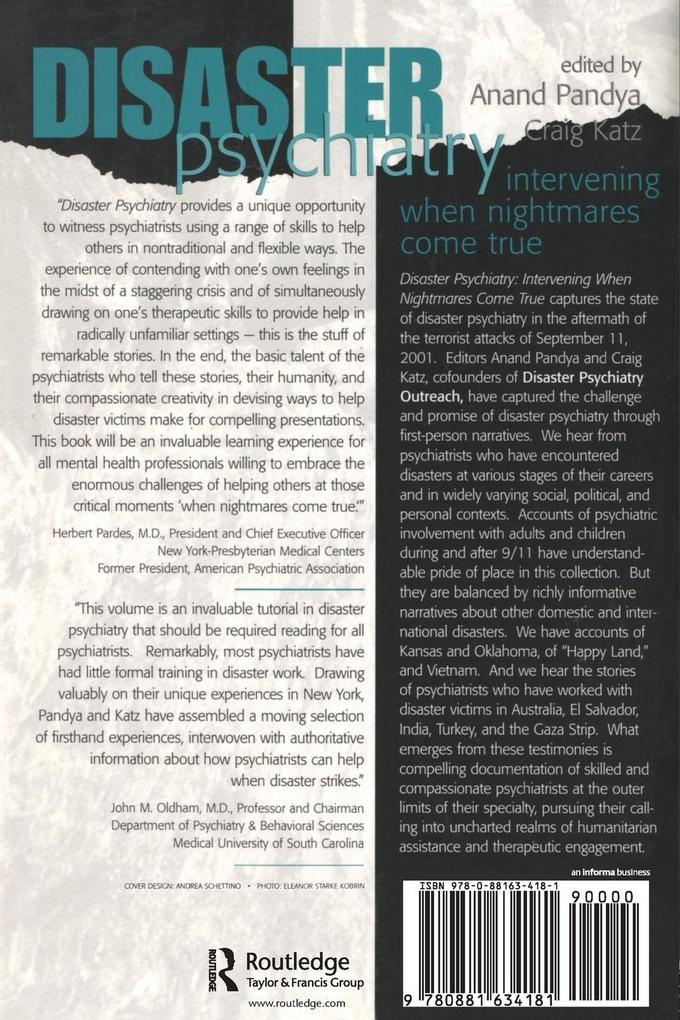
In a series of poignant first-person narratives, psychiatrists capture the challence and promise of disaster psychiatry. Accounts of 9/11 have understandable pride of place, but they are balanced by richly informative narratives about Kansas and Ok
Inhaltsverzeichnis
Pandya, Katz, Introduction. Part I: September 11, 2001.Sickinger, A Woman Named Katherine. Napoli, Life at the Pile. Merlino, The Other Ground Zero. Jones, September 11 in the ER: Brief Disaster Intervention and Compassion Stress. Part II: Disaster Psychiatrists in Training.Bath, Defining the Psychiatrist's Role with Heroes and Tragedies. Graham, You Are Alive: Hope and Help After September 11, 2001. Finkel, Professional and Personal Reactions to September 11, 2001. Part III: International Perspectives.Raphael, Outreach in Australian Disasters. Cohen, Disaster Psychiatry Throughout the Americas. Raasoch, All They Can Do Is Kill Me: Psychiatry in the Gaza Strip. DeLisi, The Acute Aftermath of an Earthquake in El Salvador. Shah, Earthquake in Gujarat, India: The Influence of Culture and Resources on Coping with a Natural Disaster. Dembert, Occupational Psychiatry, Community Psychiatry, and Cultural Considerations in an Aviation Disaster. Edwards, Becoming a Disaster Psychiatrist in Turkey. Part IV: Child and Adolescent Disaster Psychiatry.Kessler, Awakening Creativity in the Wake of Disaster: A Psychiatrist's Journey with the People of El Salvador. Heath, The World Trade Center Disaster and the Setting Up of Kid's Corner. Tompsett, Working with Fatherless Children After September 11, 2001. Part V: Other U.S. Disaters.Rosen, Debriefings in Kansas and Oklahoma. Lindy, Upheaval of the Stars: From Happy Land to the World Trade Center. Meyerson, Vietnam and the World Trade Center: One Psychiatrist's View of Defining Disaster and Working with Its Victims.