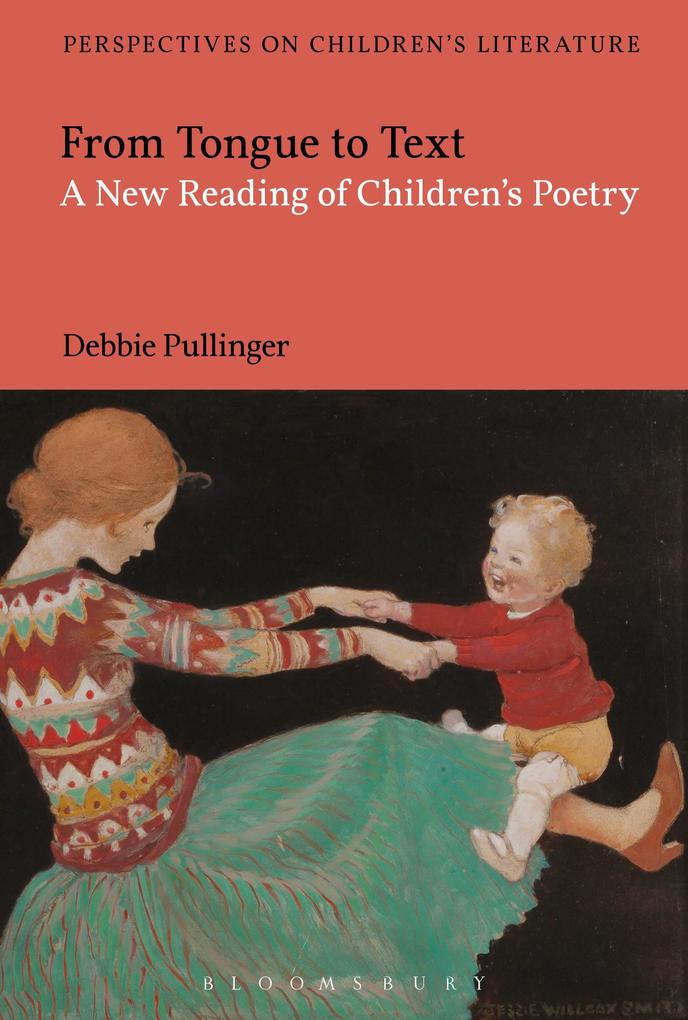
The connection between childhood and poetry runs deep. And yet, poetry written for children has been neglected by criticism and resists prevailing theories of children's literature. Drawing on Walter Ong's theory of orality and on Iain McGilChrist's work on brain function, this book develops a new theoretical framework for the study of children's poetry. From Tongue to Text argues that the poem is a multimodal form that exists in the borderlands between the world of experience and the world of language and between orality and literacy - places that children themselves inhabit. Engaging with a wide range of poetry from nursery rhymes and Christina Rossetti to Michael Rosen and Carol Ann Duffy, Debbie Pullinger demonstrates how these 'tactful' works are shaped by the dynamics of orality and textuality.
Inhaltsverzeichnis
Introduction< BR> Children's Poetry: the problem child< BR> Mind and Body< BR> Part One: Tact< BR> The Hidden Child< BR> Not Narrative< BR> In our right minds? < BR> The infancy of language< BR> The language of infancy< BR> The crossing< BR> The container< BR> Tactful language< BR> Part Two: Tongue< BR> Ear and voice< BR> Orality and vocality< BR> And another thing< BR> Making lists< BR> Again and again< BR> Here and now< BR> All join in! < BR> Live and in performance< BR> Part Three: Text< BR> Hand and eye< BR> From performance to page< BR> From A to Z< BR> The poetics of the page< BR> The distances of text< BR> The child and the text< BR> < BR> Conclusion< BR> Glossary< BR> Bibliography< BR> Index