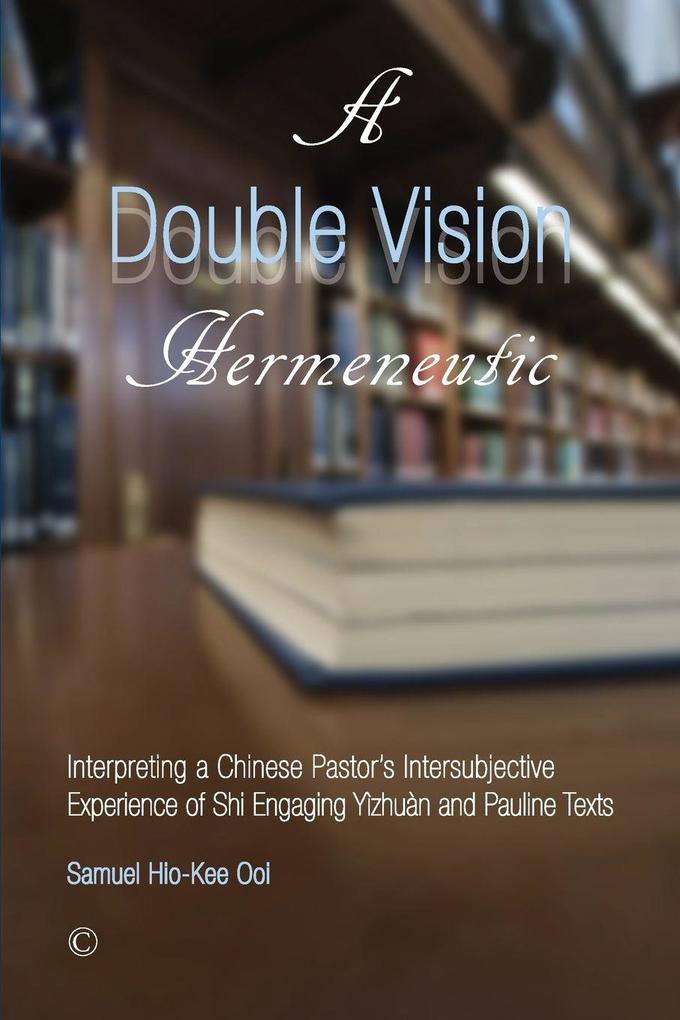
A subtle and multi-faceted exploration of the Chinese Christian experience through the author's creative engagement with key Chinese and Christian texts.
The aim of this thesis is to unfold the multilayered intersubjective experience of the author himself, a Chinese pastor. The author postulates himself as the subject in whom the said experience was evident, so that it can be analyzed and interpreted. The author argues for a cultural-linguistic experience of shì as the locus at which the intersubjective experience takes place. He then shows that such experience embodies a Chinese Christian's 'two texts' inheritance, and argues that it is through unfolding or revealing of such experience that the nature of his relationship with them can be demonstrated.
Inhaltsverzeichnis
Acknowledgments Lists of Abbreviations Editorial Conventions, Use of Sources and Research Matters Abstract Introduction 1 Surveying Chinese Indigenous Theological Approaches 2 Constructing a Double Vision Hermeneutic 3 Text A1: Shì as a Cultural-linguistic and Traditionary Text 4 Interpreting Text A1: Shì with Text A2: Yìzhuàn 5 Text B1: Principalities and Powers: A Survey on Contemporary Discourse 6 Power in Text B2: Pauline Text I: Galatians 7 Power in Text B2: Pauline Text II: Corinthians 8 The Double Vision Hermeneutics of a Chinese Pastor's Intersubjective Experience of Shì Engaging Yìzhuàn and Pauline Texts Appendix I: 64 Hexagrams Appendix II: English Names of 64 Hexagrams Glossary of Chinese Expressions Selected Bibliography Author Index Subject Index