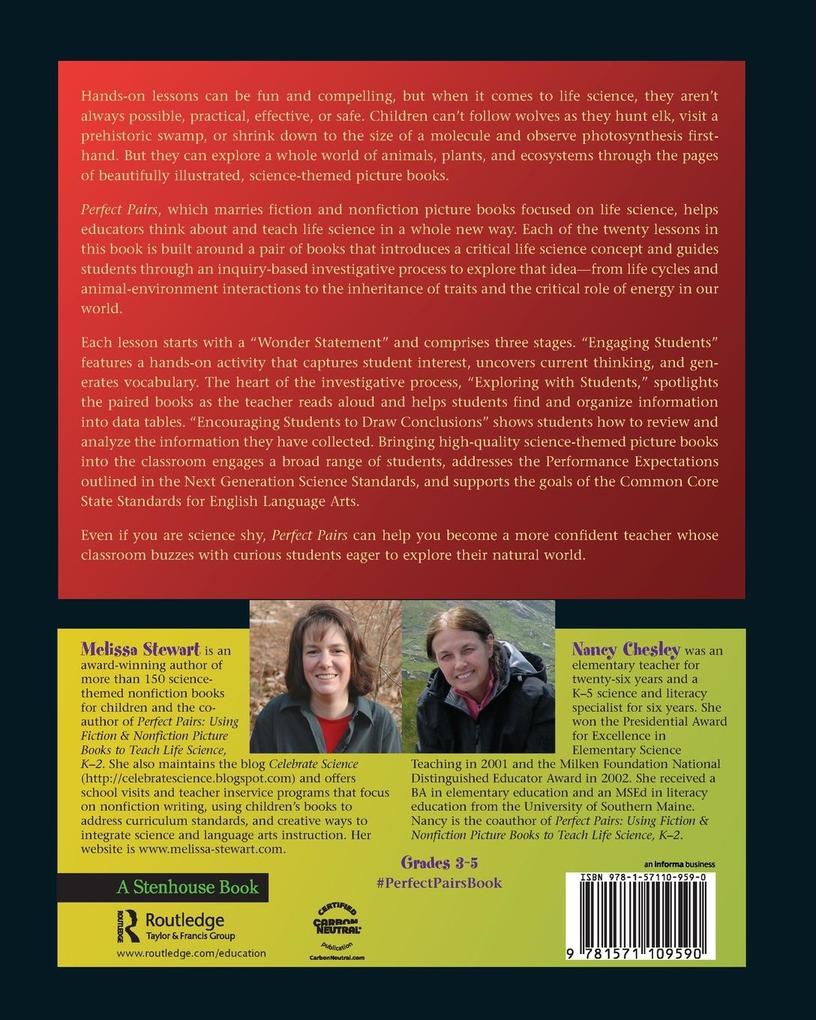
Hands-on lessons can be fun and compelling, but when it comes to life science, they aren't always possible, practical, effective, or safe. Children can't follow wolves as they hunt elk, visit a prehistoric swamp, or shrink down to the size of a molecule and observe photosynthesis firsthand.
Inhaltsverzeichnis
Introduction; Getting Started; Meeting the Standards; Lessons for Grade 3; Lesson 3.1: What the Lives of All Creatures Have in Common, Even When Their Life Cycles Are Different; Lesson 3.2: How Being Part of a Group Helps Animals Survive; Lesson 3.3: Why Some Animals Look Different from Their Family Members; Lesson 3.4: What Fossils Can Tell Us About Life and Environments Long Ago; Lesson 3.5: How Variations in Characteristics Can Help Some Animals Survive; Lesson 3.6: How Animals Survive in a Cold Environment; Lesson 3.7: How People Try to Solve Problems That Occur When an Environment Changes; Lessons for Grade 4; Lesson 4.1: How Our Body Structures Help Us Survive; Lesson 4.2: How Feathers Help Birds Survive; Lesson 4.3: How a Tree's Structures Help It Survive; Lesson 4.4: How Animals Depend on Their Senses; Lesson 4.5: How Natural Resources Provide Electrical Energy; Lesson 4.6: How Energy Use Affects Environments and the Animals Living There; Lessons for Grade 5; Lesson 5.1A: Where Plants Get Most of the Materials They Use to Grow; Lesson 5.1B: Where Animals Get the Energy They Need to Live and Grow; Lesson 5.2: Why Dead Plants and Animals Don't Pile Up in Natural Places; Lesson 5.3: How Matter Moves Among Living Things and the Environment; Lesson 5.4: How Living Things Depend on Their Environment for Survival; Lesson 5.5: How Introduced Species Can Affect an Ecosystem; Lesson 5.6: How We Can Protect Earth's Resources and Environments