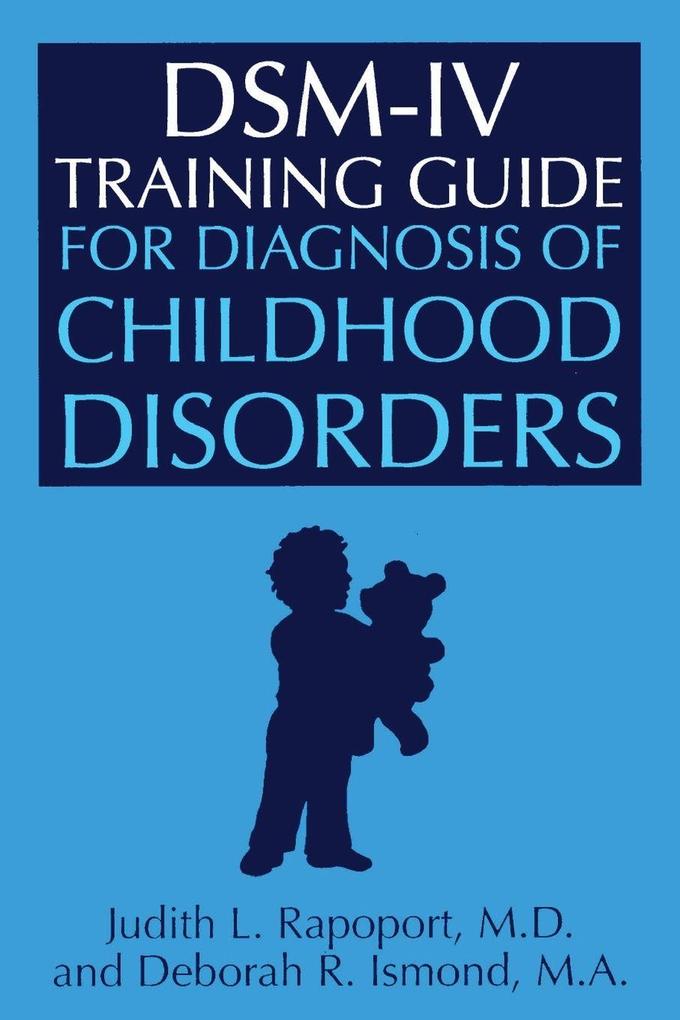
Designed in accordance with DSM-IV, this handbook clarifies and expands upon the definitions used in the classification and diagnosis of childhood disorders. Finely tuned to the revisions encompassed by DSM-IV criteria, this book offers sound, detailed guidance to the range of interpretation and application. While it addresses psychopathology specific to infancy, childhood, and adolescence as well as other psychiatric disorders, the DSM-IV Training Guide for Diagnosis of Childhood Disorders also illuminates differences between adults and children that may emerge during diagnosis.
Inhaltsverzeichnis
Part I An Overview of Psychiatric Diagnosis in Infants, Children, and Adolescents; Chapter 1 Historical Perspective on Diagnosis of Childhood Disorders; Chapter 2 Definition of Disorder; Chapter 3 Specific Diagnostic Issues in Child Psychiatry; Part II Basic Concepts for Use of DSM-IV for Diagnosis of Childhood Disorders; Chapter 4 Classification of Childhood Disorders in DSM-IV; Chapter 5 Use of Axes III, IV, and V; Chapter 6 Treatment Strategies in Relation to Diagnosis; Part III Major Classifications and Differential Diagnoses; Chapter 7 Developmental Abnormalities in the First Years of Life; Chapter 8 Schizophrenia and Other Psychotic Disorders; Chapter 9 Learning Disorders, Communication Disorders, and Motor Skills Disorder; Chapter 10 Attention-Deficit and Disruptive Behavior Disorders; Chapter 11 Disorders Manifesting a Physical Nature; Chapter 12 Eating Disorders; Chapter 13 Mood Disorders; Chapter 14 Anxiety Disorders; Chapter 15 Substance-Related Disorders; Chapter 16 Selective Mutism, Adjustment Disorders, and Gender Identity Disorders; Chapter 17 Diagnosis of Personality Disorders in Children; Chapter 18 Other Conditions That May Be a Focus of Clinical Attention; Chapter 19 Conclusions;