








Das eBook.de Hörbuch Abo - jederzeit, überall, für nur 7,95 € monatlich!
Jetzt entdecken
mehr erfahren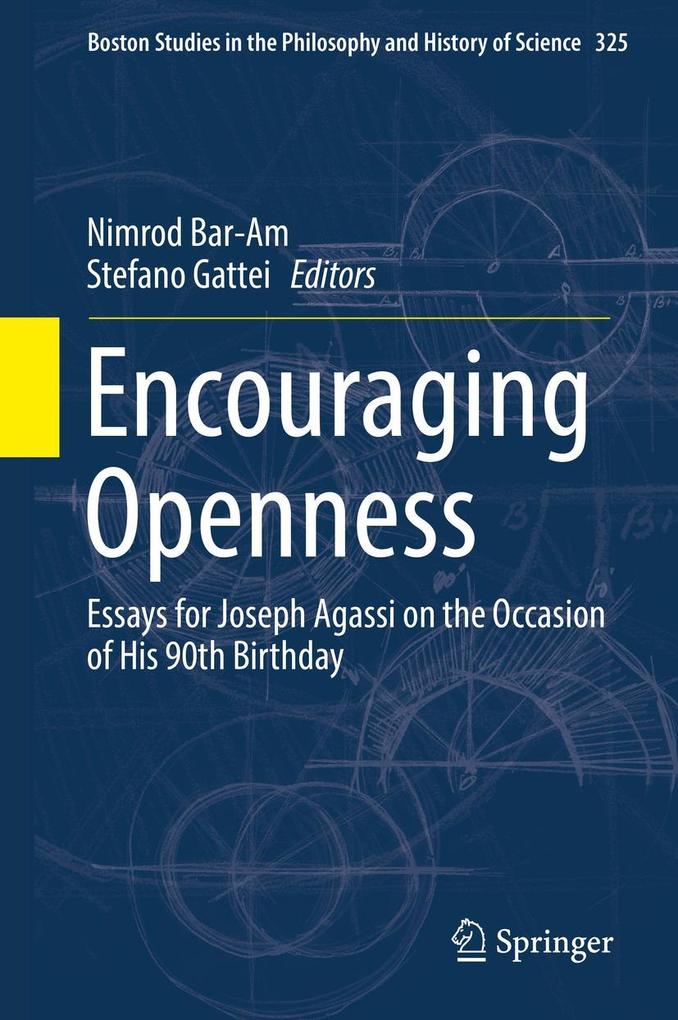
Inhaltsverzeichnis
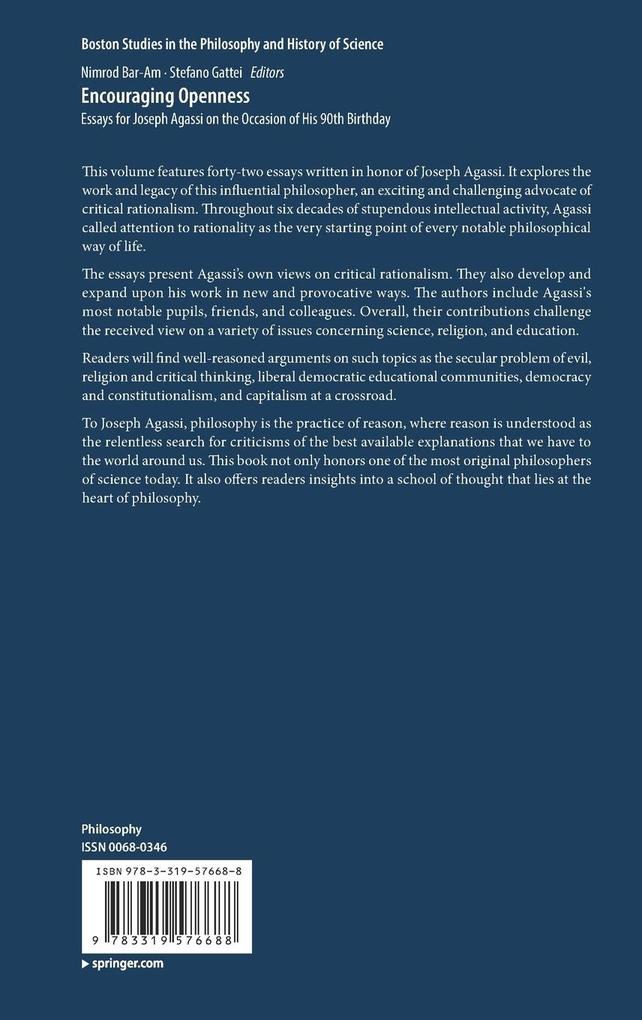
Part 1. Reflections on Rationalism as a Tradition and a Choice. - Chapter 1. Why Don t Scientists Respect Philosophers? (Mario Bunge). - Chapter 2. Evaluative Selection in Multimerit Situations (Nicholas Rescher). - Chapter 3. Joseph Agassi from Metaphysics to Politics (Christopher Donohue). - Chapter 4. Horror Dogmatis (Zuzana Parusniková). - Chapter 5. Comprehensively Critical Metapolitics (Michael Chiariello). - Chapter 6. Feng Shui: An Overlooked Topic for Examination by Critical Rationalists (Michael Matthews). - Part 2. The Sceptic Quest for a Sensible World. - Chapter 7. Verisimilitude: Why and How (Ilkka Niiniluoto). - Chapter 8. The Story of the German Translation of Tarski s Book on Truth (Jan Wole ski). - Chapter 9. Two Philosophical Contributions to Modern Physics (Jagdish Hattiangadi). - Chapter 10. Lessons from the Philosophy of Science to Data Mining and Vice Versa (Abraham Meidan). - Chapter 11. The Mystique of Computer Technology and the Waning of Critical Enquiry (Sheldon Richmond). - Chapter 12. Francis Bacon, Karl Popper, Michael Polanyi, and Modern Experimental Biology (Ute Deichman). - Chapter 13. Ebola in West Africa: Biosocial and Biomedical Reflections (Daniel Cohen). - Part 3. Making Sense of a Changing Past. - Chapter 14. Jacob & Esau Today (Malachi Hacohen). - Chapter 15. Charity, Logic, and Para-clericalism: Rereading Agassi on Koestler on Galileo (Maurice Finocchiaro). - Chapter 16. What is the Problem? Understanding the History of Ideas(William Berkson). - Chapter 17. Reflections on Science and Imagination(Robert S. Cohen). - Chapter 18. The Legends of One Methodology of Science Used throughout Its History and Its Independence from the Institutions in which Science Has Been Conducted (John Wettersten). - Chapter 19. Beyond Wavefunctions: A Time-Symmetric Nonlocal Ontology for Quantum Mechanics (Yakir Aharonov, Eliahu Cohen and Avshalom C. Elitzur). - Part 4. The Open Society and its Challenges. - Chapter 20. Critical Rationalism Applied: A Footnote to
The Siblinghood of Humanity
(Margaret Ng). - Chapter 21.
En Route
to the Siblinghood of Humanity ? (Miriam Fahri Rodrig). - Chapter 22. The Perfect Mediator and His Limitations: Toward a Multifaceted Approach to Peacemaking in the Israeli-Palestinian Struggle (Sapir Handelman). - Chapter 23. Joseph Agassi s Educational Thoughts in
Interchange
(1970-1987) (Ian Winchester). - Chapter 24. Can the Israeli Academia Replace Mandatory Conscription? (Amir Maytal). - Chapter 25. Education for Democracy (Ronald Swartz). - Chapter 26. How Can We Attain Both Democracy and Constitutionalism? (Kiichi Tachibana). - Chapter 27. Civil Nationalism: the Only Buffer against Fascism and Fundamentalism (Chen Yehezkely). - Chapter 28. Obstructing the Realization of Civil Responsibility: Political, Sociological, Historical, and Psychological Aspects of Civil Responsibility (Chemi Ben-Noon). - Chapter 29. The Secular Problem of Evil (John Kekes). - Part 5. The Human Study of Human Culture. - Chapter30. Towards A General Sociology of Science (Ian Jarvie). - Chapter 31. Critical Rationalism in Sociology (Michael Banton). - Chapter 32. Worker Bees and Slave Labor (Hilde Hein). - Chapter 33. The Pitfall of Hypostatization and the Reality of Social Things (Fred Eidlin). - Chapter 34. On Being a Popperian Economist (Lawrence Boland). - Chapter 35. Capitalism at a Crossroad (Raphael Sassower). - Chapter 36. Notes on Revisiting Klappholz and Agassi s Methodological Prescriptions in Economics (Lucien Foldes). - Chapter 37. Joseph Agassi, the M
2
T Seminar, and His Influence on My Work (Richard Lipsey). - Part 6. Philosophical Encounters. - Chapter 38. To Transcend the Popper-Agassi Impasse (Nathaniel Laor). -Chapter 39. Joe Agassi, Intellectual Irritant (Raf Champion). - Chapter 40. Critical Rationalism as Therapy (Michael Segre). - Chapter 41. Dungeons and Dragons: A Lesson in Etiquette from Professor Agassi (Joan Bailey). - Chapter 42. Drive around the Block (Charlie Sawyer).
Es wurden noch keine Bewertungen abgegeben. Schreiben Sie die erste Bewertung zu "Encouraging Openness" und helfen Sie damit anderen bei der Kaufentscheidung.