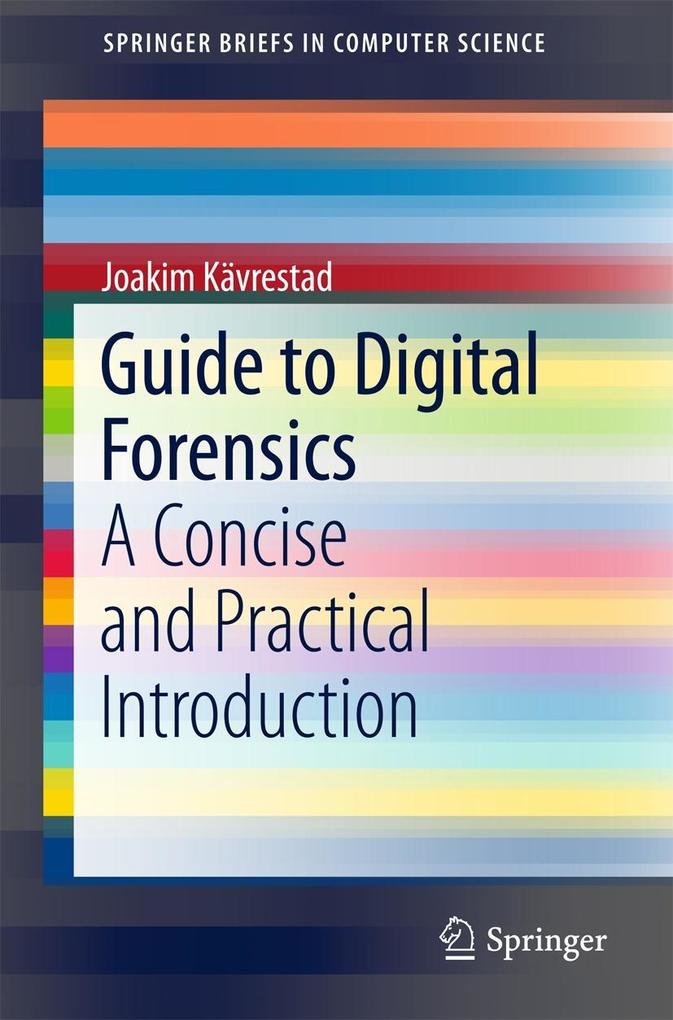
This work introduces the reader to the world of digital forensics in a practical and accessible manner. The text was written to fulfill a need for a book that introduces forensic methodology and sound forensic thinking, combined with hands-on examples for common tasks in a computer forensic examination. The author has several years of experience as a computer forensics examiner and is now working as a university-level lecturer.
Guide to Digital Forensics: A Concise and Practical Introduction is intended for students that are looking for an introduction to computer forensics and can also be used as a collection of instructions for practitioners. The aim is to describe and explain the steps taken during a forensic examination, with the intent of making the reader aware of the constraints and considerations that apply during a fo
rensic examination in law enforcement and in the private sector. Upon reading this book, the reader should have a proper overview of the field of digital forensics, starting them on the journey of becoming a computer forensics expert.Inhaltsverzeichnis
Part I: Theory
. - What is Digital Forensics? . - What is Cybercrime? . - Computer Theory. - Collecting Evidence. - Analyzing Data and Writing Reports. -
Part II: Putting it into Practice
. - Collecting Data. - Indexing, Searching and Cracking. - Finding Artifacts. - Some Common Questions. - FTK Specifics. - Basic Memory Analysis. -
Part III: Vocabulary
. - Vocabulary. -
Part IV: Appendices
. - Appendix A: Solutions. - Appendix B: Useful Scripts. - Appendix C: Sample Report Template. - Appendix D: List of Time Zones. - Appendix E: Complete Jitsi Chat Log.
Es wurden noch keine Bewertungen abgegeben. Schreiben Sie die erste Bewertung zu "Guide to Digital Forensics" und helfen Sie damit anderen bei der Kaufentscheidung.