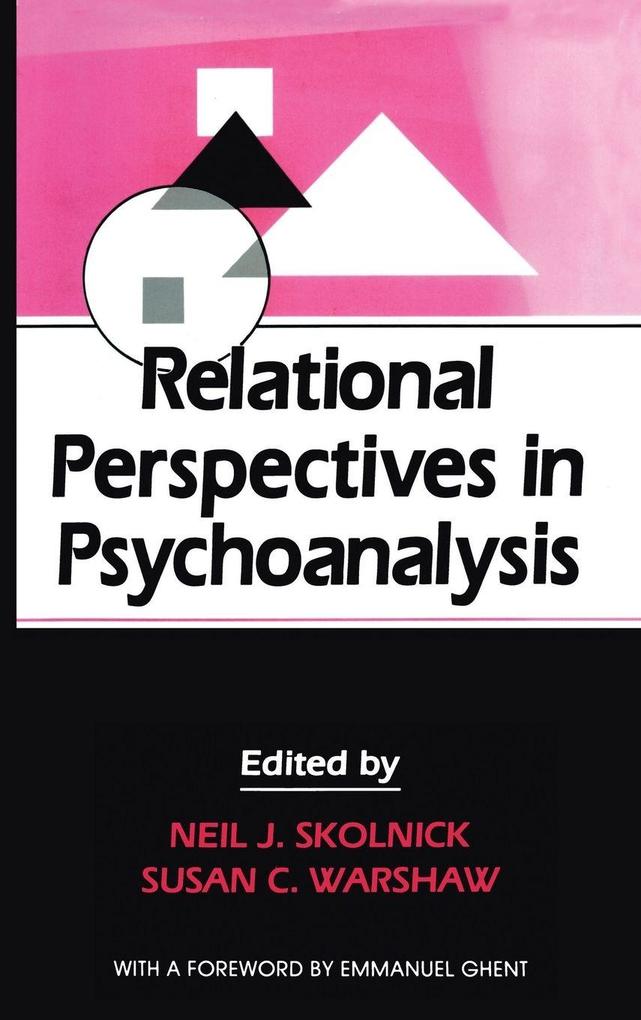
Over the past decade, a new psychoanalytic orientation has emerged that conceptualizes human relations as the fundamental building blocks of mental life. This orientation, which draws on the insights of interpersonal psychoanalysis, ego psychology, object relations theory, self psychology, and recent infancy research looks to relational configurations, real and fantasied, to account for personality development, the genesis of psychopathology, the special characteristics of the psychoanalytic situation, and the therapeutic potential of psychoanalytic treatment. Transcending both a naive environmentalism and the limitations of classical drive theory, relational psychoanalysis is premised on a "relational" recasting of the very meaning of the "intrapsychic", the "unconscious", "mental conflict", and the "drivenness" of human behavior. The "intrapsychic", for example, is seen as constituted largely by the internalization of interpersonal experience, mediated by biologically imposed constraints. "Conflict", on the other hand, is reconceptualized as taking place between opposing relational configurations rather than between drive and defense. Relational Perspectives in Psychoanalysis represents a watershed in the articulation of this new paradigm. Editors Neil Skolnick and Susan Warshaw offer a rich overview of issues currently being addressed by clinicians and theoreticians writing from a variety of complementary relational viewpoints. Chapter topics cover the roots of the relational orientation in early psychoanalytic thinking, the impact of relational considerations on developmental theory, relational conceptions of "self" and "other", and clinical applications of relational perspectives.Skolnick and Warshaw acknowledge the significant differences among relational theorists while suggesting that, collectively, they represent "a momentous shift in the center of gravity in psychoanalytic theory and practice". The papers in this collection testify to the reinvigoration of theory and practice destined to flow from this new center of gravity.
Inhaltsverzeichnis
Foreword, Ghent Introduction, Skolnick, Warshaw 1. True Selves, False Selves, and the Ambiguity of Authenticity, Mitchell 2. Self Psychology: The Self and Its Vicissitudes Within a Relational Matrix, Fosshage 3. Recognition and Destructoin: An Outline of Intersubjectivity, Benjamin 4. A Dyadic Systems View of Communication, Beebe, Jaffe, Lachmann 5. The Contribution of Mother-Infant Mutual Influence in the Origins of Self- and Objection Representations, Beebe, Lachmann 6. Dialogues as Transitional Space: A Rapprochement of Psychoanalysis and Developmental Psycholinguistics, Harris 7. Mutative Factors in Child Psychoanalysis: A Comparison of Diverse Relational Perspectives, Warshaw 8. Relational Perspectives on Child Psychoanalytic Psychotherapy, Altman 9. Attachment Research: An Approach to a Developmental Relational Perspective, Silverman 10. Secrets in Clinical Work: A Relational Point of View, Skolnick, Davies 11. Money Matters in Psychoanalysis, Aron, Hirsch 12. On the Occurrence of the Isakower Phenomenon in a Schizoid Patient, Bromberg 13. Eros Reclaimed: Recovering Freud's Relational Theory, Reisner 14. Some Historical Aspects of Contemporary Pluralistic Psychoanalysis, Wolstein