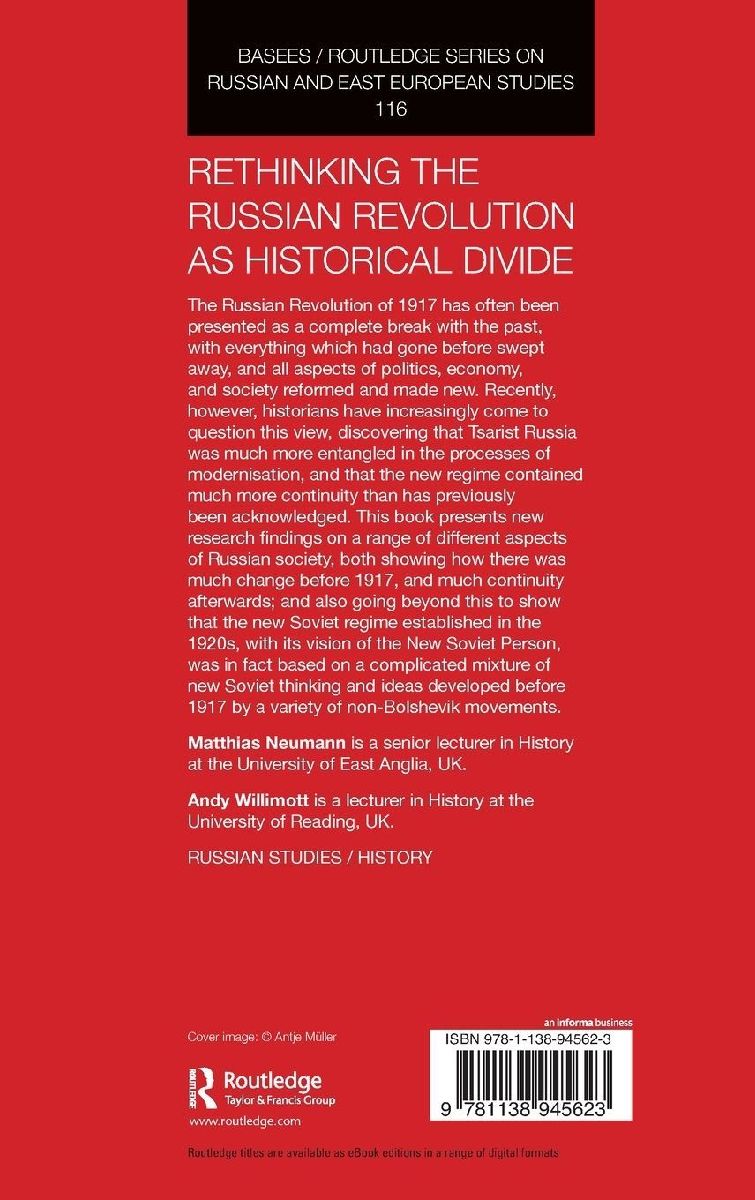
This book presents new research findings on different aspects of Russian society, both showing how there was much reform before 1917, and much continuity afterwards. It also show that the new regime established in the 1920s was based on a mixture of new Soviet thinking and ideas developed before 1917 by a variety of non-Bolshevik movements.
Inhaltsverzeichnis
Crossing the Divide: Tradition, Rupture, and Modernity in Revolutionary Russia
Andy Willimott and Matthias Neumann
Part I - The New State, The Past, and the People
1. The Problem of Persistence
J. Arch Getty
2. How Revolutionary was Revolutionary Justice? Legal Culture in Russia across the Revolutionary Divide
Matthew Rendle
3. 'Taking a Leap across the Tsarist Throne': Revolutionizing the Russian Circus
Miriam Neirick
4. The Communist Youth League and the Construction of Soviet Obshchestvennost'
Matthias Neumann
Part II - The People, the Past, and the New State
5. For the People: The Image of Ukrainian Teachers as Public Servants
Matthew D. Pauly
6. 'The Woman of the Orient is not the Voiceless Slave Anymore' - the Non-Russian Women of Volga-Ural Region and 'Women's Question'
Yulia Gradskova
7. Devotion and Revolution: Nursing Values
Susan Grant
8. What did Historians do at the Time of the Great Revolution?
Vera Kaplan
9. Speaking more than Bolshevik: Humour, Subjectivity, and Crosshatching in Stalin's 1930s
Jonathan Waterlow
Epilogue: The Russian Tradition? Discourses of Tradition and Modernity
Peter Waldron
Bibliography