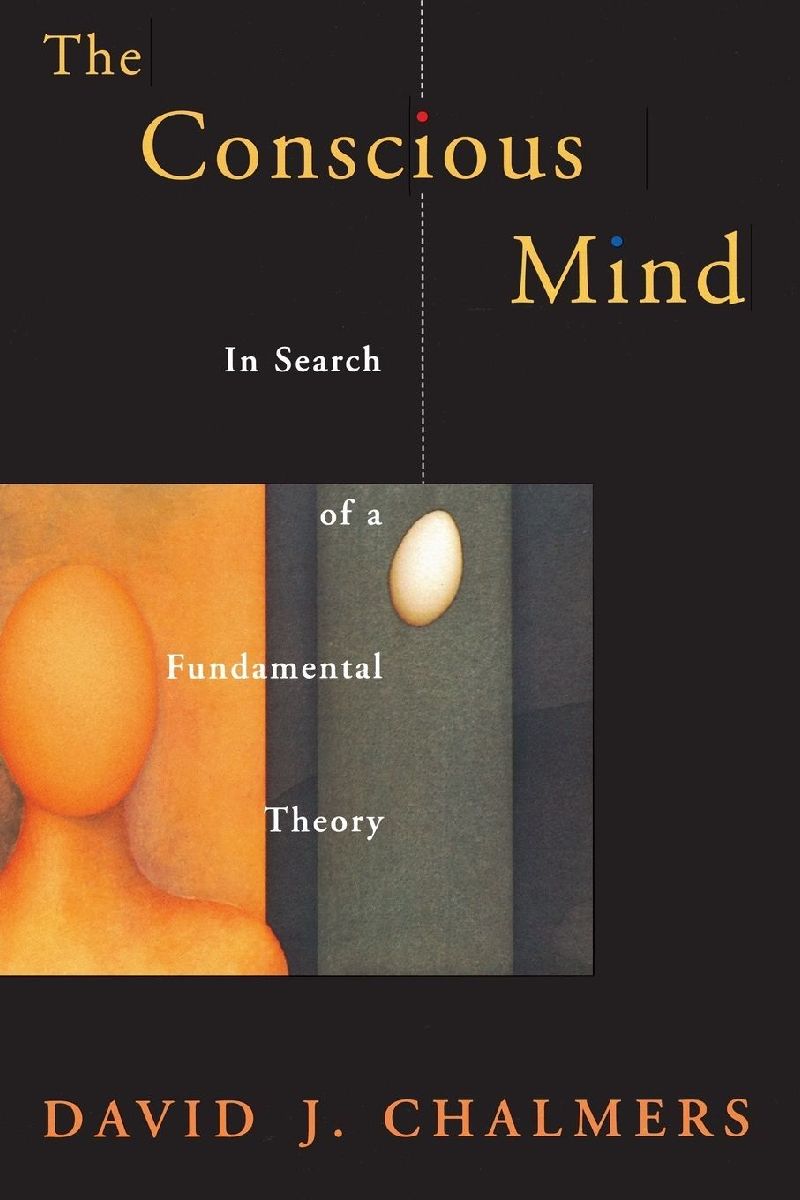
What is consciousness? How do physical processes in the brain give rise to the self-aware mind and to feelings as profoundly varied as love or hate, aesthetic pleasure or spiritual yearning? David J. Chalmers unveils a major new theory of consciousness, one that rejects the prevailing reductionist trend of science, while offering provocative insights into the relationship between mind and brain. Writing in a thought-provoking style, Chalmers proposes that conscious experience must be understood as an irreducible entity similar to such physical properties as time, mass, and space that exists at a fundamental level and cannot be understood as the sum of its parts. Engaging and penetrating, this book adds a fresh new perspective to the subject that is sure to spark debate about our understanding of the mind for years to come.
Inhaltsverzeichnis
- I. Preliminaries- 1: Two Concepts of Mind- 2: Supervenience and Explanation- II. The Irreducibility of Consciousness- 3: Can Consciousness be Reductively Explained? - 4: Naturalistic Dualism- 5: The Paradox of Phenomenal Judgment- III. Toward a Theory of Consciousness- 6: The Coherence between Consciousness and Cognition- 7: Absent Qualia, Fading Qualia, Dancing Qualia- 8: Consciousness and Information: Some Speculation- IV. Applications- 9: Strong Artificial Intelligence- 10: The Interpretation of Quantum Mechanics- Notes- Bibliography