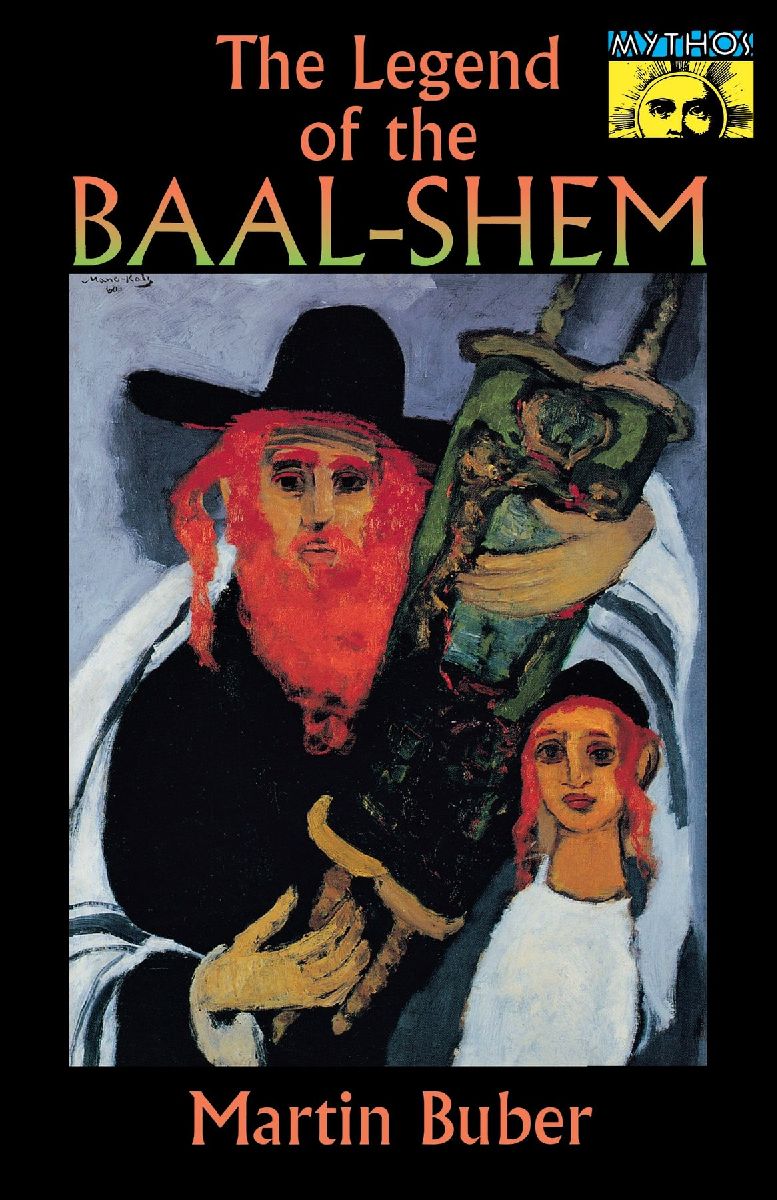
The Jewish philosopher Martin Buber spoke directly to the most profound human concerns in all his works, including his discussions of Hasidism, a mystical-religious movement founded in Eastern Europe by Israel ben Eliezer, called the Baal-Shem (the Master of God's Name). Living in the first part of the eighteenth century in Podolia and Wolhynia, the Baal-Shem braved scorn and rejection from the rabbinical establishment and attracted followers from among the common people, the poor, and the mystically inclined. Here Buber offers a sensitive and intuitive account of Hasidism, followed by twenty stories about the life of the Baal-Shem. This book is the earliest and one of the most delightful of Buber's seven volumes on Hasidism and can be read not only as a collection of myth but as a key to understanding the central theme of Buber's thought: the I-Thou, or dialogical, relationship. < BR> < BR> < BR> "All positive religion rests on an enormous simplification of the manifold and wildly engulfing forces that invade us: it is the subduing of the fullness of existence. All myth, in contrast, is the expression of the fullness of existence, its image, its sign; it drinks incessantly from the gushing fountains of life."--Martin Buber, from the introduction
Inhaltsverzeichnis
FOREWORD 7< BR> INTRODUCTION 9< BR> The Life of the Hasidim 17< BR> HITLAHAVUT: ECSTASY 17< BR> AVODA: SERVICE 23< BR> KAVANA: INTENTION 33< BR> SHIFLUT: HUMILITY 41< BR> The Werewolf 51< BR> The Prince of Fire 56< BR> The Revelation 62< BR> The Martyrs and the Revenge 73< BR> The Heavenly Journey 79< BR> Jerusalem 82< BR> Saul and David 87< BR> The Prayer-Book 92< BR> The Judgement 98< BR> The Forgotten Story 107< BR> The Soul Which Descended 121< BR> The Psalm-Singer 131< BR> The Disturbed Sabbath 139< BR> The Conversion 149< BR> The Return 161< BR> From Strength to Strength 17, < BR> The Threefold Laugh 179< BR> The Language of the Birds 185< BR> The Call 194< BR> The Shepherd 202< BR> GLOSSARY 209< BR>