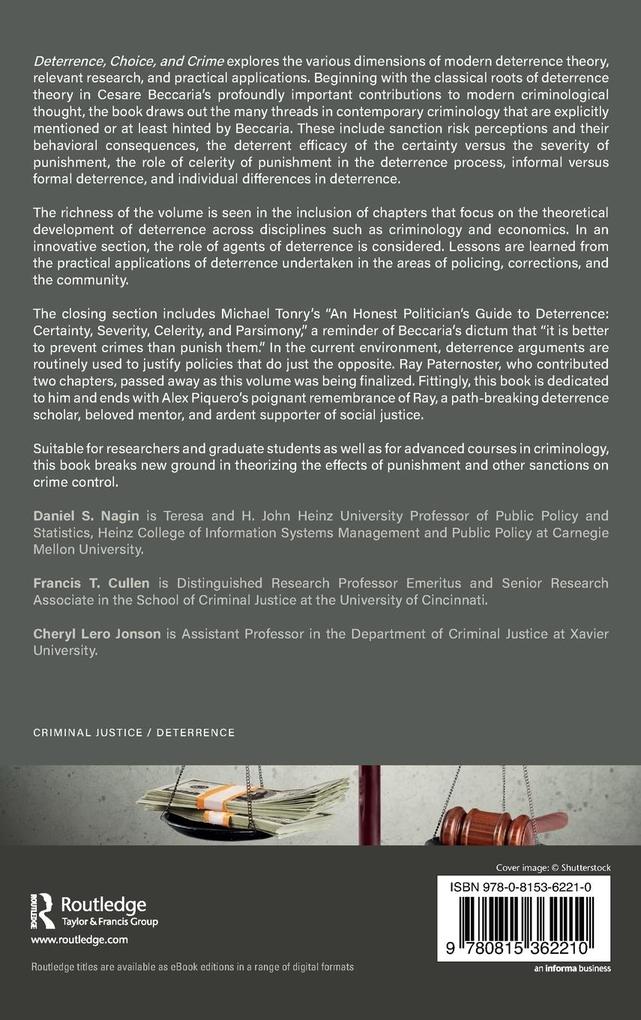
Deterrence, Choice, and Crime explores the various dimensions of modern deterrence theory, relevant research, and applications. Beginning from the classical roots of deterrence theory in Cesare Beccaria's profoundly important contributions to modern criminological thought, the book draws out the many threads in contemporary criminology that are explicitly mentioned or at least hinted by Beccaria. Subsequent chapters unpack the effects of deterrence, examine the agents of deterrence, and look at the social costs of current criminal justice policies. Suitable for researchers and graduate students as well as for advanced courses in criminology.
Inhaltsverzeichnis
Part I. Theories of Deterrence 1. Classical Theory: The Emergence of Deterrence Theory in the Age of Enlightenment 2. The Economics of Deterrence: A Review of the Theory and Evidence 3. Perceptual Deterrence Theory 4. Criminological Theory and Deterrence Part II. Unpacking the Effects of Deterrence 5. Informal and Formal Sanctions 6. Deterrent Effects of the Certainty and Severity of Punishment 7. Celerity and Deterrence 8. Individual Difference and Deterrence Part III. Agents of Deterrence 9. Police Interventions 10. Place Management, Guardianship, and the Establishment of Order 11. Corrections and Deterrence 12. Community Members and Deterrence Part IV. Final Thoughts 13. An Honest Politician's Guide to Deterrence: Certainty, Severity, Celerity, and Parsimony 14. Remembering Ray Paternoster: Contributions to Deterrence, Criminology, and His Students