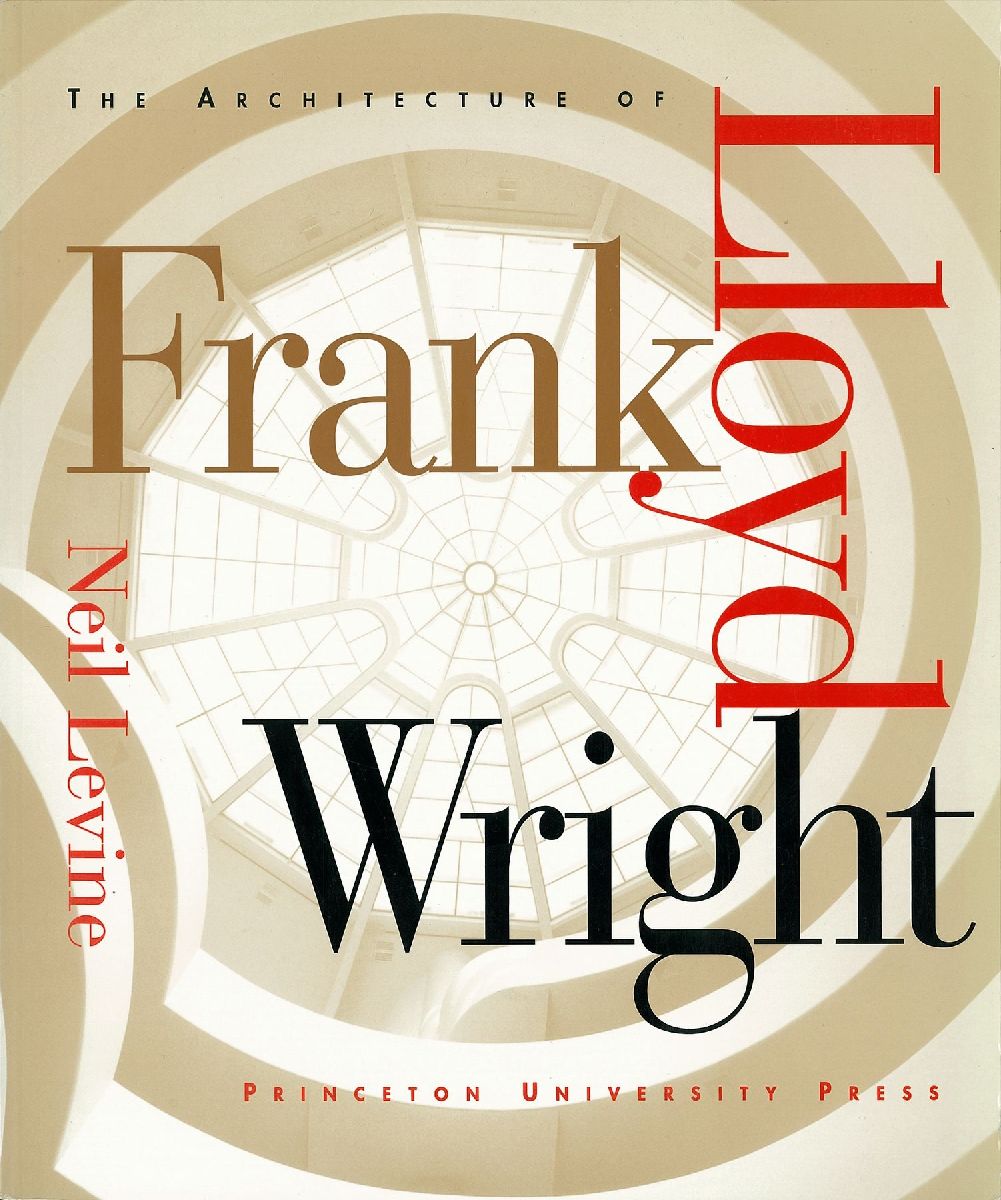
Neil Levine's study of the architecture of Frank Lloyd Wright, beginning with his work in Oak Park in the late 1880s and culminating in the construction of the Guggenheim museum in New York and the Marin County Civic Center in the 1950s, if the first comprehensive and in-depth analysis of the architect's entire career since the opening of the Wright Archives over a decade ago. The most celebrated and prolific of modern architects, Wright built more than four hundred buildings and designed at least twice as many more. The characteristic features of his work--the open plan, dynamic space, fragmented volumes, natural materials, and integral structure--established the basic way that we think about modern architecture. For a general audience, this engaging book provides an introduction to Wright's remarkable accomplishments, as seen against the background of his eventful and often tragic life. For the architect or the architectural historian, it will be an important source of new insights into the development of Wright's whole body of work. It integrates biographical and historical material in a chronologically ordered framework that makes sense of his enormously varied career, and it provides over four hundred illustrations running parallel to the text. < BR> < BR> < BR> Levine conveys the meanings of the continuities and changes that he sees I Wright's architecture and thought by focusing successive chapters on his most significant buildings, such as the Winslow House, Taliesin, Hollyhock House, Fallingwater, Tailsen west, and the Guggenheim Museum. A new understanding of the representational imagery and narrative structure of Wright's work, along with a much-needed reconsideration of its historical and contextual underpinnings, gives this study a unique place in the writings on Wright. In contrast to the emphasis a previous generation of critics and historians placed on Wright's earlier buildings, this book offers a broader perspective that sees Wright's later work as the culmination of his earlier efforts and the basis for a new understanding of the centrality of his career to the evolution of modern architecture as a whole.
Inhaltsverzeichnis
Preface and Acknowledgments
Introduction
Ch. I
Beginnings of the Prairie House
1
Ch. II
Abstraction and Analysis in the Architecture of the Oak Park Years
23
Ch. III
Voluntary Exile in Fiesole
59
Ch. IV
The Story of Taliesin
75
Ch. V
Building against Nature on the Pacific Rim
113
Ch. VI
From Los Angeles to Lake Tahoe and Death Valley
149
Ch. VII
Writing An Autobiography, Reading the Arizona Desert
191
Ch. VIII
The Temporal Dimension of Fallingwater
217
Ch. IX
The Traces of Prehistory at Taliesin West
255
Ch. X
The Guggenheim Museum's Logic of Inversion
299
Ch. XI
Signs of Identity in an Increasingly One-Dimensional World
Product Safety Contact, Easy Access System Europe, gpsr.requests@easproject.com
Barrierefreiheit
Keine Information zur Barrierefreiheit bekannt
Pressestimmen
Wright's personal history was extraordinary by any standards, and it is the great strength of Neil Levine's book that he manages to correlate the developments in Wright's architecture with the events in his life, without being sentimental or over-reverent.
Bewertungen
0 Bewertungen
Es wurden noch keine Bewertungen abgegeben. Schreiben Sie die erste Bewertung zu "The Architecture of Frank Lloyd Wright" und helfen Sie damit anderen bei der Kaufentscheidung.