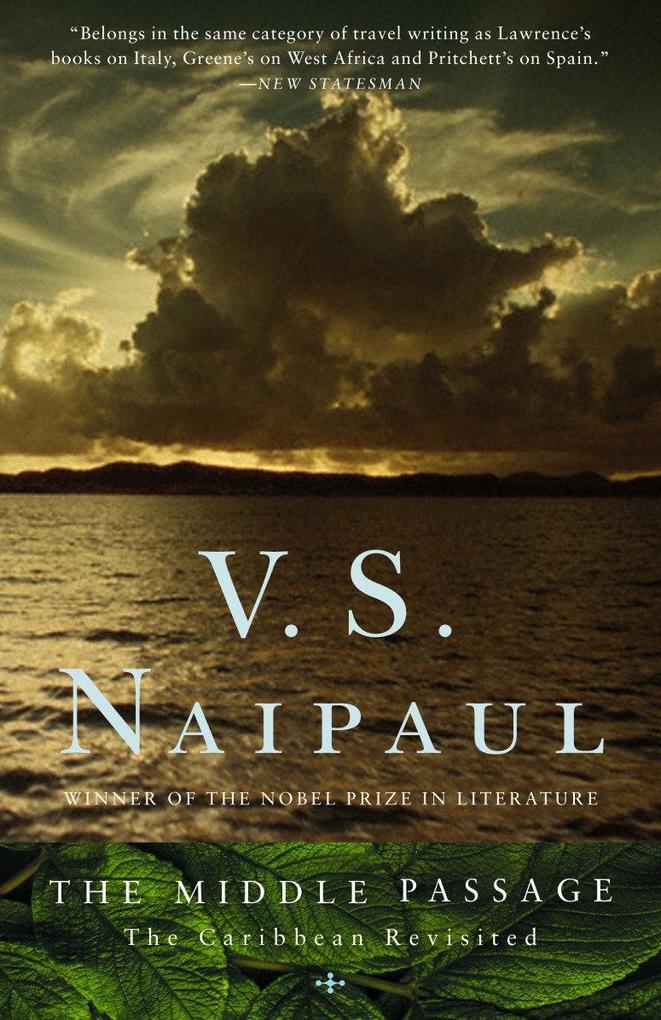
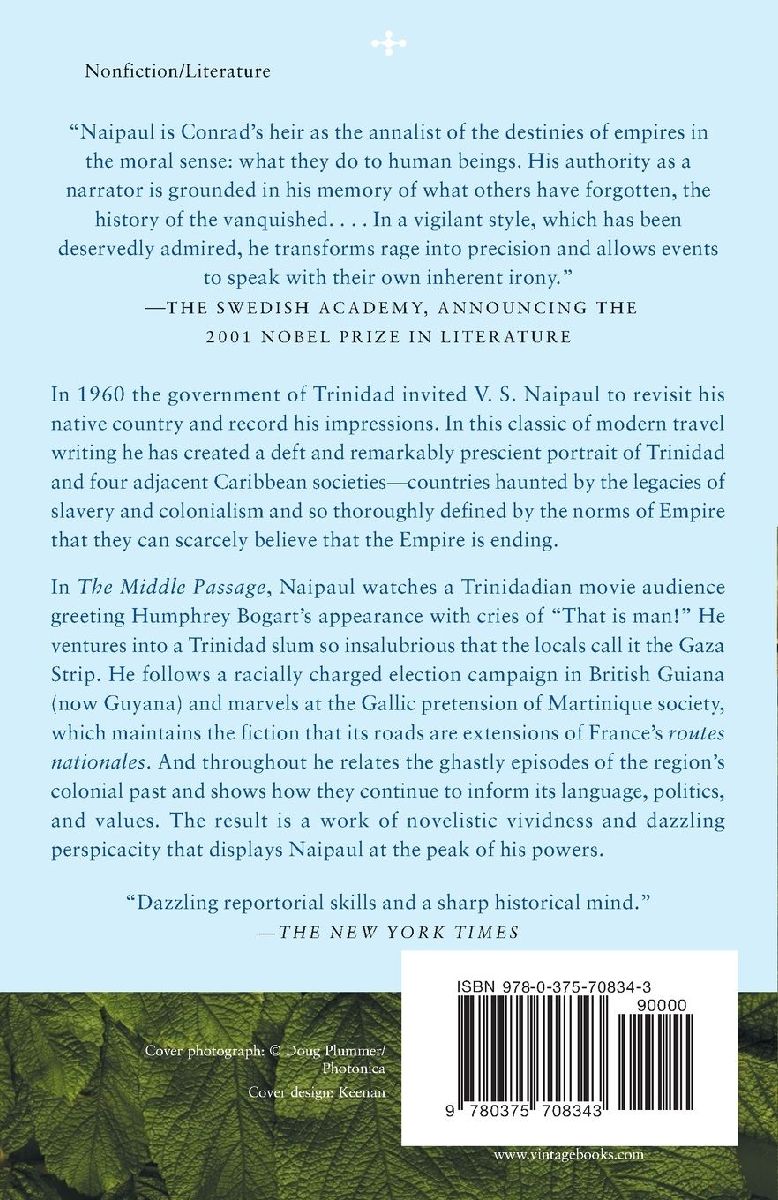
From the Nobel Prize-winning author comes a classic of modern travel writing— a deft portrait of Trinidad and the four adjacent Caribbean societies still haunted by the legacies of slavery and colonialism. < BR> < BR> “ Belongs in the same category of travel writing as Lawrence’ s books on Italy, Greene’ s on West Africa and Pritchett’ s on Spain. ” — New Statesman< BR> < BR> In 1960 the government of Trinidad invited V. S. Naipaul to revisit his native country and record his impressions. In The Middle Passage, Naipaul watches a Trinidadian movie audience greeting Humphrey Bogart’ s appearance with cries of “ That is man! ” He ventures into a Trinidad slum so insalubrious that the locals call it the Gaza Strip. He follows a racially charged election campaign in British Guiana (now Guyana) and marvels at the Gallic pretension of Martinique society, which maintains the fiction that its roads are extensions of France’ s routes nationales. And throughout he relates the ghastly episodes of the region’ s colonial past and shows how they continue to inform its language, politics, and values. The result is a work of novelistic vividness and dazzling perspicacity that displays Naipaul at the peak of his powers.