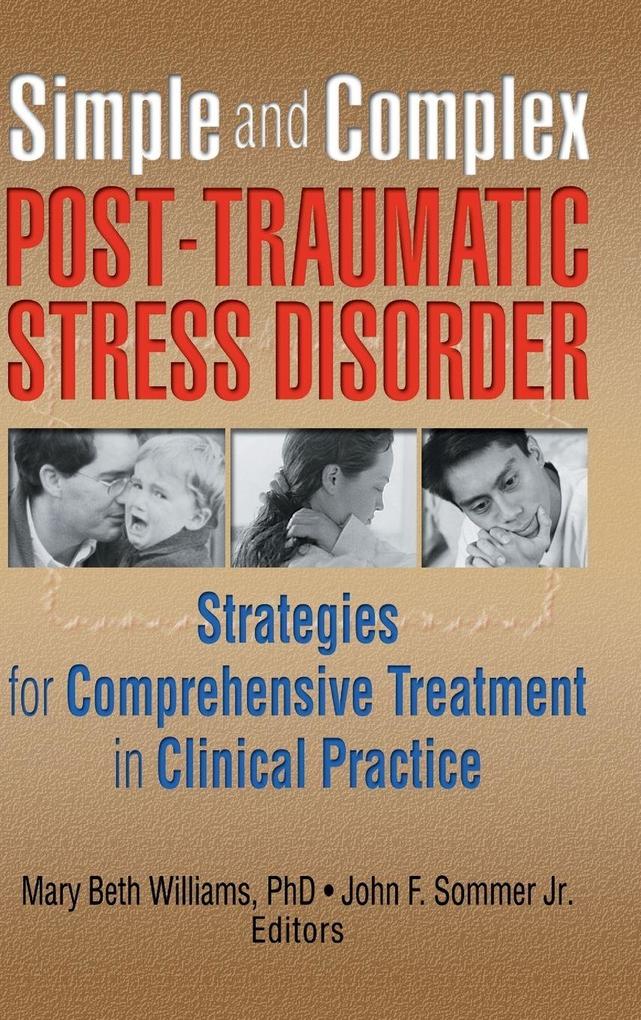
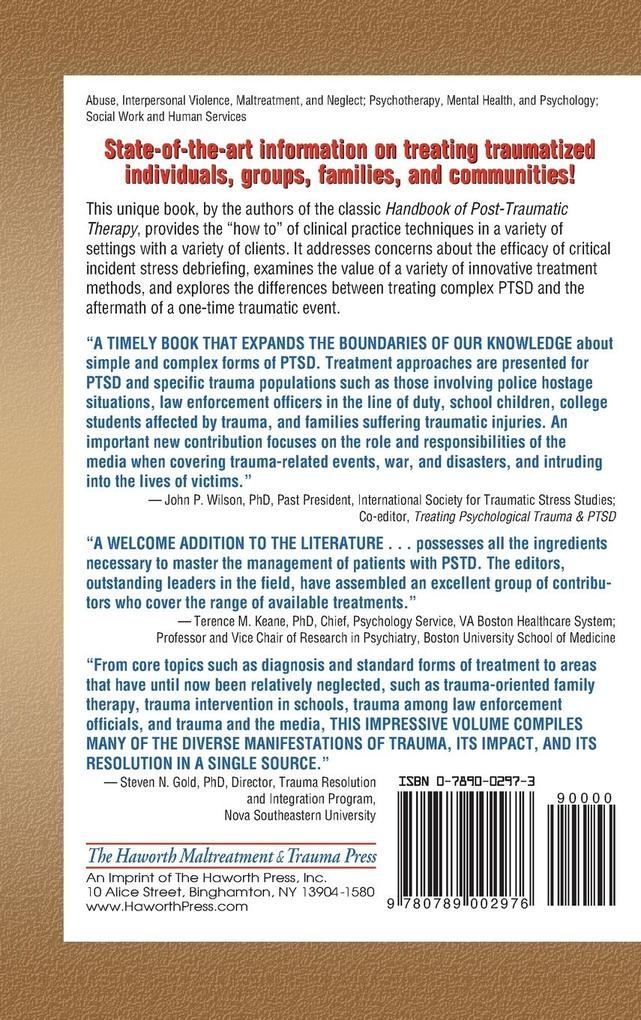
Simple and Complex Post-Traumatic Stress Disorder: Strategies for Comprehensive Treatment in Clinical Practice delivers state-of-the-art methods, techniques, and information to help traumatized individuals, groups, families, and communities. This unique book, by the authors of the classic Handbook of Post-Traumatic Therapy, provides the “how to” of clinical practice techniques in a variety of settings with a variety of clients. It addresses concerns about the efficacy of critical incident stress debriefing, examines the value of a variety of innovative treatment methods, and explores the differences between treating complex PTSD and the aftermath of a one-time traumatic event.
Inhaltsverzeichnis
* About the Editors
* Contributors
* Preface: Trauma in the New Millennium
* Purpose of the Book
* Chapter Organization
* Section I: Introduction
* Chapter 1. A Short History of PTSD from the Military Perspective
* Chapter 2. Assessment and Diagnosis of PTSD in Adults: A Comprehensive Psychological Approach
* Introduction
* Diagnosis versus Assessment
* Taking a Psychosocial History
* Methods of Assessment
* Using Assessment Results in Making Clinical Recommendations
* Summary
* Chapter 3. Approaches to the Treatment of PTSD
* Introduction
* The Symptomatology of PTSD
* Principles of Treatment
* Group Psychotherapy
* Concluding Remarks
* Chapter 4. Psychopharmacological Treatment in PTSD
* Introduction
* Antidepressants
* Buspirone
* Lithium
* Anticonvulsants
* Benzodiazepines
* Neuroleptics or Antipsychotic Agents ("Major Tranquilizers")
* Adrenergic Agents
* Opiate Antagonists
* Conclusion
* Section II: Treatment of PTSD in General
* Chapter 5. Cognitive-Behavioral Treatment of PTSD
* The Efficacy of Psychosocial Treatments
* Theoretical Considerations in Cognitive-Behavioral Therapy
* Treatment Overview
* Case Illustration
* Summary
* Appendix: Common Reactions to Assault Handout
* Chapter 6. Short-Term Treatment of Simple and Complex PTSD
* Introduction
* The History of Video-Assisted Trauma Therapy
* Principles of Time-Limited Trauma Therapy
* Applications of Video-Assisted Trauma Therapy
* Description of Treatment Procedures
* Conclusion
* Chapter 7. Life After Trauma: Finding Hope by Challenging Your Beliefs and Meeting Your Needs
* Introduction
* Impacts of Trauma
* The Meanings of Traumatic Events and Coping
* Working Through Traumatic Events
* Testing Beliefs
* Discerning the Meaning of Trust
* Getting Control
* Believing in Yourself and Others
* Feeling Close to Yourself; Getting Close to Others
* Conclusion
* Section III: Group Treatments
* Chapter 8. The Development of a Group Treatment Model for Post-Traumatic Stress Disorder
* Introduction
* Post-Traumatic Stress Disorder
* Etiological Theories
* The PTSD Group Treatment Programme
* The Development of the Tradition of Group Approaches
* Assessment
* Efficiency
* Biopsychosocial Strategy
* Technique
* Discussion
* Group Program for Complex PTSD
* Conclusion
* Chapter 9. Developing and Maintaining a Psychoeducational Group for Persons Diagnosed As DID/MPD/DDNOS
* Introduction
* History of the Group
* Composition and Structure of the Group
* Group Process
* Basic Principles in Conducting a Psychoeducational Support Group
* Benefits of Support Group Participation for Members
* Values of the Leaders
* Areas of Concern and Ethical Issues in the Group
* Contertransference and Vicarious Traumatization
* A Retrospective Look at the Group: What Did It Accomplish?
* Conclusions
* Appendix: Group Handouts
* Section IV: Children, Students, and Families
* Chapter 10. Treatment Strategies for Traumatized Children
* Brief Overview of the Literature
* Evaluation and Treatment Plan
* Educating the Child and Family About Trauma
* The Role of Parents
* Telling the Story
* Addressing the Symptoms
* Does Trauma Have Meaning?
* Issues of Development
* Follow-Up and Healing
* Conclusions
* Chapter 11. Provisions of Trauma Services to School Populations and Faculty
* Introduction
* Primary Prevention
* Secondary Prevention
* Intervention Strategies: A Case Illustration
* Tertiary Prevention
* Final Thoughts
* Chapter 12. Traumatic Stress in Family Systems
* Introduction
* Assessing Family System Trauma
* Treating Family System Trauma
* Preventing Family System Trauma
* Conclusions
* Chapter 13. Dealing with Trauma in the Classroom
* Surveying the Social La