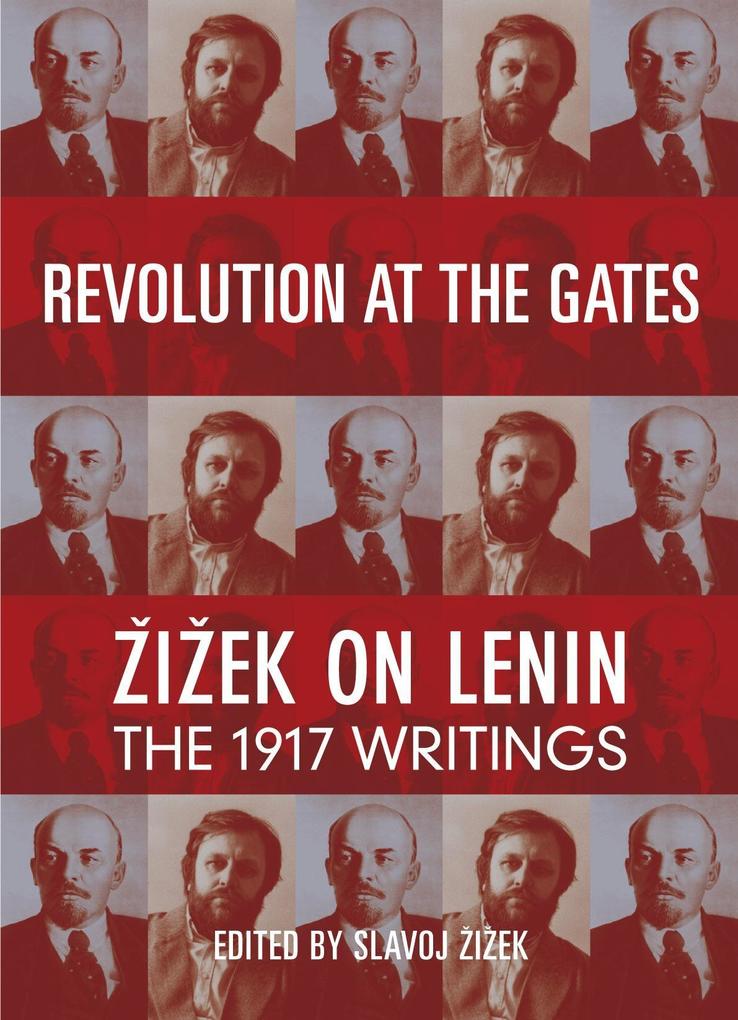
The idea of a Lenin renaissance might well provoke an outburst of sarcastic laughter. Marx is OK, but Lenin? Doesn’ t he stand for the big catastrophe which left its mark on the entire twentieth-century? < BR> Lenin, however, deserves wider consideration than this, and his writings of 1917 are testament to a formidable political figure. They reveal his ability to grasp the significance of an extraordinary moment in history. Everything is here, from Lenin-the-ingenious-revolutionary-strategist to Lenin-of-the-enacted-utopia. To use Kierkegaard’ s phrase, what we can glimpse in these writings is Lenin-in-becoming: not yet Lenin-the-Soviet-institution, but Lenin thrown into an open, contingent situation. < BR> In Revolution at the Gates, Slavoj i ek locates the 1917 writings in their historical context, while his afterword tackles the key question of whether Lenin can be reinvented in our era of "cultural capitalism." i ek is convinced that, whatever the discussion— the forthcoming crisis of capitalism, the possibility of a redemptive violence, the falsity of liberal tolerance— Lenin’ s time has come again.