







Das eBook.de Hörbuch Abo - jederzeit, überall, für nur 7,95 € monatlich!
Jetzt entdecken
mehr erfahren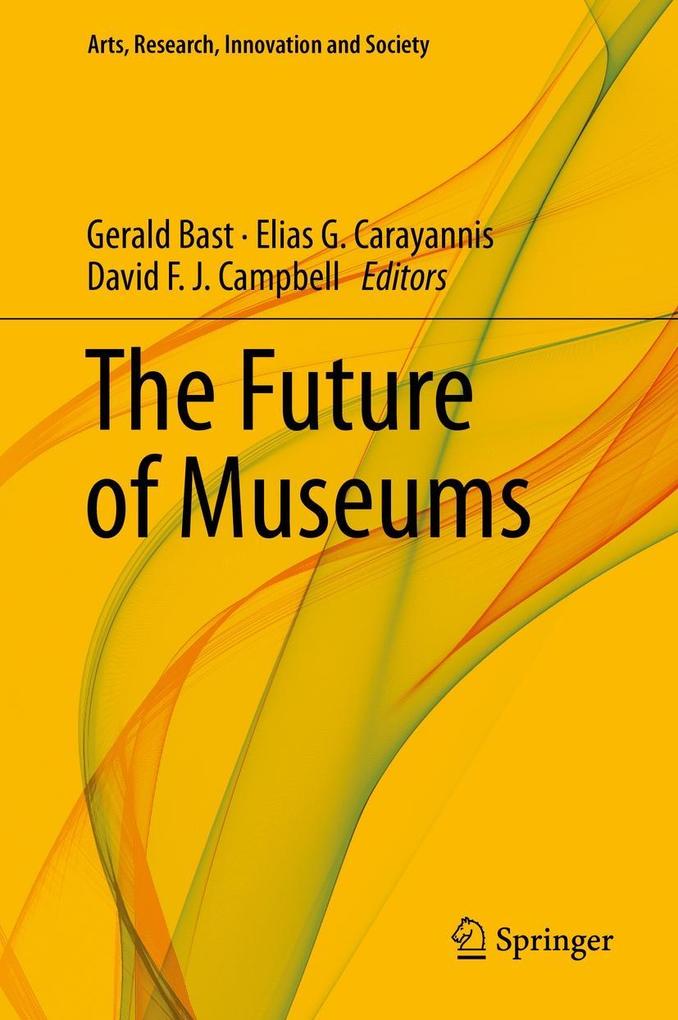
This book explores-at the macro, meso and micro levels and in terms of qualitative as well as quantitative studies-the current and future role of museums for art and society. Given the dynamic developments in art and society, museums need to change in order to remain (and in some ways, regain) relevance. This relevance is in the sense of a power to influence. Additionally museums have challenges that arise in the production of art through the use of permanent and rapidly changing technologies. This book examines how museums deal with the increasing importance of performance art and social interactive art, artistic disciplines which refuse to use classical or digital artistic media in their artistic processes. The book also observes how museums are adapting in the digital age. It addresses such questions as, How to keep museums in contact with recipients of art in a world in which the patterns of communication and perception have changed dramatically, and also Can the art museum, as a real place, be a counterpart in a virtualized and digitalized society or will museums need to virtualize and even globalize themselves virtually? Chapters also cover topics such as the merits of digital technologies in museums and how visitors perceive these changes and innovations.
When you go back to the etymological origin, the Mouseion of Alexandria, it was a place where supported by the knowledge stored there art and science were developed: a place of interdisciplinary research and networking, as you would call it today. The word from the Ancient Hellenic language for museum ( ) means the house of the muses : where the arts and sciences find their berth and cradle. With the Wunderkammer, the museum was re-invented as a place for amazing for purpose of representation of dynastic power, followed by the establishment of museums as a demonstration of bourgeois self-consciousness. In the twentieth century, the ideal of the museum as an institution for education received a strong boost, before the museum as a tourism infrastructure became more and more the institutional, economic and political role-model. This book is interested in discovering what is next for museums and how these developments will affect art and society. Each of the chapters are written by academics in the field, but also by curators and directors of major museums and art institutions.
Inhaltsverzeichnis
Chapter 1 Introduction: The Future of Museums. -Chapter 2 Changing Societies, Changing Art, Changing Museums. - Chapter 3 Will There Still Be a Future When the Museum of the Future Arrives? . - Chapter 4 Museum Services in the Era of Tourism. - Chapter 5 Manifesto for a New Museum. - Chapter 6 Transforming Education and Labor in a Museum as a Model of the Future: Vacancies in the Future Museum. - Chapter 7 Collecting Piece II [Poem]. - Chapter 8 Entering the Flow: Museum between Archive and Gesamtkunstwerk. - Chapter 9 Media are first of all for fun. The Future of Media Determines the Future of Museum. - Chapter 10 Renewal of the Museum in the Digital Epoch. - Chapter 11 The Museum of the Future. - Chapter 12 Imaginary Bauhaus Museum. - Chapter 13 Conclusion: The Museum of the Future and the Future of Museums.
The book will be of interest to all museum professionals and non-professionals alike. The book is easy to read and each chapter starts with an abstract providing an overview. I can highly recommend this future orientated book for anyone involved in museums. The book was easy to read and very relevant to understanding the changing nature of our society and how this influences leisure demands. (Sabine Michaela Lehmann, Journal of Tourism Futures, Vol. 5 (3), 2019)
Es wurden noch keine Bewertungen abgegeben. Schreiben Sie die erste Bewertung zu "The Future of Museums" und helfen Sie damit anderen bei der Kaufentscheidung.