







Das eBook.de Hörbuch Abo - jederzeit, überall, für nur 7,95 € monatlich!
Jetzt entdecken
mehr erfahren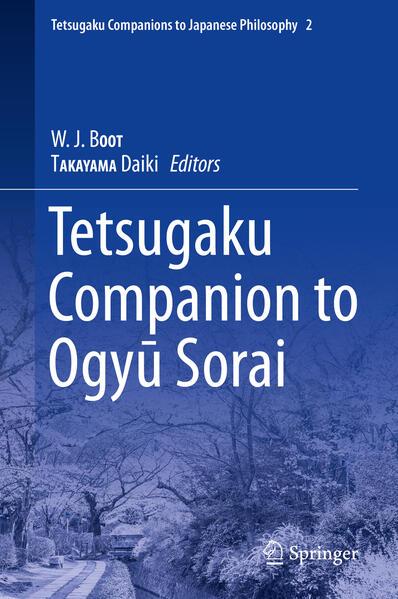
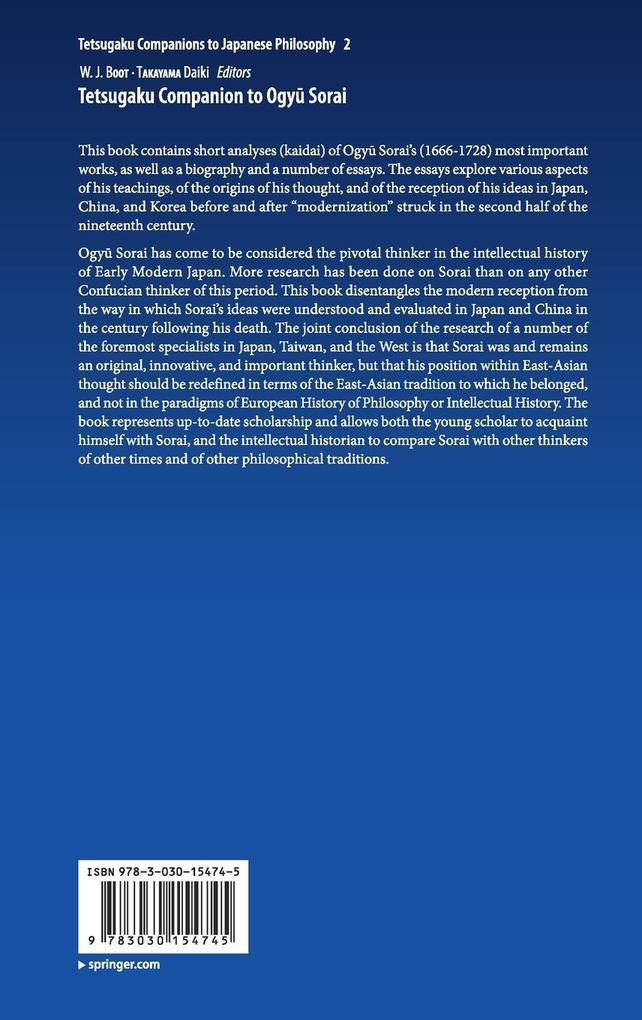
This book contains short analyses (kaidai) of Ogyu Sorai's (1666-1728) most important works, as well as a biography and a number of essays. The essays explore various aspects of his teachings, of the origins of his thought, and of the reception of his ideas in Japan, China, and Korea before and after "modernization" struck in the second half of the nineteenth century.
Ogyu Sorai has come to be considered the pivotal thinker in the intellectual history of Early Modern Japan. More research has been done on Sorai than on any other Confucian thinker of this period. This book disentangles the modern reception from the way in which Sorai's ideas were understood and evaluated in Japan and China in the century following his death. The joint conclusion of the research of a number of the foremost specialists in Japan, Taiwan, and the West is that Sorai was and remains an original, innovative, and important thinker, but that his position within East-Asian thought should be redefined interms of the East-Asian tradition to which he belonged, and not in the paradigms of European History of Philosophy or Intellectual History. The book represents up-to-date scholarship and allows both the young scholar to acquaint himself with Sorai, and the intellectual historian to compare Sorai with other thinkers of other times and of other philosophical traditions.
Inhaltsverzeichnis
Chapter 1. Introduction (W. J. Boot). - Part 1. Kaidai / Introductions. - Chapter 2. Yakubun sentei (Aihara K saku). - Chapter 3. Sorai s Military Studies (Kojima Yasunori). - Chapter 4. Ken en zuihitsu ( Jottings from the Miscanthus Garden ), Ken en jippitsu ( Ten Writings from the Miscanthus Garden ) (Takayama Daiki). - Chapter 5. Gakusoku ( School Rules ), Sorai-sensei t monsho ( Master Sorai s Responsals ) (Takayama Daiki). - Chapter 6. Bend and Benmei (John A. Tucker). - Chapter 7. Rongo-ch ( Proof of the Analects ), Daigaku-kai ( Explanation of the Great Learning ), Ch y -kai ( Explanation of the Mean ) (Sawai Keiichi). - Chapter 8. Seidan ( Discourse on Government ) and Taiheisaku ( A Plan for the Great Peace ) (Tajiri Y ichir ). - Chapter 9. Ogy Sorai s Collected Works (Sorai-sh ) (Sawai Keiichi). - Part 2. Essays. - Chapter 10. An Intellectual-Historical Biography of Ogy Sorai (Sawai Keiichi). - Chapter 11. Sorai s Theory of Learning (Kojima Yasunori). - Chapter 12. Gods, Spirits and Heaven in Ogy Sorai s Political Theory (Olivier Ansart). - Chapter 13. Ogy Sorai and the Forty-Seven R nin (John A. Tucker). - Chapter 14. The Reception of Sorai s Thought in the Second Half of the Edo Period (W. J. Boot). Chapter 15. Sorai s Teachings in East-Asia: The Formation of His Methodology of Studying the Classics and the Reception of His Works on the Classics (Lan Hung Yueh). - Chapter 16. The Study of Sorai s Thought in Modern Japan (Takayama Daiki).
Es wurden noch keine Bewertungen abgegeben. Schreiben Sie die erste Bewertung zu "Tetsugaku Companion to Ogyu Sorai" und helfen Sie damit anderen bei der Kaufentscheidung.