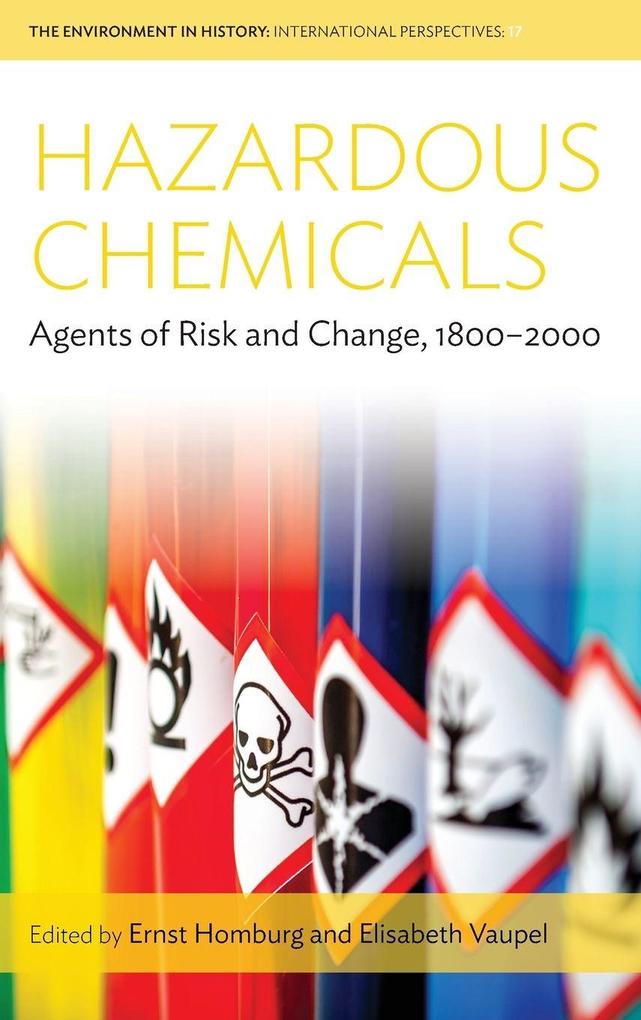
Although poisonous substances have been a hazard for the whole of human history, it is only with the development and large-scale production of new chemical substances over the last two centuries that toxic, manmade pollutants have become such a varied and widespread danger. Covering a host of both notorious and little-known chemicals, the chapters in this collection investigate the emergence of specific toxic, pathogenic, carcinogenic, and ecologically harmful chemicals as well as the scientific, cultural and legislative responses they have prompted. Each study situates chemical hazards in a long-term and transnational framework and demonstrates the importance of considering both the natural and the social contexts in which their histories have unfolded.
Inhaltsverzeichnis
List of Figures and Tables
Abbreviations
Acknowledgements
Introduction: Hazardous Chemicals, 1800-2000: A Conceptual and Regulatory Overview
Ernst Homburg and Elisabeth Vaupel
PART I: FROM ACUTE TO CHRONIC POISONING: REGULATING OLD POISONS IN THE INDUSTRIAL AGE
Chapter 1. Schweinfurt Green and the Sanitary Police: The Fight Against Copper Arsenite Pigments
Joost Mertens+
Chapter 2. The Banning of White Lead: French and International Regulations
Laurence Lestel
Chapter 3. Old Situations, New Complications: Lead and Lead Poisoning in a Changing World
Christian Warren
PART II: DISCOVERING NEW HEALTH IMPACTS: CARCIOGENESIS, MUTAGENESIS AND MORE IN TIMES OF UNCERTAINTY AND NON-KNOWLEDGE
Chapter 4. Discovering Chemical Carcinogenesis: The Case of the Aromatic Amines
Heiko Stoff and Anthony S. Travis
Chapter 5. Cyclamates: A Tale of Uncertain Knowledge (1930s-1980s)
Alexander von Schwerin
Chapter 6. Cadmium Poisoning in Japan: The Itai-itai Disease and Beyond
Masanori Kaji+
Chapter 7. Dioxins: The "Total Poison"
Stefan Böschen
PART III: NEW PRODUCTS, NEW EFFECTS. THE DISCOVERY OF THE ENVIRONMENT AND THE LONG SHADOW OF THE 1960S
Chapter 8. Organophosphates
Frederick R. Davis
Chapter 9. A Tale of Two Nations: DDT in the USA and the UK
Peter J. T. Morris
Chapter 10. War and Peace: The Phenoxy Herbicides
Amy M. Hay
Chapter 11. Raising a Stink: The Short Happy Life of MTBE
John K. Smith
Conclusions
Ernst Homburg and Elisabeth Vaupel
Index