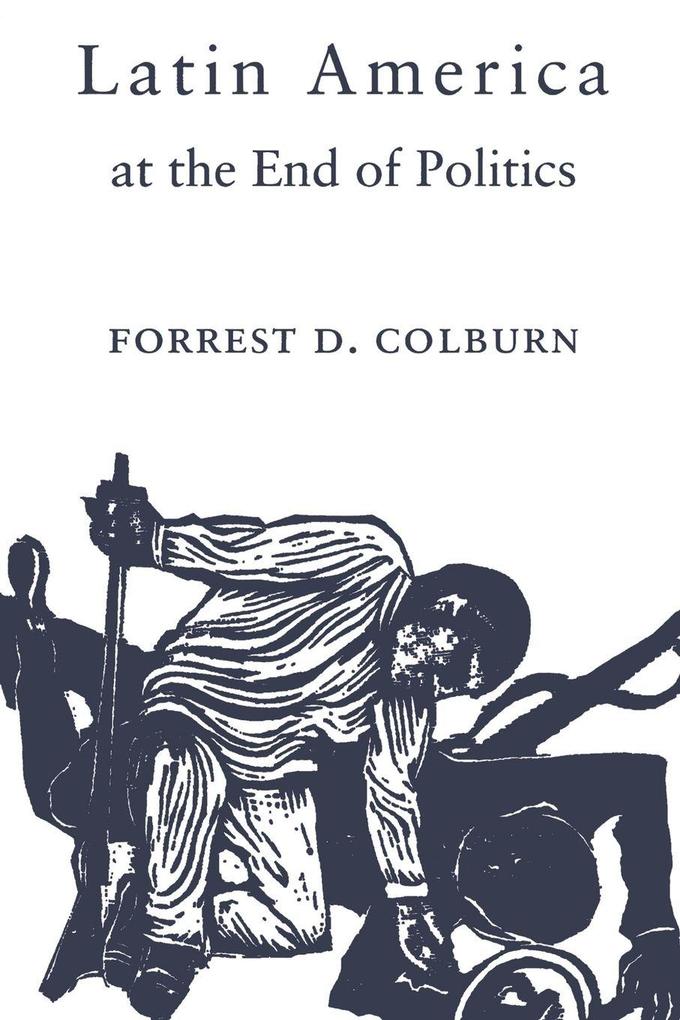
After decades of ideological struggle, much of it in the service of an elusive socialist ideal, Latin America has embraced liberalism--democracy and unfettered markets. But liberalism has triumphed more by default than through exuberance. The region's democracies are fragile and lethargic. Despite pronounced social inequality, widespread poverty, and other difficulties, the populace is not engaged in deep discussions about state and society. The end of ideological contests has dampened political conflict, but likewise lessened the sense of urgency for solving trenchant problems. Political fatigue and devotion to acquisition have smothered egalitarianism as even an ideal. There is an uneasy social indifference.
Latin America at the End of Politics explores this period of circumscribed political passions through deft portrayals of crucial political, economic, social, and cultural issues: governance, entrepreneurs and markets, urban bias, poverty, the struggle for women's equality, consumerism, crime, environmental degradation, art, and migration of the poor. Discussions of these issues are enriched by the poignant narratives of emblematic individuals, many of whom are disoriented by the ideological void of the era.
Forrest Colburn's highly original analysis draws on his deep scholarly and personal familiarity with Latin America. The collage of issues discussed, set in a provocative framework, offers a compelling interpretation of Latin America in the aftermath of the last century's ideological battles--and a way to begin to talk about the region's future.
Inhaltsverzeichnis
Acknowledgments ix 1. Introduction 1 2. Latin America as a Place 9 3. Urban Bias 17 4. An Ideological Vacuum 25 5. Fragile Democracies 33 6. The Business of Being in Business 45 7. Environmental Degradation 55 8. Malls 65 9. Crime 73 10. The Poor 81 11. Struggling for Gender Equality 89 12. El Gringo 99 13. What to Paint? 109 14. Migration 119 15. Conclusion 127 List of Illustrations 135 A Note about Sources 137 Bibliography 139