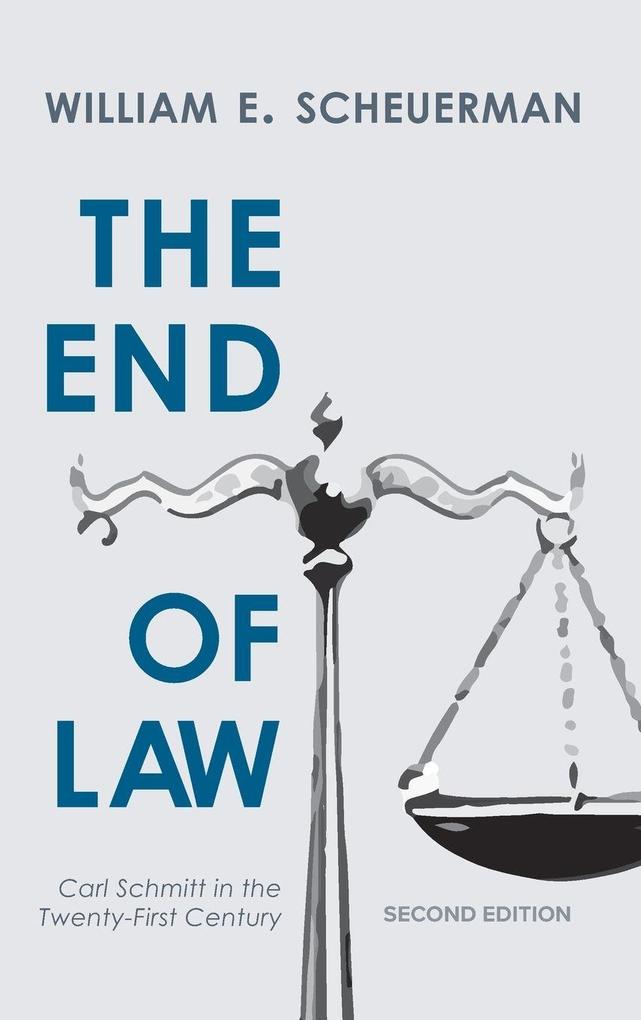
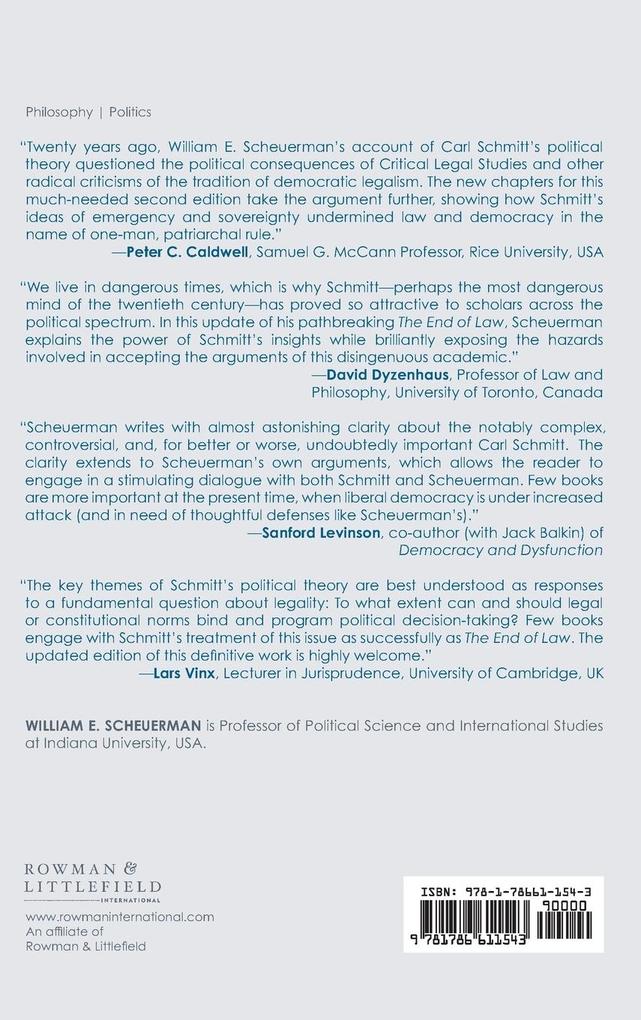
Scholarly and political interest in the controversial 20th Century German thinker Carl Schmitt has exploded in the last twenty years. This volume, focusing directly on Schmitt’s complex ideas about law, situates his views within broader debates about the rule of law and its fate, taking seriously his Nazi-era political and legal writings.
Inhaltsverzeichnis
Preface
Acknowledgments
Introduction: Why Carl Schmitt?
Part One: The Jurisprudence of Lawlessness
1. The Crisis of Legal Indeterminacy
2. The Decay of Parliamentarism
3. The Critique of Liberal Constitutionalism
4. The Total State
5. After Legal Indeterminacy?
6. Indeterminacy and International Law
Epilogue to Part One: Carl Schmitt in the Aftermath of the German Catastrophe
Part Two: Carl Schmitt in America
7. Carl Schmitt and the Origins of Joseph Schumpeter's Theory of Democratic Elitism
8. The Unholy Alliance of Carl Schmitt and Friedrich A. Hayek
Part Three: Carl Schmitt's Twenty-First Century
9. States of Emergency
10. Counterterrorism
11. States of Emergency Beyond the Nation State?
Conclusion: Carl Schmitt Now?
Notes
Index