









Das eBook.de Hörbuch Abo - jederzeit, überall, für nur 7,95 € monatlich!
Jetzt entdecken
mehr erfahren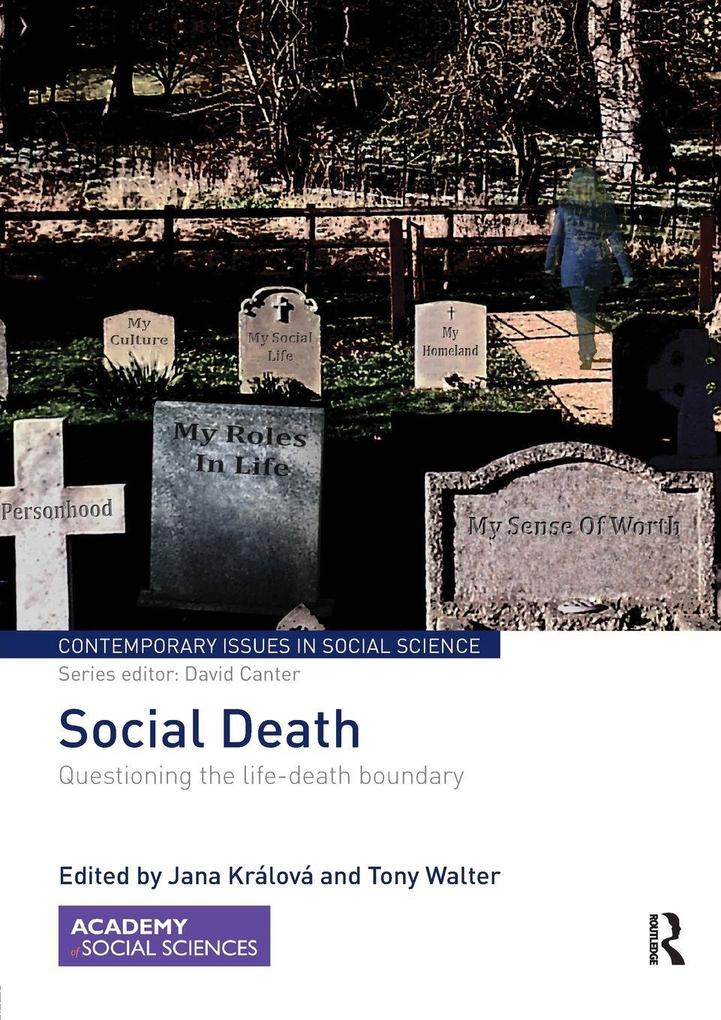
Social death occurs when the social existence of a person or group ceases, and relates to social exclusion, social capital, social networks, social roles and social identity. However, this is the first volume to unite theorising about the concept, providing conceptual clarity rooted in empirical data. Contributors discuss the fourth age, end of life policies, dying alone at home, suicide, photographs on gravestones, bereavement, and the agency of dead musicians. This book was originally published as a special issue of Contemporary Social Science.
Social death occurs when the social existence of a person or group ceases. With an individual, it can occur before or after physical death. Scholars in a wide range of disciplines have applied the concept to very diverse issues - including genocide, slavery, dementia, hospitalisation, and bereavement. Social death relates to social exclusion, social capital, social networks, social roles and social identity, but its theorising is not united - scholars in one field are often unaware of its use in other fields.
This is the first book to bring a range of perspectives together in a pioneering effort to bring to the field conceptual clarity rooted in empirical data. Preceded by an original theoretical discussion of the concept of social death, contributions from the UK, Romania, Sweden, and Israel analyse the fourth age, end of life policies, dying alone at home, suicide, photographs on gravestones, bereavement, and the agency of dead musicians. This book was originally published as a special issue of Contemporary Social Science.
Inhaltsverzeichnis
Es wurden noch keine Bewertungen abgegeben. Schreiben Sie die erste Bewertung zu "Social Death" und helfen Sie damit anderen bei der Kaufentscheidung.