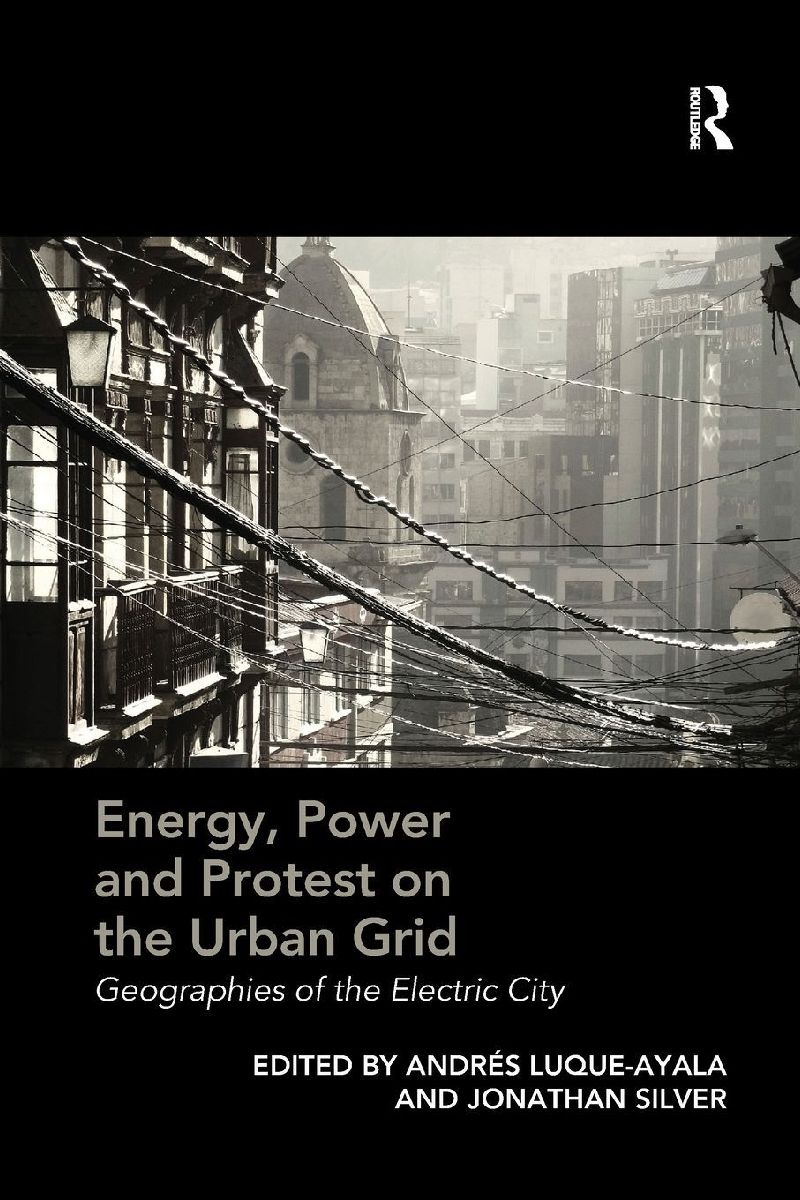
Through a robust theoretical engagement with established work around the politics of urban infrastructures, the book frames the transformation of electricity systems in the context of power and resistance across urban life, drawing links between environmental and social forms of sustainability. Such an agenda can provide both insight and inspiration in seeking to build fairer and more sustainable urban futures that bring electricity infrastructures to the fore of academic and policy attention.
Inhaltsverzeichnis
1. Introduction
(Andrés Luque-Ayala and Jonathan Silver)
Part 1: The Uneven Geographies of Urban Energy Networks
2. The American South: Electricity and Race in Rocky Mount, North Carolina, 1900-1935
(Conor Harrison)
3. Plovdiv: (De-)racialising electricity access? Entanglements of the material and the discursive
(Rosalina Babourkova)
Part 2: Rewiring the Urban Grid
4. Rio de Janeiro: Regularising favelas - energy consumption and the making of consumers into customers
(Francesca Pilo)
5. Delhi: Questioning urban planning in the electrification of irregular settlements
(Laure Criqui)
6. Maputo: Fluid flows of power and electricity - Prepayment as mediator of state-society relationships
(Idalina Baptista)
Part 3: Social Movements and Protest in the Electric City
7. Berlin: Cooperative power and the transformation of citizen's roles in energy decision-making
(Arwen Colell and Luise Neumann-Cosel)
8. Beirut: Metropolis of darkness and the politics of urban electricity grids
(Eric Verdeil)
9. Barcelona: Municipal engineers and the solar guerrillas
(Anne Maassen)
10. Athens: Switching the power off, turning the power on - Urban crisis and emergent protest practices
(Georgia Alexandri and Venetia Chatzi)