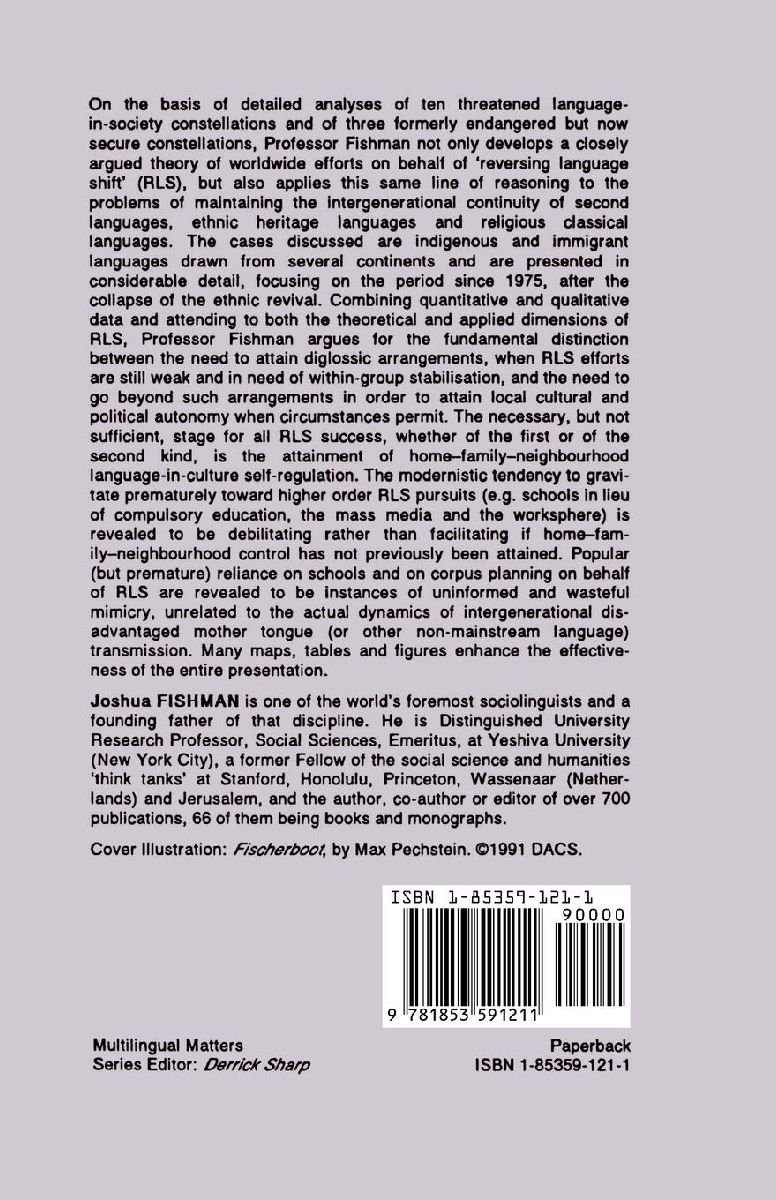
This superbly organised presentation consists of four introductory theoretical chapters dealing with the why, what and how of RLS, six chapters devoted to 13 separate cases from various parts of the world and four concluding chapters that both restate the underlying theory as well as apply it more broadly, beyond the mother tongue transmission nexus, to second language for which intergenerational continuity is pursued precisely as second languages.
Inhaltsverzeichnis
Part 1 Language shift - a preliminary analysis: what this book is about and why it is needed; why try to reverse language shift and is it really possible to do so; "where" and "why" does language shift occur and how can it be reversed?; how threatened is threatened? Part 2 Case studies - a baker's dozen from several continents. Part 3 Safeguarding the future: on RLS-focused language planning and on dialect-standard issues and corpus planning in particular; the intergenerational transmission of "additional" languages for special purpose; limitations on school effectiveness in connection with mother tongue transmission; theoretical recapitulation.