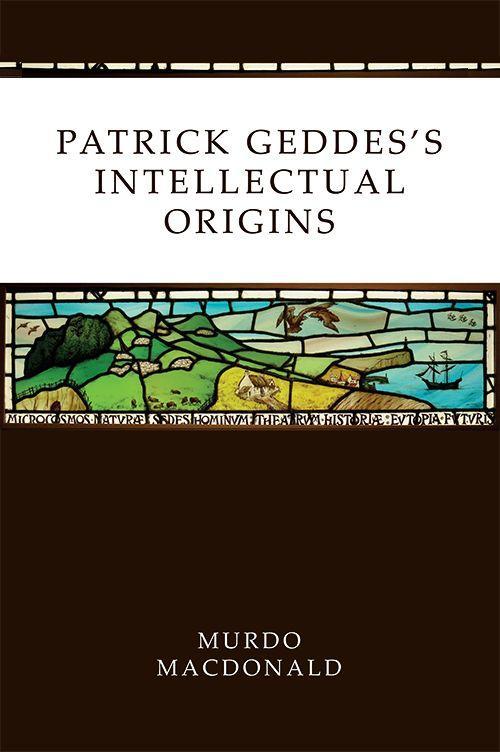
The intellectual background and cultural legacy of Patrick Geddes
- Explores Patrick Geddes's Scottish intellectual background in depth for the first time, drawing on George Davie's notion of the democratic intellect
- Highlights his insistence on the interdisciplinary importance of arts and sciences
- Considers his achievements from his pioneering work in Edinburgh and Dundee and his leadership of the Celtic revival, to his influence in Paris, London and India
Patrick Geddes is one of Scotland's most remarkable thinkers of the late 19th and early 20th century. His environmental and cultural message endures today, but until now the Scottish context to his thinking has not been properly acknowledged. This book changes that, situating Geddes within a distinctly Scottish intellectual background, and exploring his substantial national and international advocacy of art, architecture, ecology, literature, planning, geography and Celtic studies.
Inhaltsverzeichnis
Chapter 1 Patrick Geddes and the Scottish Intellectual Tradition< BR> A generalist among generalists < BR> Disciplines and interdisciplinarity < BR> Visual thinking and interdisciplinarity < BR> Presbyterianism and interdisciplinarity < BR> Art and science< BR> Chapter 2 Geography, History and Place< BR> Ballater and Perth < BR> The Black Watch < BR> Garden and world < BR> Dundee, Edinburgh and London < BR> France and Mexico< BR> Chapter 3 Arts, Crafts and Social Reform< BR> Edinburgh in the 1880s < BR> The Edinburgh Social Union < BR> James Mavor and The Scottish Arts Review < BR> The Arts and Crafts Congress of 1889< BR> Chapter 4 Patrick Geddes, D'Arcy Thompson and the Early Years of University College Dundee< BR> The Dundee Naturalists' Society < BR> Patronage for a Professor< BR> Chapter 5 Education, Anarchism and Celtic Revival in Edinburgh< BR> University Hall: buildings as interdisciplinary education< BR> A party with Kropotkin< BR> The New Evergreen< BR> Chapter 6 Manifestos in Word and Image< BR> The murals of Ramsay Garden < BR> The Evergreen: A Northern Seasonal< BR> Chapter 7 Models of Celticism< BR> The Celtic Library < BR> William Sharp and Alexander Carmichael< BR> Chapter 8 Interdisciplinarity and Cultural Revival< BR> An international summer meeting < BR> The Outlook Tower as generalist college< BR> Chapter 9 Paris 1900: Local Revival as Global Project< BR> The Paris Universal Exhibition < BR> Looking to India: Geddes, Vivekananda and Nivedita< BR> Chapter 10 City Development as Interdisciplinary Project< BR> The Dunfermline Plan: institutes of science, history and art< BR> Cities in evolution< BR> Chapter 11 Ecological Research in Dundee< BR> Ecology as a science: Geddes's students and Bartholomew's mapping < BR> The British Association Meeting of 1912< BR> Chapter 12 Dramatising the Past and Informing the Future< BR> Masques of learning < BR> Saint Columba as point of reference < BR> Coomaraswamy, Indian art, and Celticism < BR> Encyclopaedias and colleges < BR> Publishing and the masques< BR> Chapter 13 Looking East< BR> Baha'ism and Theosophy < BR> Celtic revival and Bengali revival < BR> Scottish interdisciplinarity in Indian reflection < BR> Sunwise turn and dance of Shiva< BR> Chapter 14 A Farewell Lecture< BR> Moving on from Dundee< BR> An Italian coda< BR> Appendix 1 Patrick Geddes: a visual primer in ten images< BR> Appendix 2 List of Murdo Macdonald's writings about Patrick Geddes and his milieu