Drawing on literary and archaeological data, this volume establishes a correspondence between booty (in the form of slaves and precious metals) from foreign campaigns and public building programmes, and how this equilibrium was upset after the Empire reached its full expansion and began to contract in the third century.
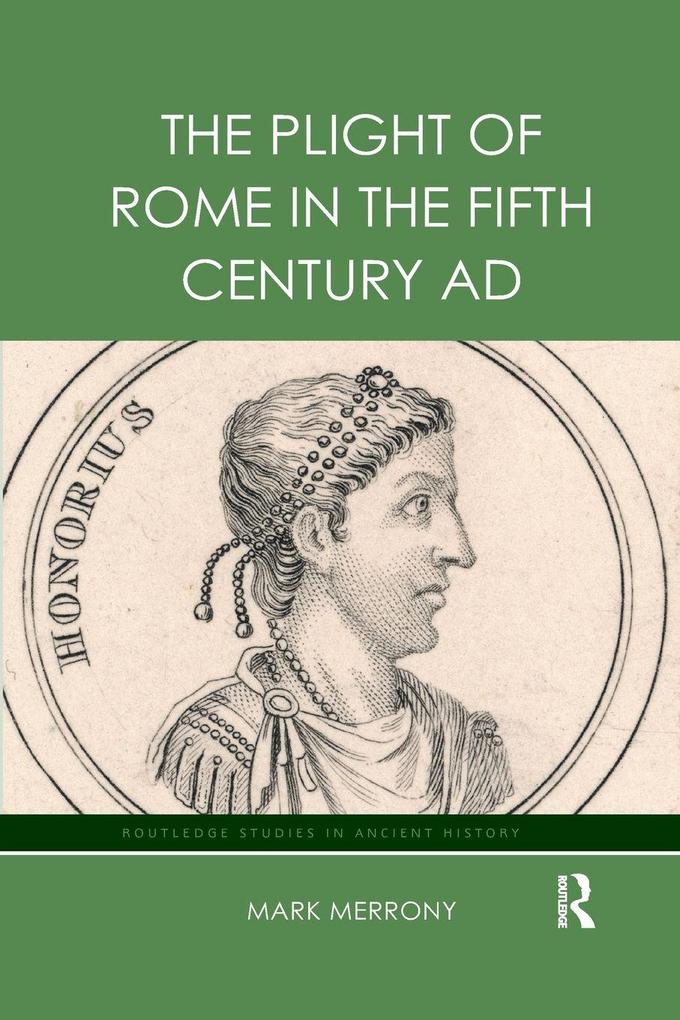
The Plight of Rome in the Fifth Century AD argues that the fall of the western Roman Empire was rooted in a significant drop in war booty, agricultural productivity, and mineral resources. Merrony proposes that a dependency on the three economic components was established with the Principate, when a precedent was set for an unsustainable threshold on military spending.
Drawing on literary and archaeological data, this volume establishes a correspondence between booty (in the form of slaves and precious metals) from foreign campaigns and public building programmes, and how this equilibrium was upset after the Empire reached its full expansion and began to contract in the third century. It is contended that this trend was exacerbated by the systematic loss of agricultural productivity (principally grain, but also livestock), as successive barbarian tribes were settled and wrested control from the imperial authorities in the fifth century. Merrony explores how Rome was weakened and divided, unable to pay its army, feed its people, or support the imperial bureaucracy - and how this contributed to its administrative collapse.
Inhaltsverzeichnis
"Merrony constructs a solid thesis to explain the decline and fall of the Western Empire."
- Murray Eiland, Minerva magazine 2018
Es wurden noch keine Bewertungen abgegeben. Schreiben Sie die erste Bewertung zu "The Plight of Rome in the Fifth Century AD" und helfen Sie damit anderen bei der Kaufentscheidung.








