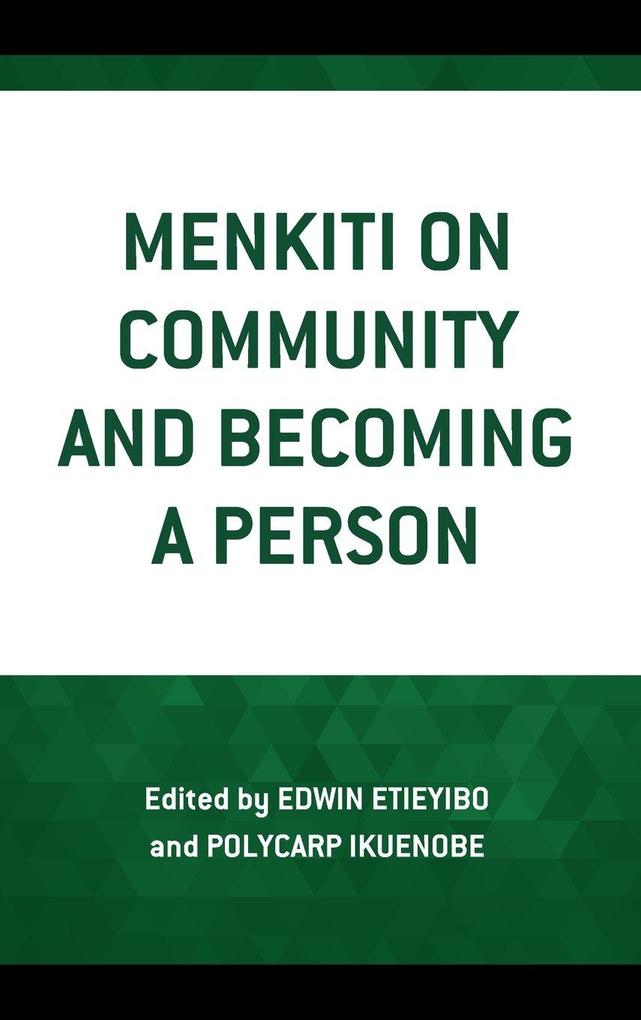
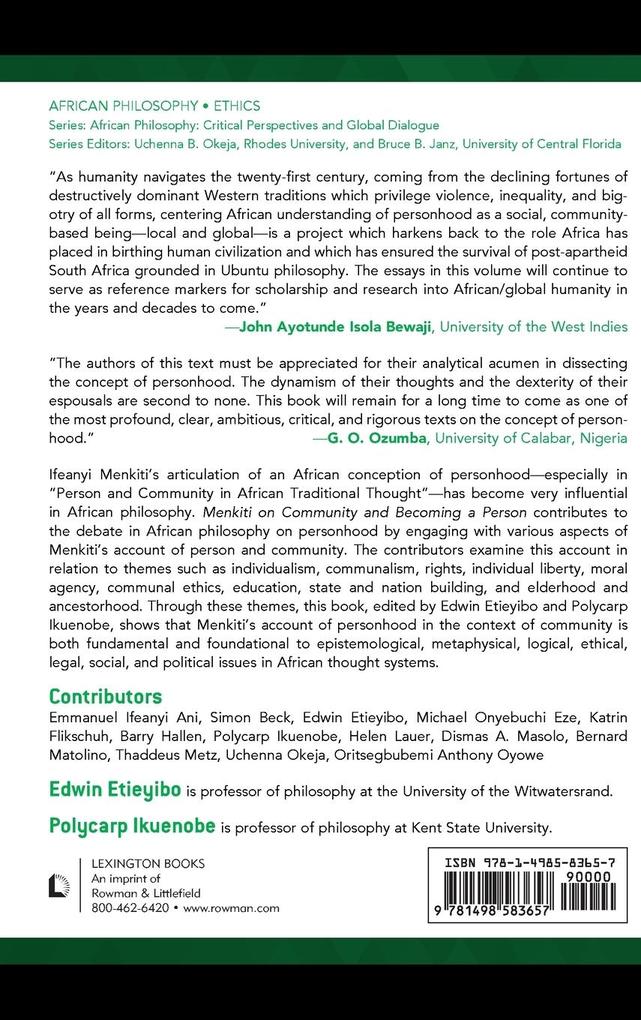
This book examines issues relating to Menkiti’s "Person and Community in African Traditional Thought," which articulates an African notion of personhood. Contributors not only show that personhood is normative but also explore the implications this notion of personhood and citizenship holds for the nation-state in Africa.
Inhaltsverzeichnis
Preface
Introduction
Edwin Etieyibo and Polycarp Ikuenobe
Chapter 1: Caught Between Two Manifestos: Menkiti and an Attempt at a Mediation
Dismas A. Masolo
Chapter 2: Discussions of African Communitarianism with Specific Reference to Menkiti and Rawls
Barry Hallen
Chapter 3: Persons and Citizens
Katrin Flikschuh
Chapter 4: The Sociality of Persons
Edwin Etieyibo
Chapter 5: Personal Persistence and Narrative Unity: The Case of Ancestral Persons
Oritsegbubemi Anthony Oyowe
Chapter 6: Menkiti's Account of the Social Ontology of African Community and Persons Polycarp Ikuenobe
Chapter 7: African Communitarianism and the Imperative for Moral Education
Michael Onyebuchi Eze
Chapter 8: Community, Individuality, and Reciprocity in Menkiti
Thaddeus Metz
Chapter 9: Elderhood and Ancestorhood: Exemplar of a Person in African Community
Polycarp Ikuenobe and Edwin Etieyibo
Chapter 10: An Outline of Menkiti's Metaphysical Commitment
Bernard Matolino
Chapter 11: Personhood and State Building in Africa
Emmanuel Ifeanyi Ani
Chapter 12: I Can't Unless You Can
Helen Lauer
Chapter 13: Before a Common Soil: Personhood, Community and the Duty to Bear Witness
Uchenna Okeja
Chapter 14: Who Gets a Place in Person-Space?
Simon Beck and Oritsegbubemi Anthony Oyowe
Chapter 15: Menkiti as a Man of Community
Edwin Etieyibo
Afterword
About the Contributors