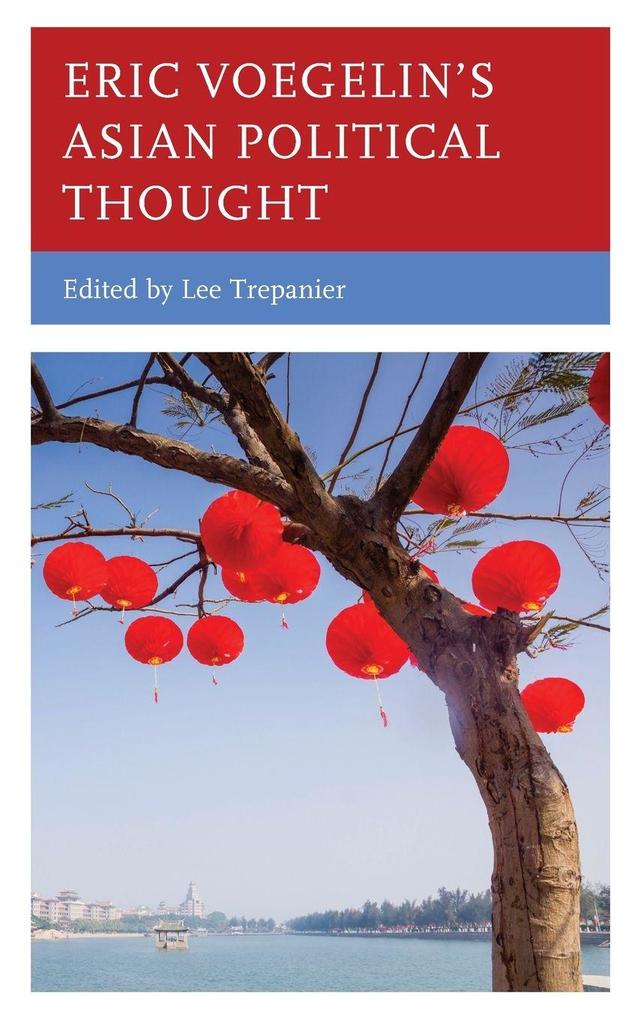
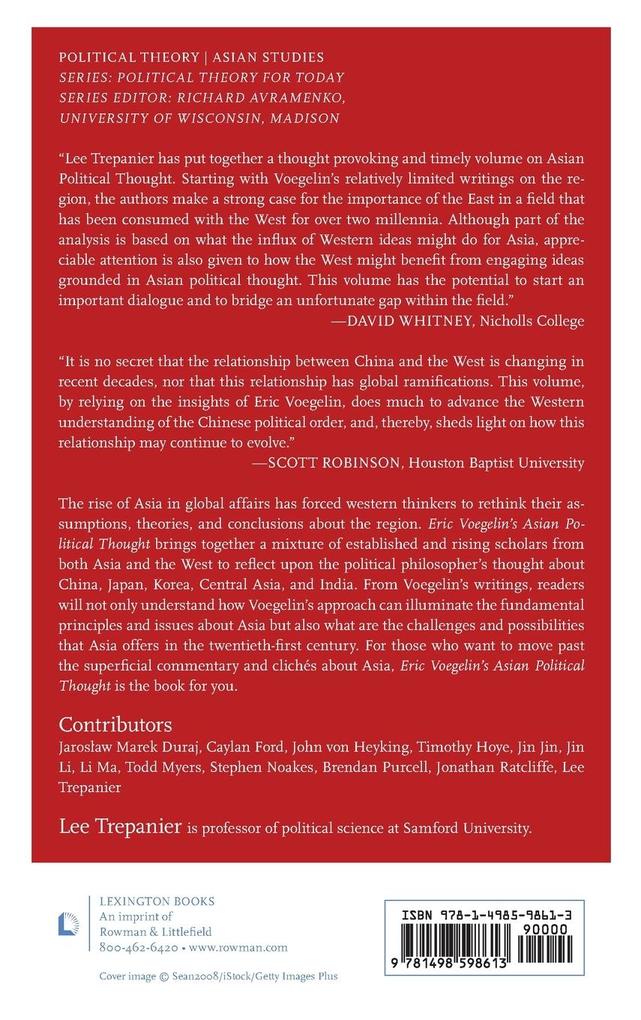
Eric Voegelin’s Asian Political Thought brings together scholars from both Asia and the West to reflect upon the political philosopher’s thought about China, Japan, Korea, Central Asia, and India, showing how Voegelin’s approach can illuminate the region but also what are the possibilities that Asia offers in the twentieth-first century.
Inhaltsverzeichnis
Introduction: Eric Voegelin and Asia
Lee Trepanier
Chapter 1: Re-thinking Chinese Ecumene in the Global Age
Jaroslaw Marek Duraj
Chapter 2: The Theological Roots of Modern Chinese Political Thought: A Voegelinian Interpretation
Jin Li and Li Ma
Chapter 3: Contextualizing a Crackdown: Voegelin on China's Falun Gong
Caylan Ford and Stephen Noakes
Chapter 4: The Decay of Order for the Progress of an Empire:
Shang Yang's Proposal for Fundamental Reform in the Records of the Grand Historian
Jin Jin
Chapter 5: Masters of Political Theology: Eric Voegelin and The Mongols
Jonathan Ratcliffe
Chapter 6: Pyramids of Skulls: Unacceptable Violence, Transcendence, and the Image of Timur in the Thought of Eric Voegelin and Contemporary Scholarship
Todd Myers
Chapter 7: The Chinese, Japanese, and Korean Ecumene
Lee Trepanier
Chapter 8: Exile and Anamnesis in Selected Works of Natsume Soseki
Timothy Hoye
Chapter 9: The Bhagavad Gita: An Incomplete Breakthrough within the Drama of Humanity
Brendan Purcell
Chapter 10: The Figure of Socrates and its Significance for Liberal Education in Asia
John von Heyking