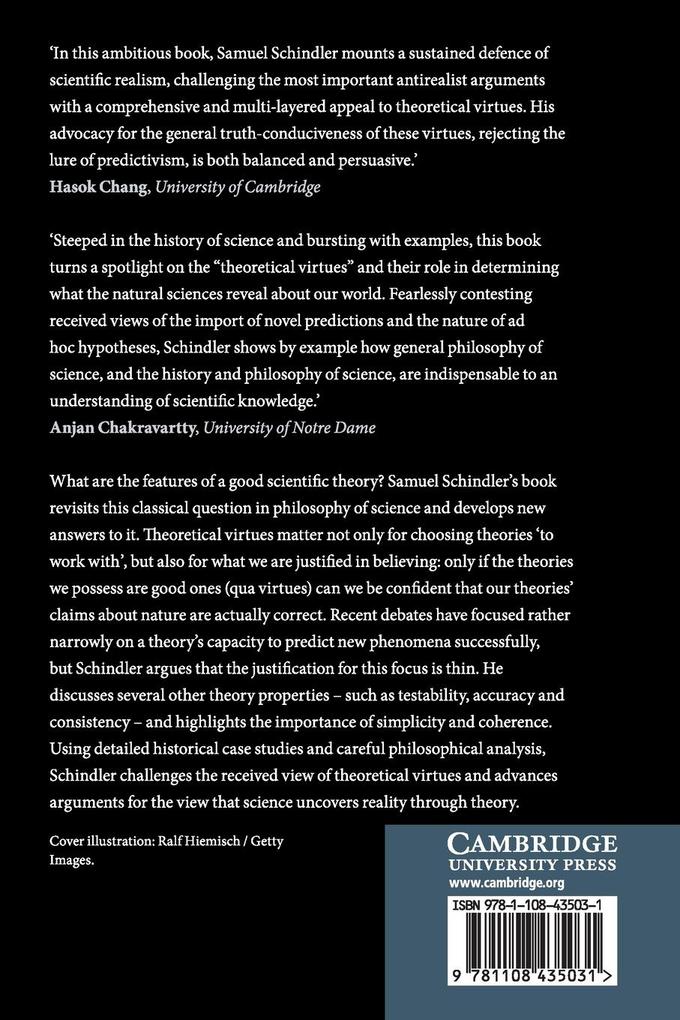
Investigates what kinds of theories scientists do and should strive for and whether those theories allow us to be confident that science is reflecting reality. The book features historical case studies and in-depth philosophical analysis to criticise current views of theoretical virtues and to present new arguments for realism.
Inhaltsverzeichnis
Introduction; 1. Theoretical virtues, truth, and the argument from simplicity; 2. Pessimism, base rates, and the no-virtue-coincidence argument; 3. Novel success and predictivism; 4. Theoretical fertility without novel success; 5. Ad hoc hypotheses and the argument from coherence; 6. Virtues as confidence boosters and the argument from choice; 7. Philosophy of science by historical means; Conclusion.