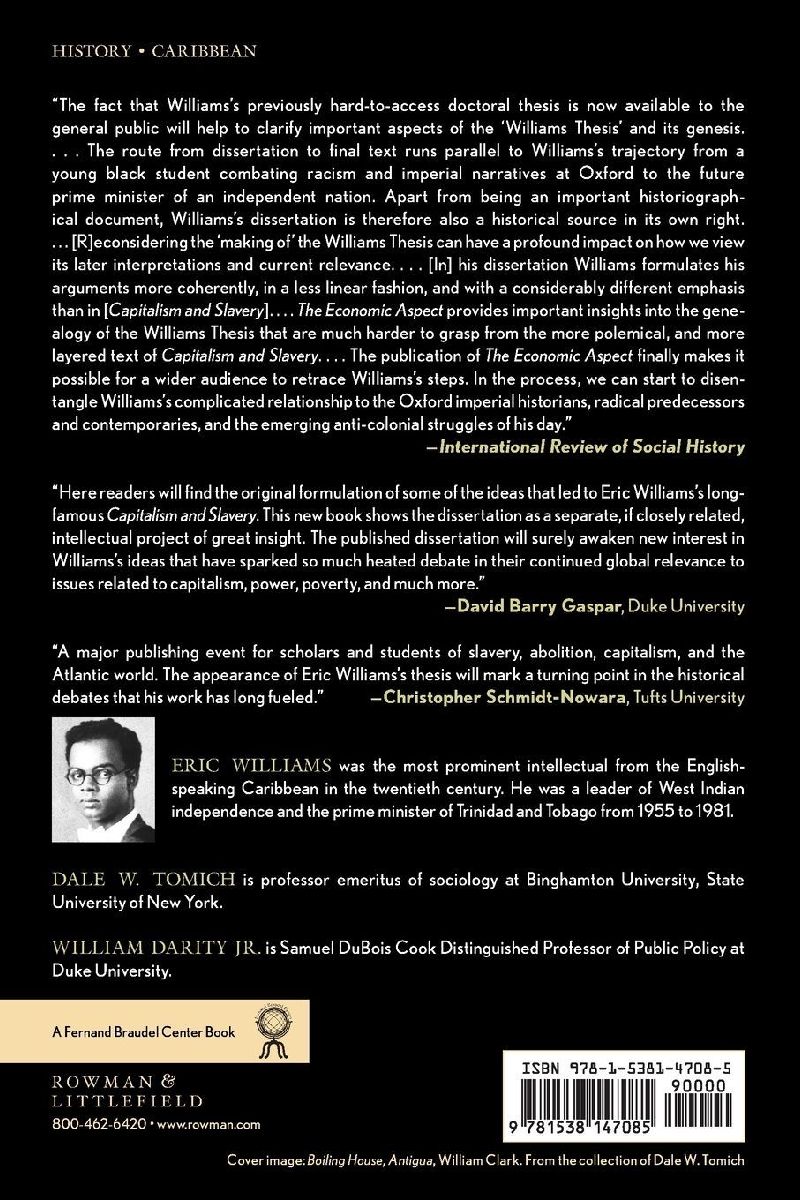
Eric Williams’s influential and widely debated Capitalism and Slavery, first published in 1944, was based on his previously unavailable dissertation, now in book form for the first time. The significant differences between his two seminal works allow us to reconsider questions whose importance has only increased in our current charged climate.
Inhaltsverzeichnis
Preface< BR> Dale Tomich< BR> < BR> Introduction: From the Dissertation to Capitalism and Slavery: Did Williams's Abolition Thesis Change? < BR> William Darity Jr. < BR> < BR> The Economic Aspect of the Abolition of the West Indian Slave Trade and Slavery< BR> Eric Williams< BR> Introduction< BR> Part I< BR> Chapter 1: The Impolicy of the Slave System< BR> Chapter 2: The Superiority of the French West Indies< BR> Chapter 3: East India Sugar< BR> Chapter 4: The Attempt to Secure an International Abolition< BR> Chapter 5: The West Indian Expeditions< BR> Chapter 6: The Significance of the West Indian Expeditions< BR> Chapter 7: The Abolition of the Slave Trade< BR> Part II< BR> Chapter 8: The Abolitionists and Emancipation< BR> Chapter 9: The Foreign Slave Trade< BR> Chapter 10: East India Sugar< BR> Chapter 11: The Distressed Areas< BR> Chapter 12: The Industrialists and Emancipation< BR> Epilogue< BR> Appendix I: "The Influential Men"< BR> Appendix II: Ramsay as an Authority< BR> Appendix III: The Intercolonial Slave Trade< BR> Bibliography