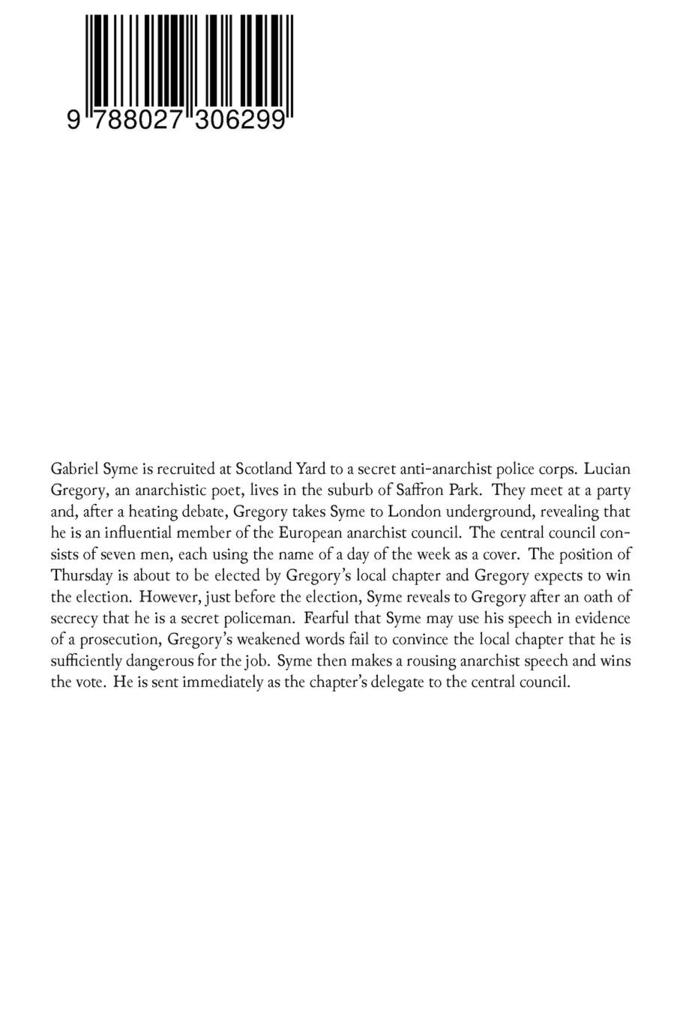
G. K. Chesterton's "The Man Who Was Thursday" is an exhilarating philosophical thriller that explores themes of anarchy, identity, and the nature of truth in a world teetering on the brink of chaos. Set against the backdrop of a fantastical landscape, the narrative follows Gabriel Syme, a poet turned detective, as he infiltrates a clandestine council of anarchists. Chesterton's masterful blend of humor and wit, paired with a rich, allegorical style, situates this novel within the realms of early 20th-century literary modernism, engaging readers with its unique interplay between reason and absurdity. Chesterton, known for his sharp intellect and deep-seated beliefs in Christianity and societal order, often drew upon his experiences in a rapidly changing world, which informed much of his work. "The Man Who Was Thursday" reflects his concerns about the upheaval of the early 1900s, showcasing his ability to weave profound existential questions into an engaging narrative, a testament to his prowess as both a writer and a thinker. This captivating novel is highly recommended for readers seeking a thought-provoking yet entertaining exploration of philosophical ideals. Chesterton's blend of thrilling plot twists and cerebral discourse makes it an essential read for those interested in the intersections of literature, philosophy, and the human condition.