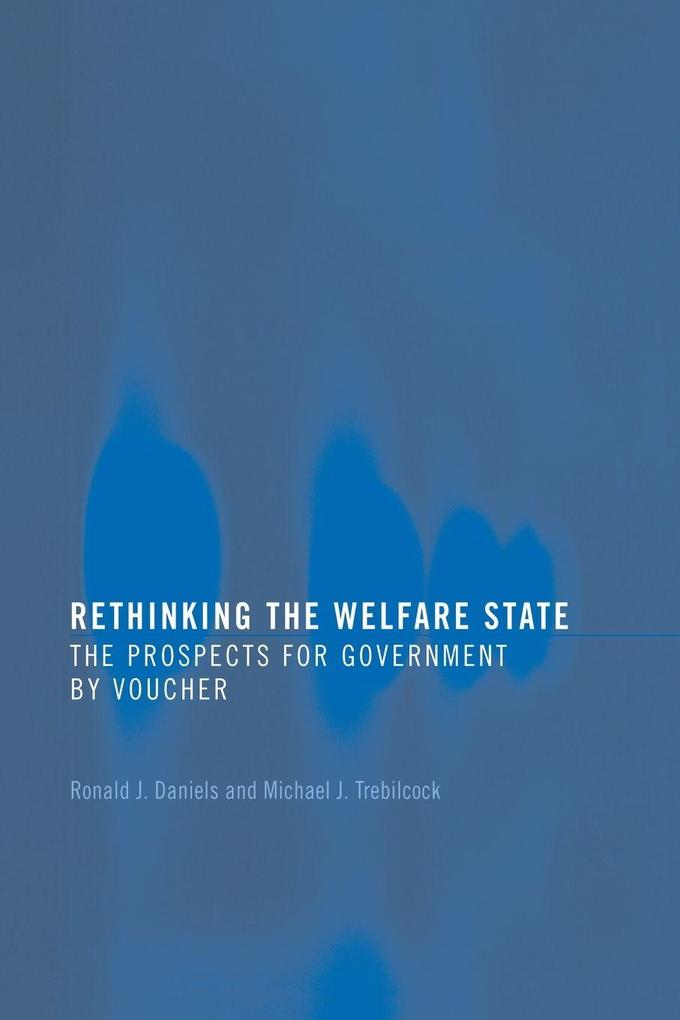
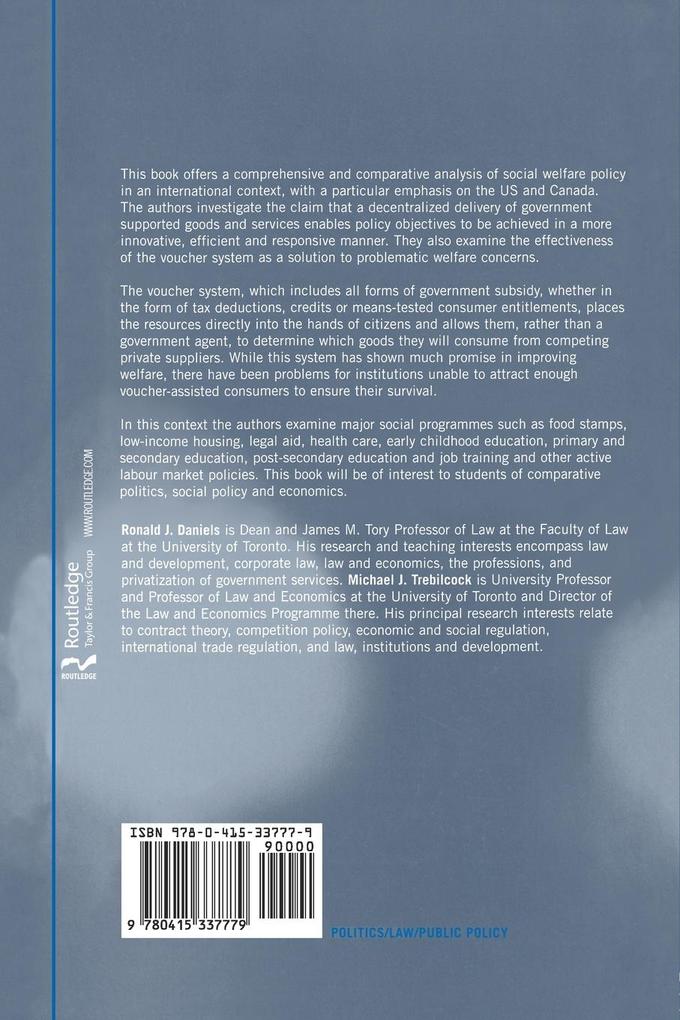
This book offers a comprehensive and comparative analysis of social welfare policy and explores the effectiveness of the voucher system as a solution to problematic areas in the welfare programme.
Rethinking the Welfare State offers a comprehensive and comparative analysis of social welfare policy in an international context, with a particular emphasis on the US and Canada.
The authors investigate the claim that a decentralized delivery of government supported goods and services enables policy objectives to be achieved in a more innovative and efficient way, but at a lower cost. Secondly they examine the effectiveness of the voucher system as a solution to problematic welfare concerns. While this system has shown much promise in improving welfare, there have been problems for institutions unable to attract enough voucher-assisted consumers to ensure their survival.
In this context, the authors examine major social programmes such as food stamps, primary and secondary education, post-secondary education, labour market training, childcare, healthcare, legal aid, low-income housing, long-term care and pensions.
Inhaltsverzeichnis
1. Introduction 2. The Case for Vouchers 3. Food Stamps 4. Low Income Housing 5. Legal Aid 6. Health Care 7. Primary and Secondary Education 8. Post-Secondary Education 9. Labour Market Training 10. Early Childhood Education 11. Conclusion