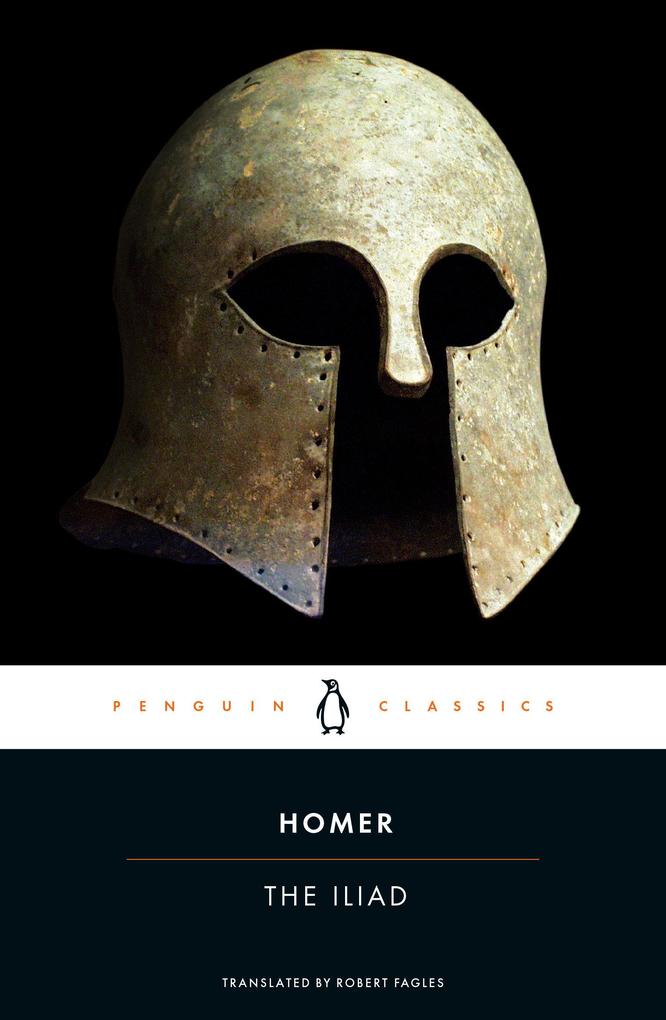
A work of tremendous influence that has inspired writers from his ancient Greek contemporaries to modernist writers such as T. S. Eliot, Homer's epic poem The Iliad is translated by Robert Fagles with an introduction and notes by Bernard Knox in Penguin Classics.
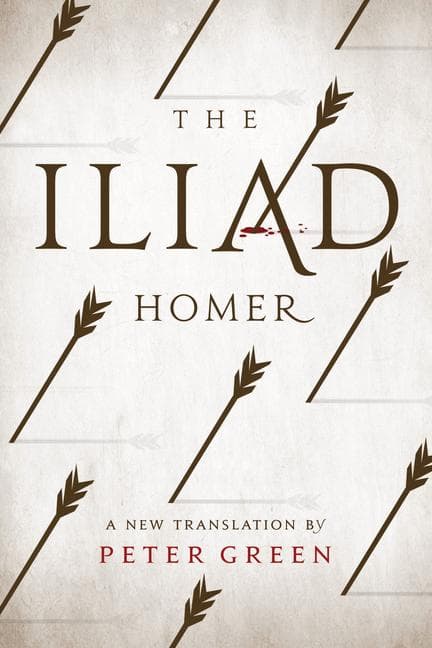
One of the foremost achievements in Western literature, Homer's Iliad tells the story of the darkest episode in the Trojan War. At its centre is Achilles, the greatest warrior-champion of the Greeks, and his refusal to fight after being humiliated by his leader Agamemnon. But when the Trojan Hector kills Achilles' close friend Patroclus, Achilles storms back into battle to take revenge - although knowing this will ensure his own early death. Interwoven with this tragic sequence of events are powerfully moving descriptions of the ebb and flow of battle, of the domestic world inside Troy's besieged city of Ilium, and of the conflicts between the Gods on Olympus as they argue over the fate of mortals.
Seven Greek cities claim the honour of being the birthplace of Homer (c. 8th-7th century BC), the poet to whom the composition of the Iliad and Odyssey are attributed. The Iliad is the oldest surviving work of Western literature, but the identity - or even the existence - of Homer himself is a complete mystery, with no reliable biographical information having survived.
If you enjoyed The Iliad, you might like The Odyssey, also available in Penguin Classics.
'An astonishing performance'
Peter Levi
'Plain and direct, noble, above all rapid . . . leading the reader forward with an irresistible flow. [Fagles'] version is imbued with humanity'
Oliver Taplin, The New York Times Book Review
'Robert Fagles has given us an Iliad to read aloud: eloquent, rhythmical, and full of power'
Jasper Griffin, Oxford University
Inhaltsverzeichnis
The IliadTranslator's Preface< BR> Introduction< BR> Introduction< BR> The Spelling and Pronunciation of Homeric Names< BR> Maps< BR> 1. Homeric Geography: Mainland Greece< BR> 2. Homeric Geography: The Peloponnese< BR> 3. Homeric Geography: The Aegean and Asia Minor< BR> Inset: Troy and Vicinity< BR> Homer: The Iliad< BR> Book 1: The Rage of Achilles< BR> Book 2: The Great Gathering of Armies< BR> Book 3: Helen Reviews the Champions< BR> Book 4: The Truce Erupts in War< BR> Book 5: Diomedes Fights the Gods< BR> Book 6: Hector Returns to Troy< BR> Book 7: Ajax Duels with Hector< BR> Book 8: The Tide of Battle Turns< BR> Book 9: The Embassy to Achilles< BR> Book 10: Marauding Through the Night< BR> Book 11: Agamemnon's Day of Glory< BR> Book 12: The Trojans Storm the Rampart< BR> Book 13: Battling for the Ships< BR> Book 14: Hera Outflanks Zeus< BR> Book 15: The Achaean Armies at Bay< BR> Book 16: Patroclus Fights and Dies< BR> Book 17: Menelaus' Finest Hour< BR> Book 18: The Shield of Achilles< BR> Book 19: The Champion Arms for Battle< BR> Book 20: Olympian Gods in Arms< BR> Book 21: Achilles Fights the River< BR> Book 22: The Death of Hector< BR> Book 23: Funeral Games for Patroclus< BR> Book 24: Achilles and Priam< BR> Notes< BR> The Genealogy of the Royal House of Troy< BR> Textual Variants from the Oxford Classical Text< BR> Notes on the Translation< BR> Suggestions for Further Reading< BR> Pronouncing Glossary