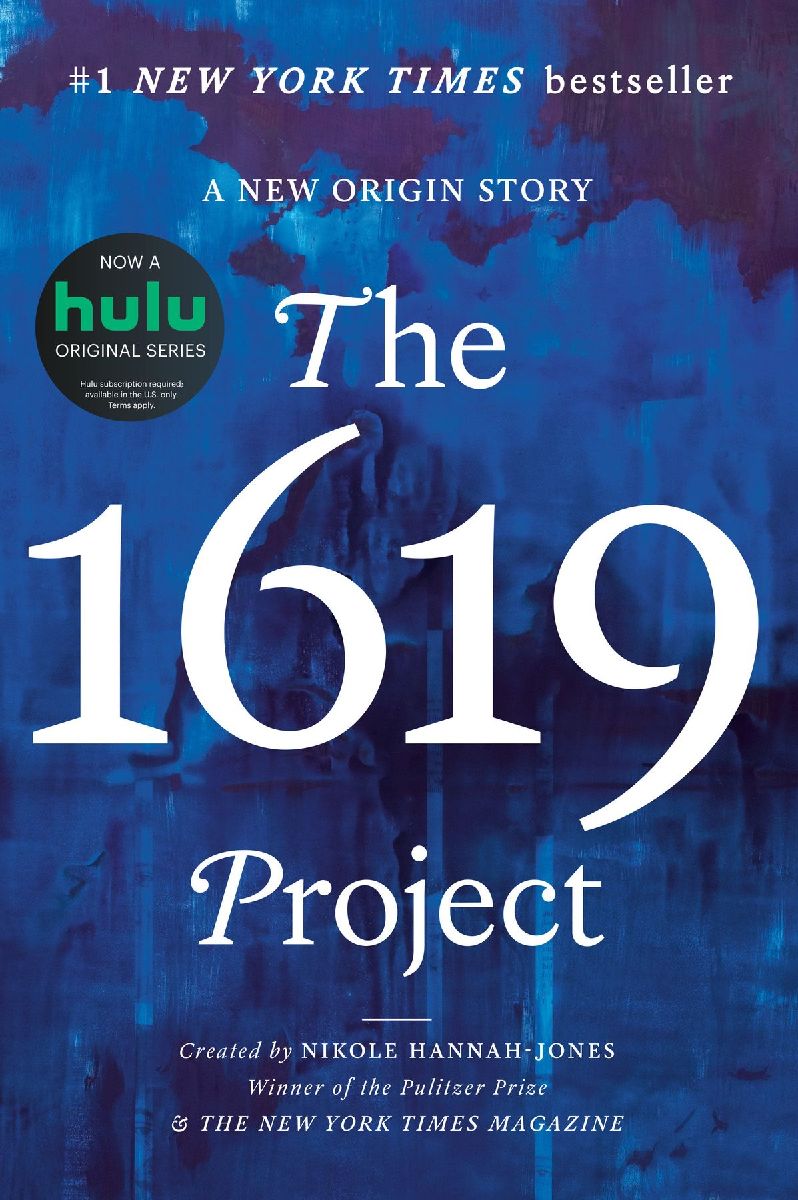
"The animating idea of The 1619 Project is that our national narrative is more accurately told if we begin not on July 4, 1776, but in late August of 1619, when a ship arrived in Jamestown bearing a cargo of twenty to thirty enslaved people from Africa. Their arrival inaugurated a barbaric and unprecedented system of chattel slavery that would last for the next 250 years. This is sometimes referred to as the country's original sin, but it is more than that: It is the country's very origin. The 1619 Project tells this new origin story, placing the consequences of slavery and the contributions of Black Americans at the center of the story we tell ourselves about who we are as a country. Orchestrated by the editors of The New York Times Magazine, led by MacArthur 'genius' and Pulitzer Prize-winning journalist Nikole Hannah-Jones, this collection of essays and historical vignettes includes some of the most outstanding journalists, thinkers, and scholars of American history and culture--including Linda Villarosa, Jamelle Bouie, Jeneen Interlandi, Matthew Desmond, Wesley Morris, and Bryan Stevenson. Together, their work shows how the tendrils of 1619--of slavery and resistance to slavery--reach into every part of our contemporary culutre, from voting, housing and healthcare, to the way we sing and dance, the way we tell stories, and the way we worship. Interstitial works of flash fiction and poetry bring the history to life through the imaginative interpretations of some of our greatest writers. The 1619 Project ultimately sends a very strong message: We must have a clear vision of this history if we are to understand our present dilemmas. Only by reckoning with this difficult history and trying as hard as we can to undersand its powerful influence on our present, can we prepare ourselves for a more just future"--
Inhaltsverzeichnis
PREFACE by Nikole Hannah-Jones< BR> < BR> CHAPTER ONE: Democracy by Nikole Hannah-Jones< BR> < BR> CHAPTER TWO: The Creation of Race by Dorothy Roberts< BR> < BR> CHAPTER THREE: Uprisings, Fear and Policing by Michelle and Leslie Alexander< BR> < BR> CHAPTER FOUR: Second Amendment by Carol Anderson < BR> < BR> CHAPTER FIVE: Native Americans and Slavery by Tiya Miles< BR> < BR> CHAPTER SIX: The Roots of Capitalism by Matthew Desmond< BR> < BR> CHAPTER SEVEN: Rule by Political Minority by Jamelle Bouie< BR> < BR> CHAPTER SEVEN: Black Activism and Birthright Citizenship by Martha Jones< BR> < BR> CHAPTER EIGHT: Mass Incarceration by Bryan Stevenson< BR> < BR> CHAPTER NINE: The Sugar Trade by Khalil Muhammad < BR> < BR> CHAPTER TEN: The Wealth Gap by Trymaine Lee< BR> < BR> CHAPTER ELEVEN: The Roots of Racial Health Disparities by Linda Villarosa< BR> < BR> CHAPTER TWELVE: Music by Wesley Morris < BR> < BR> CHAPTER THIRTEEN: The Black Church by Anthea Butler< BR> < BR> CHAPTER FOURTEEN: Health Care by Jeneen Interlandi< BR> < BR> CHAPTER FIFTEEN: Traffic by Kevin Kruse< BR> < BR> CHAPTER SIXTEEN: The Myth of Progress by Ibram Kendi< BR> < BR> CHAPTER SEVENTEEN: Economic Justice by Nikole Hannah-Jones