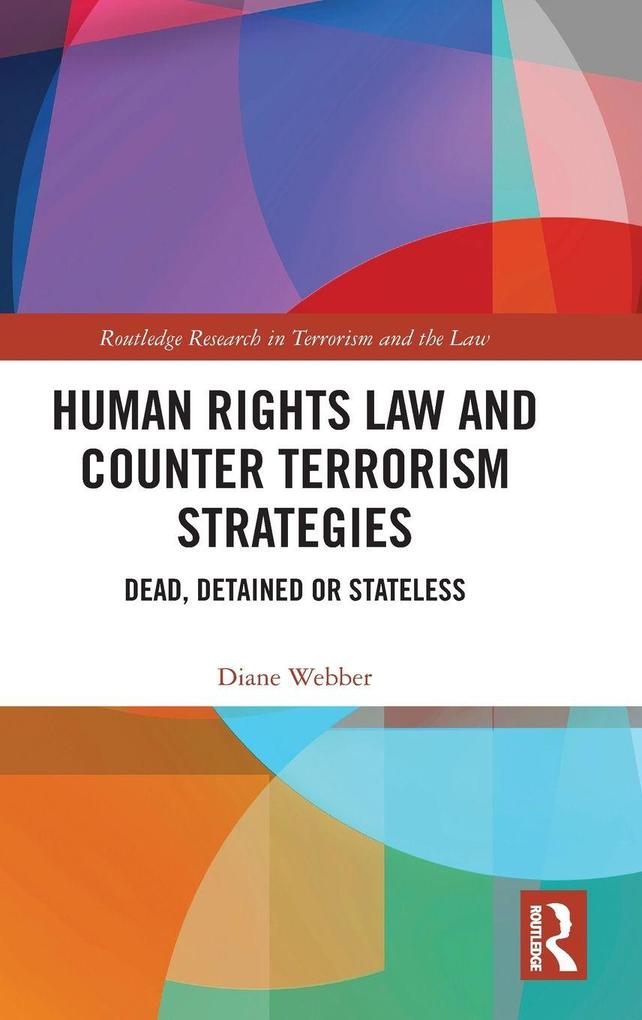
This book demonstrates that, in many cases, counter terrorism policies relating to preventive detention, targeted killing and measures relating to returning foreign terrorist fighters have failed to respect human rights, and this encourages vulnerable people to be drawn towards supporting or committing acts of terrorism.
In 2006, the United Nations urged Member States to ensure that counter terrorism policies guaranteed respect for human rights and the rule of law. This book demonstrates that, in many cases, counter terrorism policies relating to preventive detention, targeted killing and measures relating to returning foreign terrorist fighters have failed to respect human rights, and this encourages vulnerable people to be drawn towards supporting or committing acts of terrorism. Furthermore, in recent years, jurisprudence and public opinion in some countries have shifted from being at one stage more protective of human rights, to an acquiescence that some particularly draconian counter terrorism methods are necessary and acceptable. This book analyzes why this has happened, with a focus on the United States, United Kingdom, and Israel, and offers suggestions to address this issue. The work will be essential reading for students, academics and policy-makers working in the areas of human rights, humanitarian law, and counter terrorism.
Inhaltsverzeichnis
PART I
1. Introduction
PART II: Preventive detention
2. The international framework on preventative detention
3. Domestic perspectives on preventative detention
PART III: Targeted killing
4. The international law framework on targeted killing
5. Domestic perspectives on targeted killing
PART IV: Tackling the problems of foreign fighters
6. The international law framework on foreign fighters
7. Domestic perspectives on foreign fighters
PART V
8. Conclusions
Es wurden noch keine Bewertungen abgegeben. Schreiben Sie die erste Bewertung zu "Human Rights Law and Counter Terrorism Strategies" und helfen Sie damit anderen bei der Kaufentscheidung.








